|
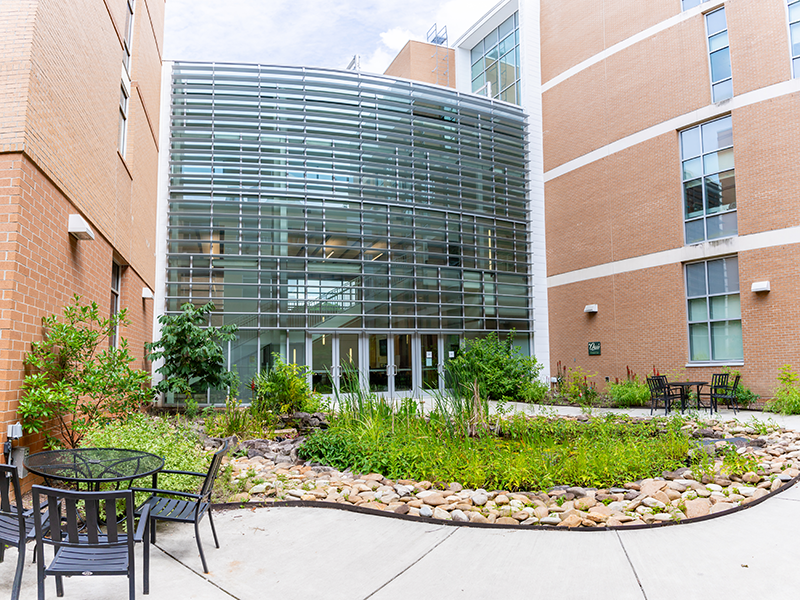
Ecological Communities Featured in the Oasis
-
|
Where soil nutrients and adequate moisture are readily available, blooming wildflowers can carpet the forest floor of mountain coves and north-facing river bluffs in spring. Trillium species, with 3 leaves and 3 petals, are particularly diverse in the southeastern U.S. with many species stranded in these cool microclimates after the last ice age. The seeds of Trillium and many other woodland wildflowers with restricted ranges are dispersed by ants, which limited their ability to colonize northward during glacial retreat. Many spring wildflowers, such as Virginia Bluebell, Wood Poppy, and Bloodroot are referred to as spring ephemerals. These bloom and store energy through photosynthesis during spring before forest leaf-out but often retreat to their underground roots during the drier, shady summer.
|
-
|
Butterfly weed and Purple Coneflower attract many types of insects to the Oasis with nectar, while the bright pompoms of St. John’s wort are particularly attractive to bumblebees. In addition, some plants here serve as larval hosts for butterflies such as Monarchs (milkweeds), Zebra Swallowtail (Pawpaw), Pipevine Swallowtail (Pipevine), and Gulf Fritillary (Passionflower). Flowers specialized for hummingbirds are usually red and tubular without a fragrance or easy landing platform. Examples in the Oasis include Wild Columbine, Red Buckeye, and Indian Pink in spring, and Bee Balm and Plum leaf Azalea in mid-summer. Hummingbirds most frequently visit the Oasis in late summer and early fall, when brilliant scarlet spikes of Cardinal Flower are blooming.
|
-
|
Bogs develop in wet, acidic areas where nutrient availability is poor. Sandy soil often allows water seepage to leach nutrients away quickly, while dead vegetation rots very slowly and builds up as peat. Carnivorous plants such as pitcher plants, sundews, and Venus Flytrap gain a competitive advantage in these low nutrient environments by capturing and digesting insects to acquire nutrients like nitrogen, phosphorous, and potassium that most plants absorb from soil through their roots. Carnivorous plants still must photosynthesize and require high light environments without competition from shade-casting woody plants. Despite living in wet conditions, most bogs are reliant on periodic fires to prevent eventual encroachment by shrubs.
|
-
|
Permanent water allows the establishment of a complex food web that starts with photosynthetic organisms such as aquatic plants, algae, and diatoms. Small invertebrates feed on the living and dead organic material they produce, and larger invertebrates such as dragonfly and dobsonfly larva are voracious predators. Mosquitofish are abundant generalists that eat anything small enough to fit in their mouth (including mosquito larva), and larger sunfish are the top aquatic predators in the Oasis. The blooms of Waterlilies, Pickerelweed, and Lizard’s Tail attract pollinators which, in turn, may fall victim to dragonflies patrolling the pond. Even waterfowls may very rarely drop by.
|
-
|
Unique plant and animal communities occur where exposures of rock allow for only thin layers of sandy soil to accumulate. The Georgia piedmont contains the highest concentration of granitic rock outcrops in the southeastern U.S., and many rare, specialized outcrop species primarily occur in our state. Similar silica-rich rock types, such as Altamaha Grit in South Georgia and sandstone in northeastern Alabama harbor many of the same species. Some outcrop plants reproduce and die back before summer heat evaporates puddles and bakes the rock surface, while others persist through summer and bloom spectacularly in the fall once temperatures moderate. Many lichens are rock outcrop specialists, and there are species of grasshopper, stoneflies, and jumping spider endemic to outcrops.
|
-
|
Plant Name
Pawpaw
Red Buckeye
Eastern Redbud
Fringe Tree
Bottlebrush Buckeye
American Holly
Flowering Dogwood 'Cherokee Brave'
American Beautyberry
Alabama Croton
Alabama Snow Wreath
Cedarglade St. Johnswort
Buttonbush
Needle Palm
Florida Star-Anise
Piedmont Azalea
Alabama Azalea
Oconee Azalea
Plumleaf Azalea
Dwarf Palmetto
|
|
Latin Name (if known)
Asimina triloba
Aesculus pavia
Cercis canadensis
Chionanthus virginicus
Aesculus parviflora
Ilex americana
Cornus florida
Callicarpa americana
Croton alabamensis
Neviusia alabamensis
Hypericum frondosum
Cephalanthus occidentalis
Rhapidophyllum hystrix
Illicium floridanum
Rhododendron canescens
Rhododendron alabamense
Rhododendron flammeum
Rhododendron prunifolium
Sabal minor
|
|
|