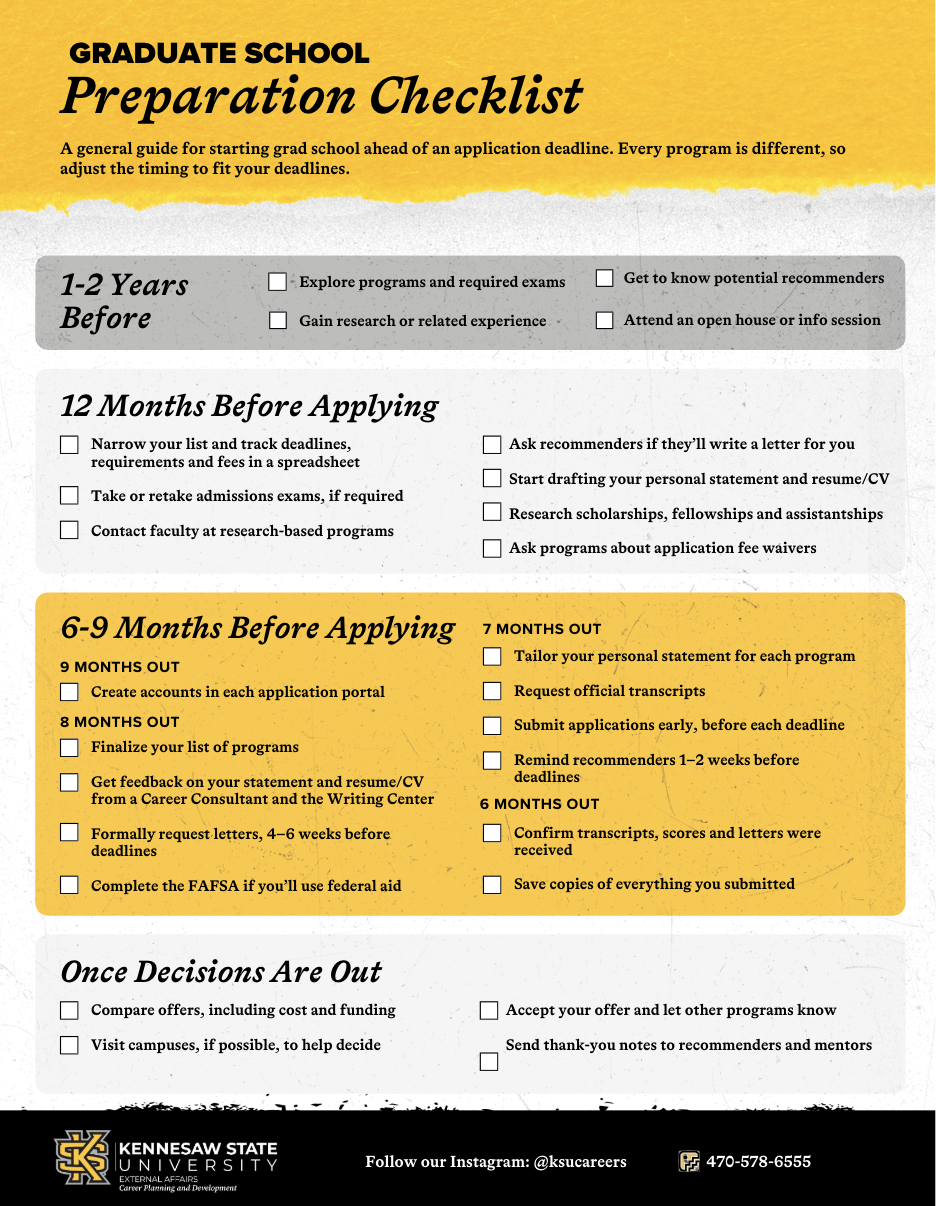
Applying to graduate school is a multi-step process, and every program and student is a little different. The timeline below is a general guide for students who plan to attend graduate school. If you’re the first in your family to apply to graduate school, you’re not on your own. Your career consultant can walk through each step with you.

Not sure grad school is the right next step? Start here. A graduate degree is a big investment of time and money, and for some careers work experience matters more.

Schedule a career advising appointment  to talk through your goals, or set up informational interviews  with people working in the field you’re considering.

1–2 Years Before Graduate School

Build a strong foundation early:

  • Explore programs that match your interests and career goals. Look at curriculum, faculty, cost, location, outcomes for graduates, and whether the program is a master’s, doctorate, or professional degree (law, medicine, etc.). Programs often have admissions counselors that can help you navigate the application process.
  • Research admissions exams (GRE, GMAT, LSAT, MCAT, etc.). Many programs have made the GRE optional, so check each program before you commit to a test. If you’re applying to KSU, graduate admissions lists testing requirements and test-prep options.
  • Get involved in research or hands-on experience. For research-based programs especially, experience with faculty makes a big difference. The Office of Undergraduate Research can help you get started, and internships, co-ops, and related jobs in Handshake build experience too.
  • Attend an info session. Universities will often host virtual or in-person open houses or info sessions to help prospective students decide if they are a fit and learn the specifics of that school's admissions process. 
  • Build relationships with potential recommenders, such as professors, supervisors, and mentors. Go to office hours, take more than one class with a professor you connect with, and keep them updated on your plans.
  • Keep your GPA strong. Your transcript is one of the first things admissions committees review.

If you're considering a graduate degree from KSU, getting connected with a Graduate Admissions Counselor will help you understand admissions requirements, application procedures, and making informed decisions when pursuing a given program so you can stay on top of the application process. 

KSU Graduate Admissions

As You Begin to Apply

Start preparing materials and settle on your strategy:

  • Know your timeline. Applications can open as early as a year ahead of the start date, so make sure to check your prospective institution's to know when you can apply and when you'll likely hear back. 
  • Narrow your list and track each program’s deadlines, requirements, and fees in a spreadsheet.
  • Take (or retake) admissions exams, if needed, so scores are ready well before deadlines.
  • Prepare for interviews, which are common for Ph.D. and some professional programs and can occur at any point in the application process, even before applications are due. Take practice interviews in Big Interview, or schedule a mock interview with a Career Consultant.
  • Reach out to faculty at prospective programs, especially for research-based programs where you’ll work closely with an advisor.
  • Get connected with University Admissions. Colleges may have admissions counselors or similar roles that can support you as you navigate the application and admissions process. 
  • Review each program’s application components (personal statement, writing sample, CV, portfolio, etc.).
  • Ask recommenders if they’re willing to write you a letter. Give them plenty of notice.
  • Start drafting your personal statement and resume/CV, and gather your transcripts.
  • Research funding. Look into scholarships, fellowships, and assistantships, which can cover tuition and pay a stipend. KSU’s Office of Prestigious Undergraduate Awards provides a list of competitive awards and programs like the Fulbright US Student Program and Boren Awards for International Study. If you’re considering KSU’s own graduate programs, explore graduate assistantships  and the Office of Graduate External Fellowships and Awards.
  • Ask about application fee waivers. Many programs offer them. It never hurts to ask.
KSU Graduate Application dates and deadlines


Once the Application Window is Open

This is the busiest phase, so pace yourself. Different programs have different application periods and make decisions at different times, so familiarize yourself with the timeline for each prospective school.

12 Months Out

  • Most applications open.
  • Create accounts in each school's graduate application portal so you can see exactly what’s required.

11 Months Out

  • Finalize your list of schools you want to apply to. Some colleges only allow students to apply to one grad program in a given year; understand if there are limits to the number of programs you can apply to at a given institution, and decide accordingly. 
  • Draft your personal statement and resume/CV.
  • Get feedback from your Career Consultant and the KSU Writing Center.
  • Formally request letters of recommendation. Aim for at least 4–6 weeks before the deadline, and share your resume, personal statement draft, program list, and deadlines with each recommender.
  • Complete the FAFSA if you plan to use federal aid. Graduate financial aid works differently than undergrad aid, so check each program’s financial aid office for details.

10 Months Out

  • Tailor your personal statement for each program. Generic statements stand out, and not in a good way.
  • Request official transcripts  to be sent to each school.
  • Submit applications ahead of each deadline. Don’t wait until the last day, since portals can slow down.
  • Send a polite reminder to recommenders about one to two weeks before deadlines.
  • Follow up with faculty contacts, if applicable.

9 Months Out

  • Confirm each school received your transcripts, test scores, and recommendation letters.
  • Save copies of everything you submitted.
  • Thank your recommenders for submitting their letters.
     

As the Deadline Approaches/Once Decisions Are Out

Wrap up and get ready for what’s next:

  • Know Your Timeline. Some programs have rolling decisions, and others will wait to make decisions for all applicants after a single deadline has passed. 
  • Receive admission decisions and compare offers, including total cost and funding packages.
  • Visit campuses, if possible to help you make your decision. If you've accepted an offer, be on the lookout for an invitation to a grad orientation.
  • Accept your offer and complete any required paperwork.
  • Let other schools know if you’re declining their offer.
  • Send thank-you notes to recommenders and mentors, and share where you’re headed.