Why Preparation Matters

Job fairs represent a critical opportunity for students to make meaningful connections with employers. Students who invest time in getting ready are more likely to:

  • Make lasting impressions with employers
  • Identify roles that align with their goals
  • Stand out among other candidates
  • Secure interviews and opportunities

As faculty, you play a crucial role in helping students understand what preparation looks like and why it's non-negotiable.
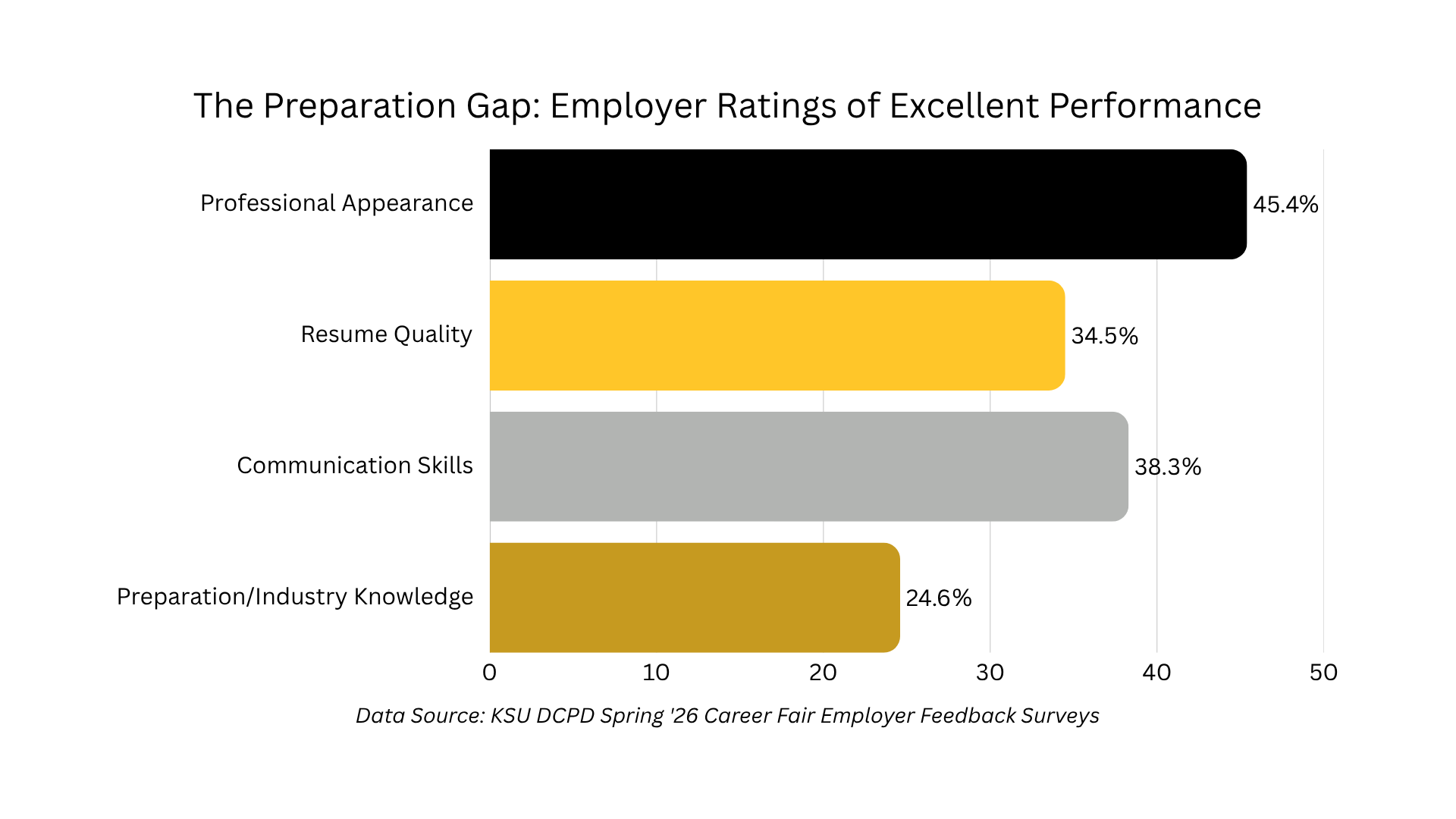

What Employers Are Telling Us


Employers repeatedly emphasize that student preparedness directly impacts their willingness to invest time in conversations and interviews. Unprepared students (those without resumes in hand, unfamiliar with the company, or unable to articulate their interests) don't get second looks.

The difference between a forgettable interaction and one that leads to an interview is often just preparation.


Career Fair Prep Guide for Your Students


What a Prepared Student Looks Like

  • A polished, detailed resume that speaks to their experience, skills, and accomplishments, with no typos, on hand at the fair, and ready to submit online. 
  • They know which types of roles appeal to them (sales, project management, coordinator roles, structural and civil positions, government and policy-adjacent work, etc.) and can discuss why.
  • They've done the work to identify what competencies matter forthe roles they favor and can thoughtfully discuss how they're building those skills.
  • Appearance sets the tone for the conversation. See professional dress guidelines below.
  • They can introduce themselves confidently in 30–60 seconds, highlighting who they are and what they're looking for, rather than waiting for the employer to take the lead or asking them to describe their company.
  • Using Handshake, students can view the employers attending and review the roles those companies typically hire for.
  • They understand the company's general focus areas and can thoughtfully discuss how their interests and skills align with the organization's needs. They don't have to know the role exactly, but they need to have some level of understanding for the industry.

Professional Dress Standards

Professional appearance signals respect and seriousness about the opportunity. Dress codes vary by industry, but career fairs call for business professional attire as the standard. 

Wear:

  • Blazer or sport coat
  • Collared shirt or blouse
  • Dress pants or skirt (knee length or longer)
  • Closed-toe dress shoes
  • Minimal, professional jewelry
  • Neat hair and grooming
  • Pressed, clean clothing

Avoid:

  • Jeans or casual pants
  • T-shirts or tank tops
  • Shorts or athletic wear
  • Flip-flops or sneakers
  • Heavy perfume or cologne
  • Baseball caps
  • Wrinkled or stained clothing

Pro tip: Professional dress levels the playing field. When all students are dressed appropriately, the focus stays on their qualifications, personality, and fit.

 
cover image of the professional dress lookbook. A girl stands in business professional clothing holding a clipboard

View/Download the DCPD Professional Dress Lookbook


How You Can Support Your Students

  • Normalize preparation talk. Discuss job fairs in class as a milestone that requires thoughtful planning, not just showing up.
  • Direct students to Career Services resources. Host us for a classroom presentation; point students to advising sessions, college-specific workshops, and the Steppingblocks career pathway learning module (see below to access).
  • Set expectations early. If a job fair is coming, remind students in the weeks prior that preparation starts now.
  • Review resumes if possible. Even a quick check for typos and clarity can make a difference.
  • Emphasize professional dress. Make clear that appearance matters and is part of being professional.

Passionate about supporting your students' career development? Become a Faculty Career Champion!

Faculty Career Champions Program

Helping Students Research Companies

Students don't need to be company experts, but they should know what they're walking into.

  1. Check the Handshake listing. See which companies are registered for the fair and what roles they have open or typically hire for.
  2. Identify relevant roles. Check handshake, LinkedIn, or other company pages. Are there positions in sales, project management, government relations, structural engineering, etc. that align with their interests?
  3. Know the industry or mission. Students should spend 5–10 minutes understanding: What does this company do? What sector or market do they serve? (This is easier than memorizing company specifics.)
  4. Find their angle. Can they connect something about their skills, major, or interests to what the company does? This becomes the opening for conversation.
  5. Prepare 1–2 thoughtful questions. Rather than "What does your company do?" try "I see you have coordinator roles, what does the typical day look like?" or "Can you tell me about the growth path for someone starting in sales?"

Support Your Students Now

Direct your students to these resources to prepare for the job fair: