The labs in the Systems and Industrial Engineering department are designed to enhance
real-world learning and research in areas like facilities design, ergonomics, and
system simulation. We have state-of-the-art equipment and technology that support
coursework and student projects. Detailed descriptions of individual labs showcase
their unique purposes and contributions to our program. The labs also support collaboration
between students and faculty on innovative research initiatives, and prepares students
for professional success in systems and industrial engineering.
Instructional Labs
Facilities Design & Plant Layout Labs
The Facilities Design and Plant Layout Labs actively engage students with a number
of techniques and software packages.
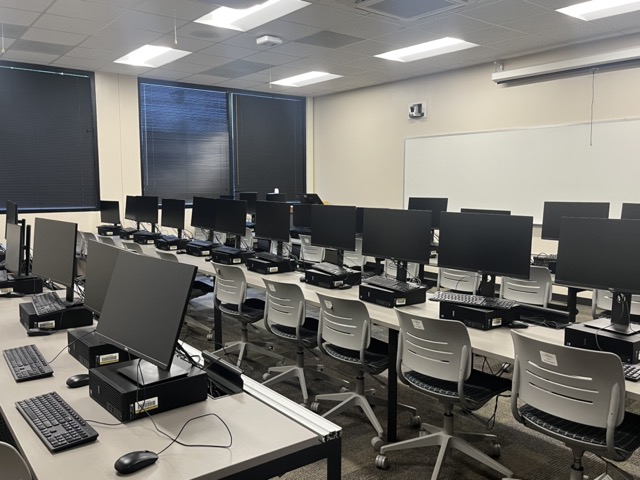
The Facilities Design, Plant Layout, and Material Handling Labs are a part of the lecture classes. Students use a range of techniques and software packages not only to lay out floor plans with machines and offices, but also to calculate throughput and operational efficiencies before physically moving a single item. Many types of industries are always either relocating, redesigning, or enhancing their existing facilities, so IETs are well equipped upon graduation to tackle these issues. These software packages are also available through VirtualOwl VMware virtual desktop client technology for online students.
Location: W. Clair Harris Textile Center, M131
Systems Simulation Labs
The Systems Simulation Labs provide students with hands-on experience with an industry-popular
Arena Simulation software.
The Systems Simulation Labs are a part of the lecture classes. In the labs, we use
an industry-popular Arena Simulation software on network computers available in two
classrooms and also available through VirtualOwl VMware virtual desktop client technology
for online students.
Location: W. Clair Harris Textile Center, M131
Work Measurement and Ergonomics Labs
The Work Measurement and Ergonomics Labs are equipped to provide hands-on experience
with measurements of work elements and designing time standards.
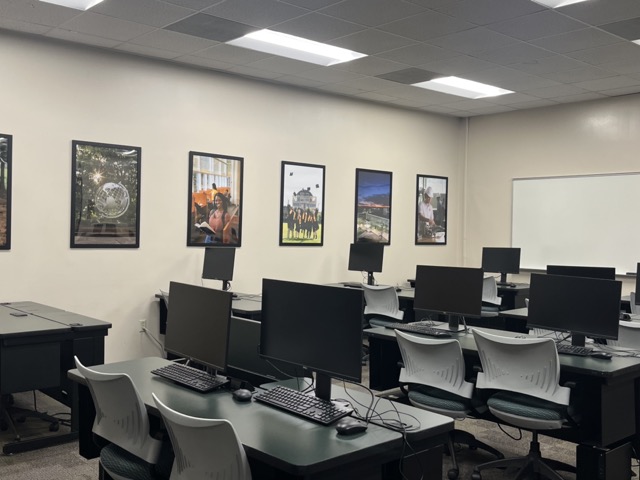
The Work Measurement and Ergonomics Labs are a part of the lecture classes. In these
labs, students use several software packages to gain hands-on experience measuring
work elements and designing time standards crucial to the business. These software
packages are also available through VirtualOwl VMware virtual desktop client technology
for online students.
Location: W. Clair Harris Textile Center M130
Research Labs
Human Factors, Operations Optimization, and Ergonomics (HOPE) Lab
The Human Factors, Operations Optimization, and Ergonomics (HOPE) Lab is housed within
the Southern Polytechnic College of Engineering and Engineering Technology at Kennesaw
State University and is led by Dr. Valentina Nino. Our interdisciplinary research
focuses on integrating advanced technologies such as eye-tracking sensors, wearable
exoskeletons, and motion capture systems into healthcare environments to improve workflow
efficiency, provider well-being, and patient safety. Collaborating across engineering,
healthcare, computing, and business disciplines, our team aims to redesign systems
and processes to make healthcare safer, more effective, and human-centered.
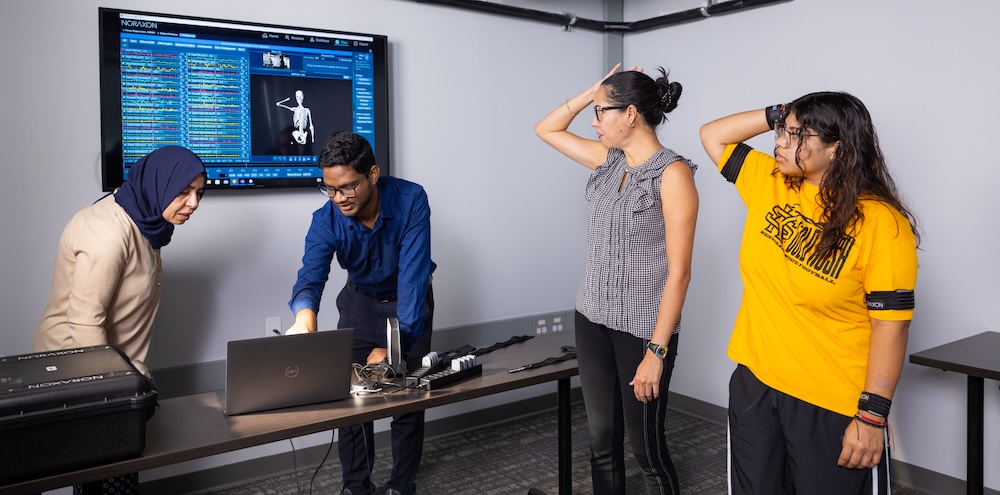
The HOPE Lab also houses a Noraxon Ultium Portable Biomechanics Laboratory, a modular, all-in-one “lab-in-a-box” capable of capturing high-fidelity biomechanical data in virtually any location.
These features allow us to acquire synchronized kinematic, kinetic, and muscle activation
data in real-world clinical or simulated research environments, critical for monitoring
the ergonomic impact of nursing tasks and exoskeleton use. This robust instrumentation
and interdisciplinary infrastructure position the HOPE Lab to execute the proposed
R03 project efficiently, providing seamless integration between ergonomic data collection,
device evaluation, and human-centered systems redesign.
Omnisuit (Auxivo AG): A lightweight, textile-based passive exosuit that supports lower back
and shoulder movement during lifting and forward-bending tasks, offering ergonomic
assistance while preserving mobility.
IX Back Air (SuitX): A pneumatic, modular back-support exoskeleton providing adjustable lumbar
assistance; its breathable, low-profile design allows for comfortable donning/doffing
in clinical contexts.
Apogee (German Bionic): A powered exoskeleton delivering up to 30kg (66lb) of lower-back
lift assistance with active torque control and real-time ergonomic feedback capabilities.
Noraxon Ultium Portable Biomechanics Laboratory
16 Ultium Motion IMUs for wearable 3D motion capture and posture analysis.
8 Ultium EMG channels, offering detailed muscular activity data via wireless SmartLeads.
One NiNOX high-speed camera for synchronous video recording.
Seamless USB/Sync hub integration and license of the myoResearch software for synchronized
data capture, playback, and custom reporting.
The Health Systems Integration (HSI) Laboratory serves as a collaborative, shared
research space for student training and interdisciplinary studies in healthcare systems engineering, process improvement, and human-systems integration.
Equipped with virtual reality (VR) technology, 3D glasses, and the Nekspine exoskeleton,
the facility supports research investigating complex healthcare systems from operational,
technological, and human-centered perspectives. Two core research projects are currently
underway in the lab:
Blood Donation Research
This research is led by Dr. Keyser and focuses on blood donation research. Our long-term
goal is to enhance the sustainability of the blood supply in the US. The aging baby
boomer blood donor base, coupled with decreases from younger age groups, is an ongoing
public health concern and impacts all people in need of blood transfusions regardless
of gender, age, racial, or ethnic backgrounds. The proposed work responds to the urgent
need for a new, sustainable generation of blood donors in the US.
Fairness and Equity in Clinical Risk Prediction
This research, led by Dr. Li, develops and evaluates clinical risk prediction models
for early childhood caries using a microsimulation framework built on a representative
cohort of US children ages 0 to 60 months. Each simulated child is assigned a calibrated
risk score, and outcomes are modeled under different care policies, including minimal
intervention, targeted triage, and universal preventive treatment, across monthly
cycles up to age five. The framework tracks caries burden, referral rates, preventive
treatment use, and cost-effectiveness for each policy scenario, and compares how a
single decision threshold affects different subgroups of children. This infrastructure
allows the research team to test and compare care policies for both predictive accuracy
and equity of outcomes before implementation in clinical practice.
Equipment
Nekspine Exoskeleton: A wearable exoskeleton that supports the spine and reduces strain during physically
demanding tasks, used to study ergonomic outcomes in healthcare settings.
Virtual Reality (VR) Technology: Used to simulate healthcare workflows and clinical environments, allowing researchers
to test scenarios before applying them in real practice.
3D Glasses: Used with VR equipment to improve depth perception when reviewing healthcare system
models and design prototypes.
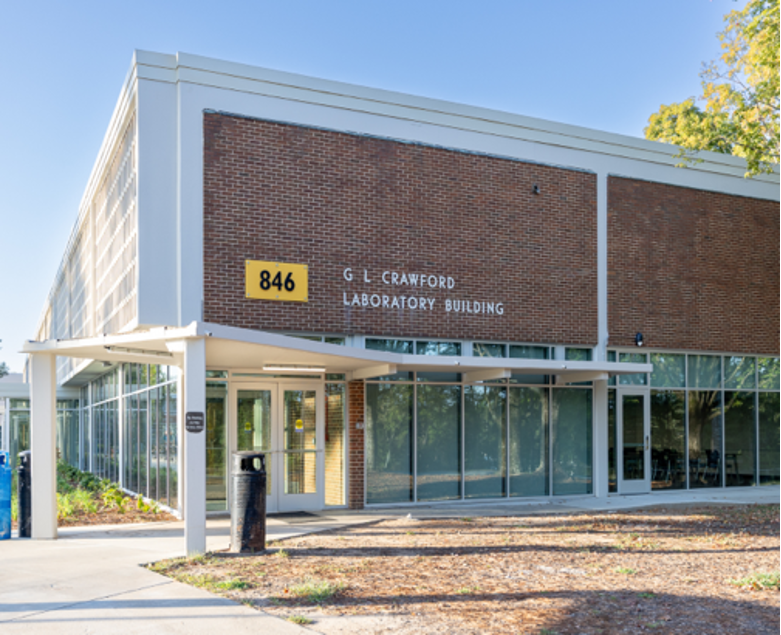
Health Systems Optimization (HSOpt) Lab directed by Dr. Maryam Eghbalizarch, is located
in the Crawford laboratory building on the Marietta campus of Kennesaw State University.
The lab focuses on integrating systems engineering and data science to enhance healthcare
delivery and management. The team develops solutions to support medical decision-making and analyze the cost-effectiveness
of healthcare interventions. The HSOpt Lab occupies approximately 370 square feet
of dedicated research space and has access to several thousand square feet of shared
laboratory and collaborative workspace, providing an appropriate environment for computational
modeling, data analysis, and interdisciplinary research activities.
The lab is equipped with high-performance computational hardware to support advanced
modeling, simulation, and data analysis tasks, including a Dell Precision 7875 Tower workstation configured with an AMD Ryzen Threadripper PRO processor, 256 GB DDR5 ECC memory,
an NVIDIA RTX 4500 Ada GPU (24 GB), and high-capacity NVMe and SSD storage. This configuration
supports computationally intensive tasks such as artificial intelligence methods,
operations research modeling, and large-scale simulation analyses. Additional lab
equipment includes a 65-inch professional-grade interactive display that facilitates data visualization, collaborative research discussions, and instructional demonstrations related to the projects.
Equipment
Dell Precision 7875 Tower Workstation: High-performance workstation supporting AI methods, operations research modeling,
and large-scale simulation analyses.
Processor: AMD Ryzen Threadripper PRO Memory: 256 GB DDR5 ECC RAM Graphics: NVIDIA RTX 4500 Ada GPU (24 GB) Storage: High-capacity NVMe and SSD storage
65-inch Interactive Display: Used for data visualization, collaborative research discussions, and instructional
demonstrations.