Resources for Faculty Researchers

Explore the tools and funding opportunities available to support undergraduate research happening at Kennesaw State University.

This section provides faculty with essential resources for integrating research into courses, finding undergraduate research students, mentoring students, and much more! Whether you're submitting grants or guiding students through their undergraduate research journey, these resources and funding opportunities will help you create a dynamic research environment and enrich the undergraduate research experience at KSU.

click here to view additional faculty resources

click here to view different OUR program offerings


Learn More About Undergraduate Research

Discover ways faculty can introduce undergraduate research opportunities to students and incorporate research experiences into the classroom. Resources include classroom visits, guidance on integrating research into courses, and information about university initiatives that promote student engagement.

Become an Undergraduate Research Mentor

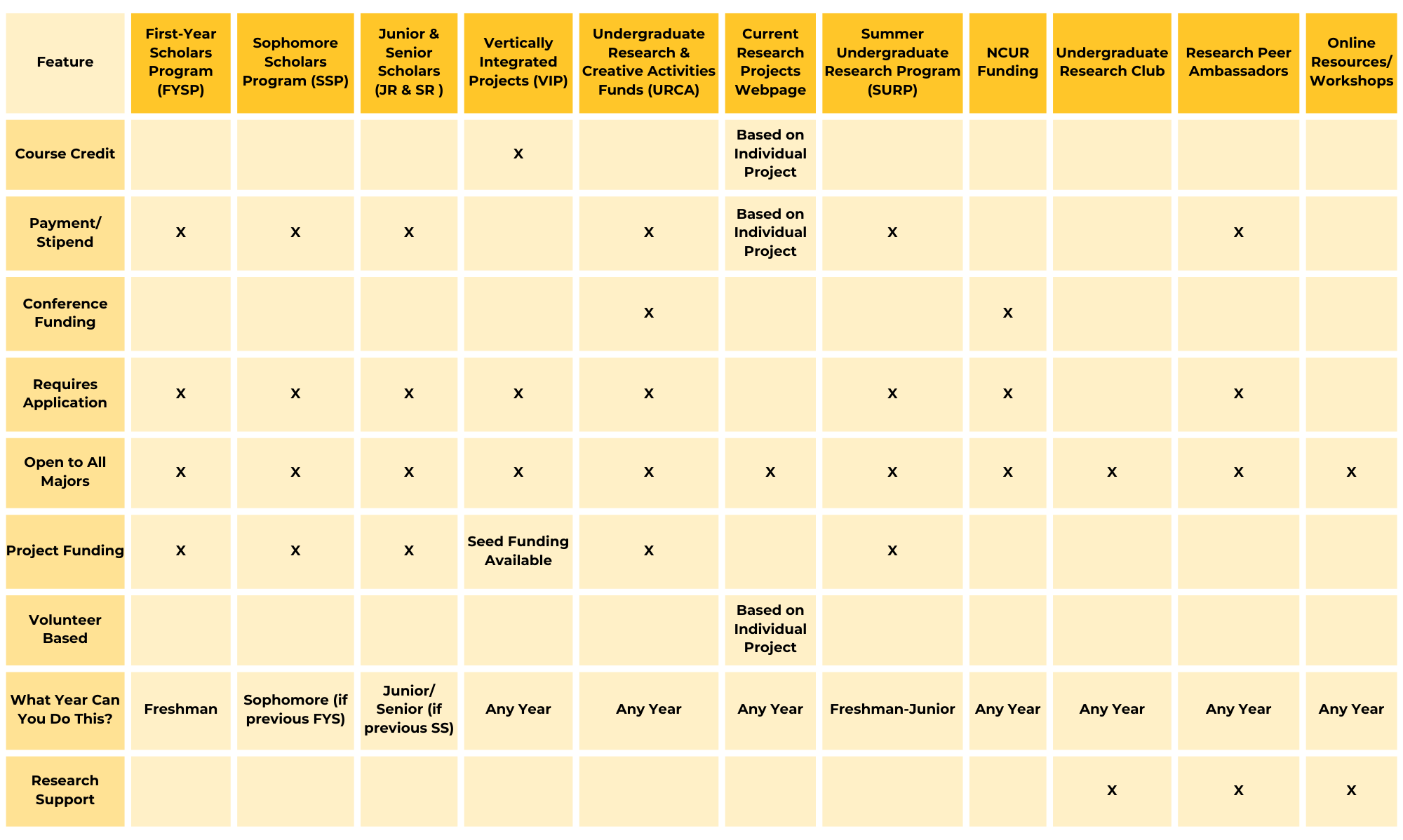
Find funding and program opportunities that enable faculty to mentor undergraduate researchers at different stages of their academic careers. Programs and resources support research experiences throughout a student's undergraduate journey, including scholar programs, summer research, grants, course-based research, and vertically integrated projects.

Excel in Undergraduate Research

Access resources designed to help faculty strengthen their involvement in undergraduate research and better support their student researchers. Opportunities include connecting with the Council on Undergraduate Research, recruiting undergraduate researchers, and receiving recognition for outstanding undergraduate research mentorship.

Research Mentoring Guidelines

Effective mentoring is crucial for nurturing the next generation of scholars. We help to provide resources and support for mentors to guide undergraduate researchers. This includes being familiar with best practices, establishing learning outcomes to integrate into research experiences, and valuable literature to use as aid.

By following these guidelines, mentors can significantly enhance the academic and professional development of their students. For more information or assistance, please contact us at our@kennesaw.edu.

Best Practices in Mentoring Undergraduate Reseachers

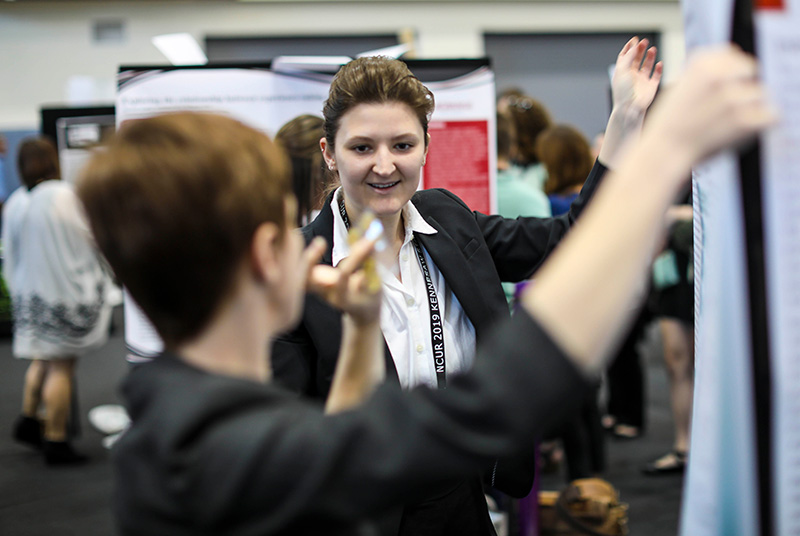
A KSU ProfessorMentoring Undergraduate Reseacher on their poster project during a conference

Below are some good resources to help faculty better mentor undergraduate researchers:

  • Pierszalowski, S., & Buser, T. (2021). Mentoring the next generation: Using undergraduate research to broaden engagement and impact in STEM. Center for Advancing Research Impacts in Society: Fellows Series. Read the entire manual.

  • Vandermaas-Peeler, M., Miller, P. C., & Moore, J. L. (Eds.). Excellence in Mentoring Undergraduate Research. Washington, DC: Council on Undergraduate Research. Order the book at the CUR Bookstore.

Learning Outcomes

Below are undergraduate research learning outcomes taken from the literature. These outcomes can be incorporated into syllabi for undergraduate research experiences.

Missing anything? Let us know at our@kennesaw.edu.

  • At the end of the project, students should be able to:

    • Define the terminology associated with research and theory in their field
    • Describe past research studies in their field of study
    • Articulate how their research study makes a contribution to their academic field
    • Explain the rationale for choosing particular research methodologies and data analytic techniques
    • Evaluate research studies they see in the media or encounter in other courses
  • At the end of the project, students should be able to:

    • Locate primary and secondary sources related to their field of study
    • Synthesize and critically analyze past research in their field of study
    • Design a study to answer a research question 
    • Develop a hypothesis
    • Describe ethical research practices and apply those practices to a research study
    • Write an IRB or IACUC proposal and become IRB certified
    • Collect data for a research study
    • Analyze, synthesize, organize, and interpret data from their research study
    • Work effectively as part of a team
    • Write a research paper 
    • Present their research/creative activity to an audience (e.g., poster, oral presentation, performance, display)
  • At the end of the project, students should be able to:

    • Articulate what it means to be a scholar in their academic field
    • Articulate the ways in which their research participation helps prepare them for graduate school and/or a career
    • Describe appropriate professional conduct (e.g., at conferences, when interacting with professionals in the field)
    • Reflect on their research project, including strengths, weaknesses, and things they would do differently in another research context
  • Although these outcomes are harder to measure, the literature suggests that after an undergraduate research experience, students tend to experience improvements in the following areas:

    • Time management
    • Self-confidence/self-esteem
    • Independent thinking
    • Problem-solving
    • Organizational skills
    • Leadership skills
    • Intrinsic motivation
    • Persistence on tasks
  • Baenninger, M., & Hakim, T. (1999). Undergraduate research as a curricular element: Multidisciplinary courses at the College of New Jersey. Council on Undergraduate Research Quarterly, 20, 9-13.

    Bauer, K. W., & Bennett, J. S. (2003). Alumni perceptions used to assess undergraduate research experience. Journal of Higher Education, 74, 210-230.

    Bowman, M. H., & Stage, F. K. (2002). Personalizing the goals of undergraduate research. Journal of College Science Teaching, 32, 120-125.

    Chopin, S. F. (2002). Undergraduate research experiences: The translation of science education from reading to doing. The Anatomical Record, 269, 2-10.

    Hunter, A., Laursen, S. L., & Seymour, E. (2006). Becoming a scientist: The role of undergraduate research in students’ cognitive, personal, and professional development. Science Education, 91, 36-74.

    Hu, S., Scheuch, K., Schwartz, R., Gayles, J. G., & Li, S. (2008). Reinventing undergraduate education: Engaging college students in research and creative activities. San Francisco, CA: Jossey-Bass.

    Kardash, C. M. (2000). Evaluation of an undergraduate research experience: Perceptions of undergraduate interns and their faculty mentors. Journal of Educational Psychology, 92, 191-201.

    Landrum, R. E., & Nelson, L. R. (2002). The undergraduate research assistantship: An analysis of the benefits. Teaching of Psychology, 29, 15-19.

    Lopatto, D. (2003). The essential features of undergraduate research. Council on Undergraduate Research Quarterly, 24, 139-142.

    Lopatto, D. (2004). Survey of Undergraduate Research Experiences (SURE): First Findings. Cell Biology Education, 3, 270-277.

    Lopatto, D. (2004). What undergraduate research can tell us on research on learning. What Works, What Matters, and What Lasts, Volume IV. Retrieved from the Project Kaleidoscope website, http://www.pkal.org/documents/Vol4WhatUndergradResearchCanTellUs.cfm 

    McKinney, K., Saxe, D., & Cobb, L. (1998). Are we really doing all we can for our undergraduates? Professional socialization via out-of-class experiences. Teaching Sociology, 26, 1-13.

    Seymour, E., Hunter, A., Laursen, S. L., & Deantoni, T. (2004). Establishing the benefits of research experiences for undergraduates in the sciences: First findings from a three-year study. Science Education, 88, 493-534.

    Thiry, H., & Laursen, S. (2009). Evaluation of the undergraduate research programs of the Biological Science Initiative: Students’ intellectual, personal and professional outcomes from participation in research. Report prepared for the Howard Hughes Medical Institute. Boulder, CO: Ethnography and Evaluation Research.

Additional Resources for Faculty Mentors

  • If you are working with secondary education student researchers, and need financial support for background checks and/or student parking, consider applying for Secondary Education Research Internship Funding (SERIF).

    Learn More
  • Student typing on laptop

    If you are submitting a grant that requires information about undergraduate research at KSU, this web page contains information you can add to your proposal (last updated February 2022).

    If you require specialized information not at the link, please email our@kennesaw.edu with the request.

    Expect a 2-3 week turnaround for these requests.

    learn more
  • man using a laptop outside

    Check out some information on how to make sure all undergraduate researchers understand the expectations.

    learn more
  • Typewritter typing the words "Something Worth Reading"

    What are some guidelines on how to navigate authorship issues with undergraduate researchers?

    learn more
  • Birds eye view of people attending a undergraduate researchers conference

    Help your students get prepared to present their research to an external audience and ensure their presentation is a success!

    learn more