The Miner Anderson Family Foundation and the Office of Global Education at Kennesaw
State University (KSU) are pleased to announce the 2026 Education for Sustainability
and Human Rights Fellowship. Inspired by the United Nations Universal Declaration
of Human Rights and the 2030 Framework of Education for Sustainable Development, the
program consisted of a week-long residential institute, with monthly meetings and
a one-day winter retreat to follow in January 2027. These programs and activities
foster dialogue among the educators regarding linkages between global and local topics.
Participants are supported in designing and implementing a hands-on project about
human rights and/or the Sustainable Development Goals in their schools. The aim of
the program is to create a network of K-12 teachers for collaboration, curriculum
development, and instruction for issues-centered student learning.
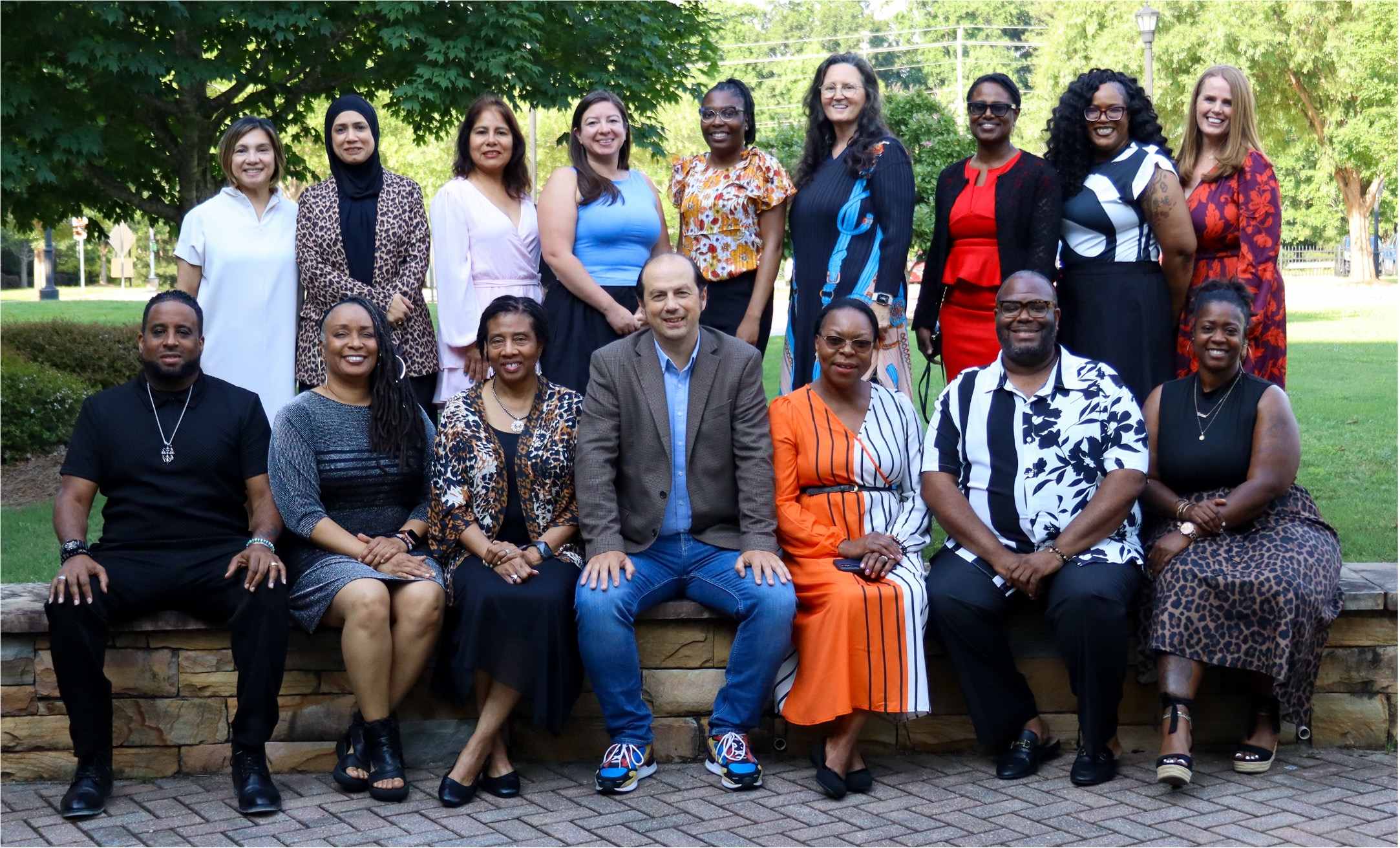
2026 SHR Cohort Members and Program Facilitators
Past participants have enjoyed the community that is built during the fellowship,
and the ability to design meaningful programs that impact the students while addressing
world-wide challenges:
“I am not alone as a teacher who wants to learn and make the world better for my students.” S.W.
“I loved the community I was able to build, ideas that I gained from others, and the connections I made.” A.A.
"I am so appreciative of the experience!" T.J.
2026 SHR Fellowship Program
Program Dates: May 31 - June 6, 2026
Program Location: Kennesaw State University (KSU)
Application Deadline: Monday, April 13, 2026. The application has closed. Please check back in Spring 2027 for information on next year's fellowship.
During the 7-day residential institute, fellows:
Learned about the UN's Sustainable Development Goals
Gained a deep understanding of the main principles in human rights education
Explored the attributes of global citizenship
Worked with fellow teachers to develop ideas on how to implement these values in the
classroom
Visited key civil rights, historic, and cultural landmarks in Atlanta
What Was Included: Costs for the fellowship and institute were covered by the Miner Anderson Family Foundation and included a $400 stipend, hotel accommodations, and all meals. In addition, participants who complete the residential institute and monthly meetings will qualify for a microcredential (Level II Badge) offered by Kennesaw State University.
Who Can Apply: Teachers from across Georgia and surrounding states can apply. Please note that only
12 fellows will be selected each year.
For More Information: Contact Patrice.Binns@kennesaw.edu in KSU's Office of Global Education
Meet the 2026 Facilitators and Presenters
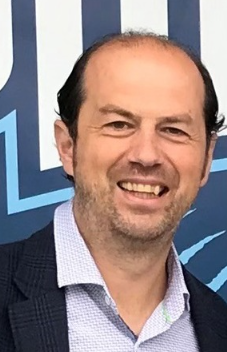
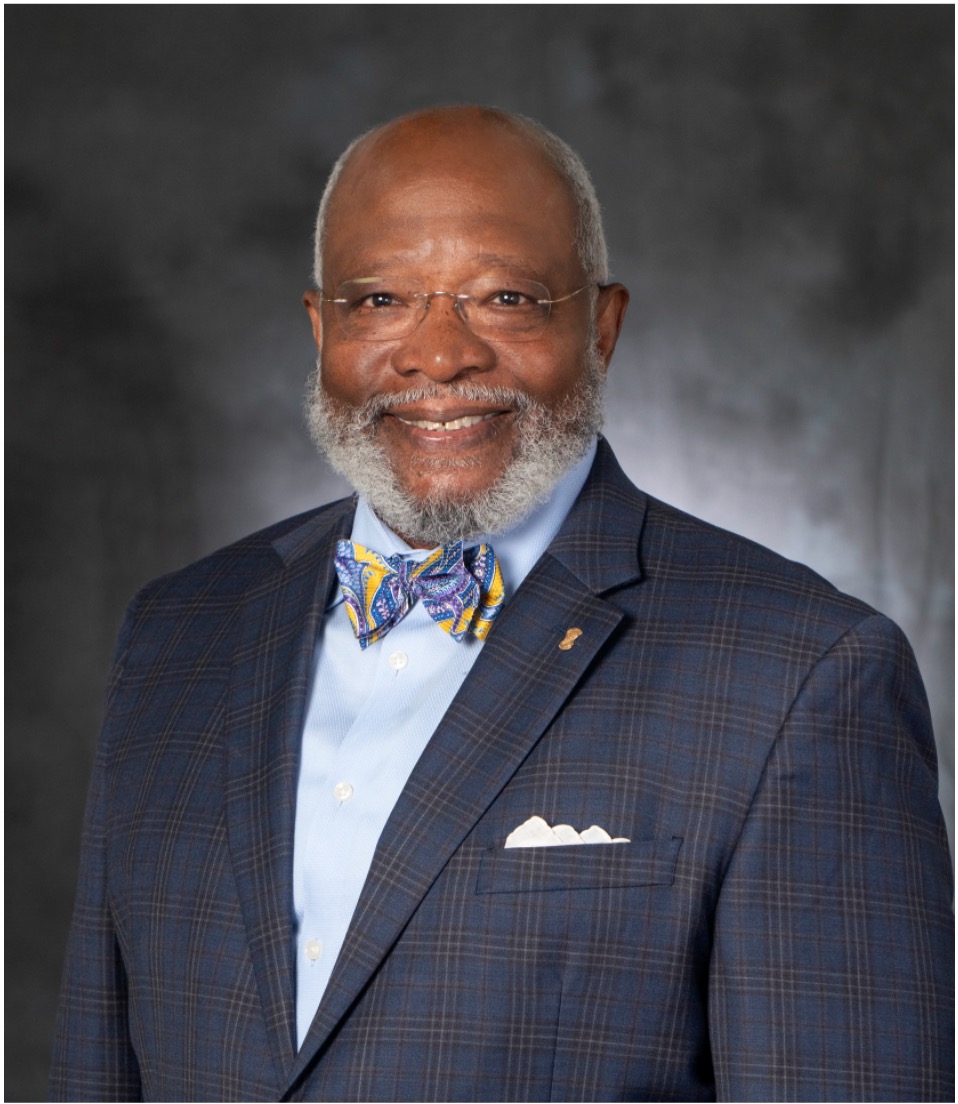
Dr. Ion Vlad
Ion Vlad is the director of the San Francisco-based Miner Anderson Family Foundation.
He is a co-founder of the Peace Leadership Collaborative in California. He is also
an adjunct professor of human rights at the University of Arizona.
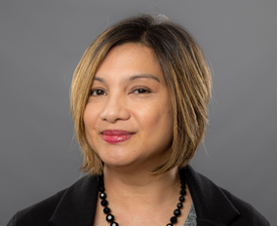
Dr. Theresa Alviar-Martin
Theresa (Tracey) is a Professor of Curriculum and Instruction at Kennesaw State University.
Her scholarship examines citizenship education in culturally diverse societies from
decolonial, global, and comparative perspectives. Prior to joining academia, Tracey
worked for 13 years as an upper elementary teacher in international schools in Bangkok
and Hong Kong, and as an ESOL teacher in a refugee camp in the Philippines. She is
an editorial board member of Theory and Research in Social Education, a recipient of the National Council for the Social Studies (NCSS) exemplary dissertation
award, and author of several peer reviewed articles and book chapters. Her recent
book (edited with Dr. Mark Baildon), Research on Global Citizenship Education in Asia brought together scholars from seven Asian societies. Along with Dr. Sohyun An, Tracey
is a founding member and co-director of education for Asian American Voices for Education
(AAVEd), a collective advocating for ethnic studies in the GA K-12 curriculum. Their
edited volume, Grassroots Organizing for K-12 Asian American Studies: Stories from Field (Palgrave) chronicles AAVEd members’ stories of curriculum reform in the aftermath of the Atlanta Spa shootings.
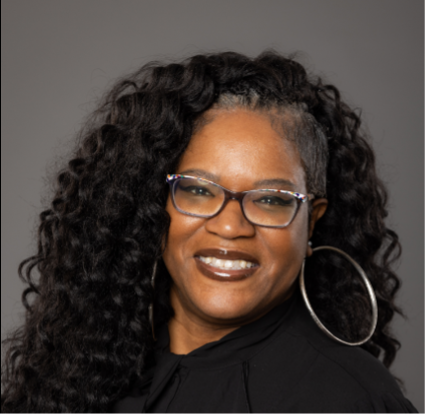
Dr. Nefertari Yancie
Nefertari Yancie is an Assistant Professor of History Education at Kennesaw State University. Dr. Yancie’s research interests include developing students’ historical empathy skills utilizing counternarratives, first-person perspective writing, and historical dialogues. Her research especially focuses on how historical empathy may be utilized in the classroom to explore how enduring issues such as racism and social injustice have their roots in the past and continue to impact the present.
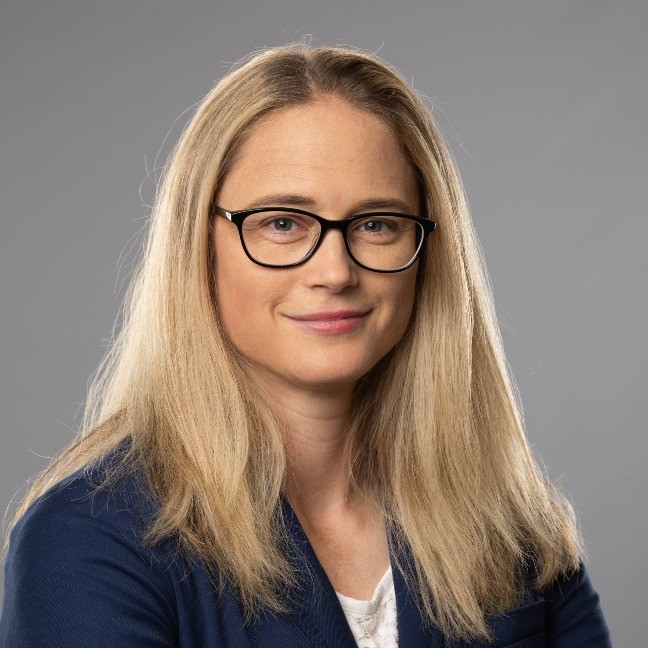
Dr. Erin C. Adams
Erin Adams is an Associate Professor of Elementary Social Studies in the Department
of Elementary and Early Childhood Education at Kennesaw State University. Her scholarship
examines social studies teacher education, specifically economic education and discourse.
In that area, she investigates the history of neoclassical economic theory (the theories
used in K-12) and the relationship between economics and civic education. Relatedly,
she investigates the economic and environmental impact of metals, mining, and extraction.
Her work has been published in a variety of journals and books. She is also interested
in scholarly reading, writing, and theorizing practices. She is the co-editor of the
Theory-Story Reader for Social Studiesas well as two forthcoming volumes.
Dale Hawkins Long
Dale Hawkins Long is a survivor of the September 15, 1963 bombing of the Sixteenth Street Baptist Church in Birmingham, Alabama, where four of his friends were tragically killed and twenty-seven injured. He and his late brother, Kenneth escaped unscathed. Mr. Long’s experience in Birmingham led him to dedicate his life to volunteering. He has received numerous awards for volunteer service including recognition by both President George H. W. Bush and President George W. Bush.
His professional career includes the NASA Space Shuttle Program, Texas Instruments, the City of Garland, the City of Dallas, and consultant to the Dallas Area Rapid Transit. Now retired, Mr. Long is a public speaker, cinematic realist, and a primary source storyteller about Jim Crow, 60’s era Birmingham. He has shared his story in academia, corporate, and faith-based settings, as well as in numerous public and community forums. Most recently he lectured to students at Western Carolina University in North Carolina and at Texas Instruments.
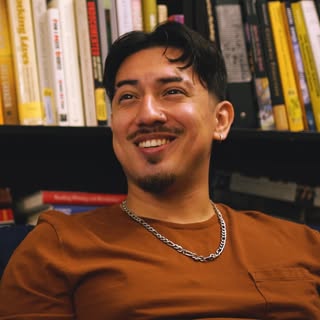
Jonathan Peraza Campos
Jonathan Peraza Campos is a middle school teacher, teacher educator, and community
organizer. He provides professional development, does outreach, and creates resources
to support the teaching of Central American studies in K-12 with the Teaching Central
America program at Teaching for Change. He merges his knowledge of ethnic studies
and Central American Studies (CAS) education and community organizing to amplify the
ongoing work for liberatory education in the South through his sixth grade classroom,
the Vos del Sur Program at Migrant Roots Media, Escuelitas on Buford Highway, and
the Atlanta chapter of the Association of Raza Educators.
Peraza Campos received his undergraduate degree in Sociology and English in 2018 from Emory University. He holds master’s degrees in Social Foundations of Education and in Secondary English Education from Georgia State University along with a graduate certificate in Latin American Studies from Georgia State and an ethnic studies K-12 teacher specialization certificate from University of California, Los Angeles. He is currently completing a Master of Arts in History from Georgia State University. His educational and historical work examine the links between racism, imperialism, immigration, militarism, incarceration, policing, and education, especially in the Latinx South and pertaining to Central Americans.
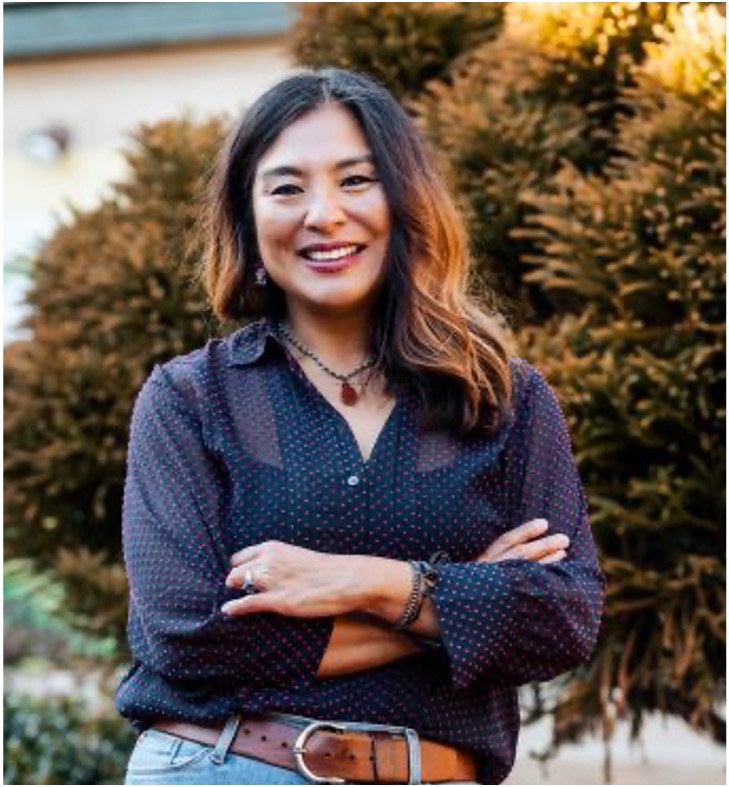
Lily Pabian
Lily Pabian has served as Executive Director of We Love Buford Highway since 2019.
She has more than 30 years of experience across the nonprofit, consulting, and corporate
sectors. Her work focuses on community-centered leadership, cultural preservation,
strategic communications, fundraising, and coalition building. She is known for bridging
long-term vision with grassroots engagement, ensuring that organizational strategies
remain grounded in the lived experiences of the communities they serve.
Pabian's connection to Buford Highway is deeply personal. Her early experiences growing
up here continue to shape her commitment to preserving the corridor's cultural heritage
and ensuring that immigrant communities remain visible, valued, and connected. Today,
Pabian views Buford Highway not simply as a place, but as a living example of how
diverse communities create belonging through shared experiences, cultural exchange,
and collective investment in one another. Her leadership at We Love Buford Highway
reflects a lifelong dedication to advancing opportunities for immigrant families while
celebrating the stories, businesses, and traditions that define Atlanta's most multicultural
corridor.
Her contributions have been recognized through numerous honors, including Georgia
Asian Times' 25 Most Influential Asian Americans, the Atlanta Business Chronicle Diversity,
Equity, and Inclusion Award, Atlanta Business Chronicle Power 100: Atlanta's Most
Influential Advocates, Dekalb County Board of Commissioners, and Atlanta Magazine's
500 Most Powerful Leaders.