Engage with Leaders in Your Research Area

The Southern Polytechnic College of Engineering and Engineering Technology (SPCEET) Seminar Series is designed to encourage the exchange of ideas within and across the college’s disciplines through research. We invite speakers from top research institutions and within SPCEET to give presentations on their ongoing and most recently completed research projects each semester.

The Seminar Series provides faculty, staff, and students an excellent opportunity to directly interact with leaders in their research areas, get valuable feedback on their ongoing work from peers, and create possibilities for high-impact collaboration.

Spring 2026 Research Seminars

Seminars will take place from 11:15 am - 12:05 pm. Light refreshments will be provided.

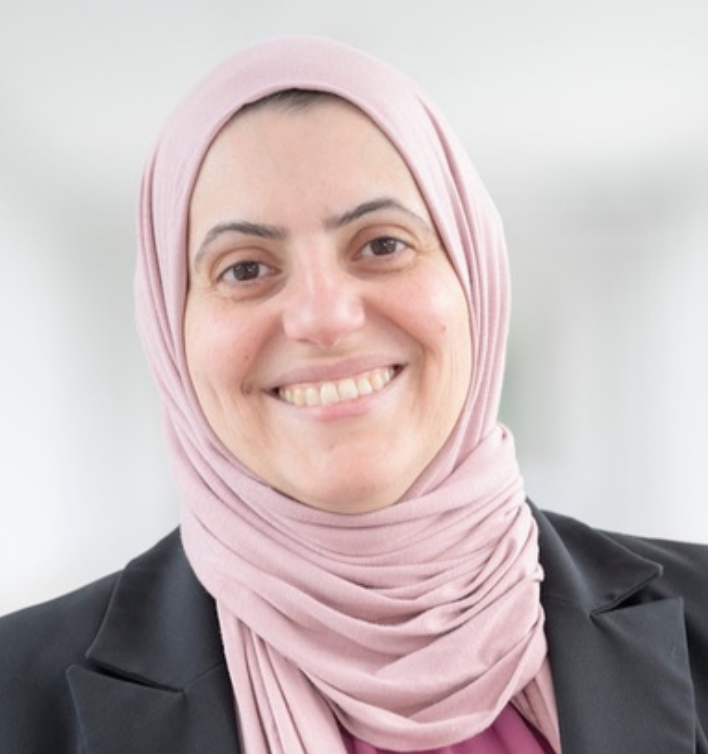
Nidhal Carla

Dr. Nidhal Carla Bouaynaya

Associate Vice President for Artificial Intelligence; Professor of Electrical and Computer Engineering, Rowan University

Seminar: Towards Self-Aware Artificial Intelligence - Lessons Learned from Optimal Estimation Theory
Date: Wednesday, January 21st
Time: 11:15 AM - 12:15 PM
Location: Q 107

  • Dr. Bouaynaya holds a Ph.D. in Electrical and Computer Engineering and an M.S. in Pure Mathematics from the University of Illinois at Chicago. Her research focuses on Machine Learning and AI. She co-authored more than 120 refereed journal articles, book chapters, and conference proceedings. Dr. Bouaynaya has won numerous Best Paper Awards. She is an entrepreneur, the co-founder of MRIMATH, LLC, an FDA-cleared startup that leverages artificial intelligence to enhance patient oncology outcomes and treatment responses, and the founder of Deep AI Solutions, LLC, an IBM-protégé startup that provides trustworthy machine learning solutions to government and industry clients.
  • This talk will advance Bayesian deep learning methods that are able to quantify their uncertainty in the decision and self-assess their performance, are robust to adversarial attacks, and can even expose an attack from ambient noise. This talk will establish the theoretical and algorithmic foundations of uncertainty or belief propagation through complex deep learning models by adopting powerful frameworks from optimal estimation problems in non-linear and non-Gaussian dynamical systems. We introduce Tensor Normal distributions as priors over the network parameters and derive a first-order Taylor series mean-covariance propagation framework. 

Billyde Brown

Dr. Billyde Brown

Senior Research Engineer, Georgia Tech

Seminar: Nanofabrication for Enhanced Energy Storage, Heat Transfer, and Biosensor Performance
Date: Wednesday, January 28th
Time: 11:15 AM - 12:15 PM
Location: Q 107

  • Dr. Billyde Brown is a Senior ResearchEngineer and External User Outreach Manager at the Georgia Tech Institute for Matter and Systems (IMS), the largest interdisciplinary research institute with the most extensive shared user facilities at the Georgia Institute of Technology. Dr. Brown’s primaryrole is to provide awareness of world-class nano-/microfabrication class 100 cleanroom, class 1000 biocleanroom, and materials characterization tools and facilities through outreach activities. Dr.Brown is a co-investigator on the NIH-funded Atlanta Center for Microsystems-Engineered Point-of-Care Technologies (ACME-POCT) led by Georgia Tech and Emory. Dr. Brown has strong expertise in several technical areas including electrochemical biosensors, nanomaterial synthesis and characterization, thin-film additive manufacturing, and electrochemical energy storage. 
  • Dr. Brown will give an overview of the Institute for Matter and Systems (IMS) core facilities and how to access them, as well as present some recent case study examples of biosensor and heat transfer research and development projects from Georgia based university spinoff companies who have leveraged IMS tools. Further Dr. Brown will discuss his own recent research in energy storage and biosensors that extensively used IMS tools and facilities. These include the following projects: (1) Titanium oxide and nitride atomic layer deposition (ALD) coatings on carbon nanomaterials and nanoscale 3D printed polymer templates for microscale energy storage. (2) Prototype development of a wireless biosensor system for real-time monitoring of critical quality attributes in cell expansion bioreactors.

Jeffrey McCutcheon

Dr. Jeffrey McCutcheon

GE Professor of Advanced Manufacturing Department of Chemical & Biomolecular Engineering, University of Connecticut

Seminar: New Membrane Manufacturing
Approaches for Next Generation
Separations
Date: Wednesday, March 4th, 2026
Time: 11:15 AM - 12:15 AM
Location: Q 107

  • Dr. Jeffrey McCutcheon currently serves as the director of the Connecticut Center for Applied Separation Technologies (CCAST). For over 20 years, he has pioneered work in membrane-based separations. He has published over 130 refereed publications and has several issued patents. He has received numerous awards including most recently the AIChE Separation Division FRI/Neil Yeoman Innovation Award, the North American Membrane Society Permeance Prize, Paul L. Busch Award from the Water Research Foundation
  • The thin film composite (TFC) membrane is a versatile membrane design platform that enables the use of ultra-thin membranes. These membranes are made through interfacial polymerization, which is a process developed over 40 years ago. In this talk, we provide context for why this process has continued to dominate TFC membrane manufacturing and offer a new manufacturing innovation, electrohydrodynamic spray, that may enable the expansion of TFC membrane chemistries to well beyond those currently offered commercially. This expanded library of chemistries will other separation processes currently limited to a small family of materials options and performance limitations.

Dr. Duminda Wijesekera

Dr. Duminda Wijesekera

Director, Mason Innovation Labs; Professor, Department of Cyber Security Engineering, George Mason University

Seminar: Trustable 5G/NextG for Applications
Date: Wednesday, April 8th Time: 11:15 AM - 12:15 AM
Location: Q 315

  • Duminda Wijesekera’s current research addresses multiple areas;

    (1) 5G technology and its applications including air, ground, and satellite communications.

    (2) Security and safety of cyber-physical systems. Research in this area includes the safety and security of Intelligent Transportation Systems (ITS) that include trains, aircraft, and connected/automated automobiles.

    (3) Secure Manufacturing Automation and (4) Applying formal reasoning for safety and cyber security.

  • 5G/Next G systems along with AI/ML have been promoted for many applications systems for transportation, healthcare, national security, power transfer automation, border patrol etc. This talk will address some security issues internal to the 5G/NextG systems resulting from the virtualized nature of the system internals and proposed some solutions to address them using hardware-based trust, and how this system can be extended to provide zero-trust architecture. The second half of the talk will address solutions that have been proposed for transportation, power transfer automation and border protection.

Dr. Zhengxiong Li

Dr. Zhengxiong Li

Assistant Professor of Computer Science and Engineering, University of Colorado, Denver

Seminar: Exploring Wireless and Mobile Security for the IoT and the Future Cyber World
Date: Wednesday, April 15th
Time: 11:15 AM - 12:15 PM
Location: Q 107

  • Dr. Zhengxiong’s research team focuses on exploring, designing, implementing, and evaluating novel intelligent sensing and computing systems for high-impact real-world applications in IoT security. Together with his students and collaborators, he has published over 60 papers in highly selective venues and received four institutional research awards/honors and seven best paper/article award nominations. His research has been featured in various high-impact media outlets and has provided valuable insights to local government and law enforcement agencies. In addition to his cutting-edge research, Dr. Li is actively engaged in the mobile and security research and open-source community.
  • The Internet of Things (IoT) is advancing rapidly, driven by trends toward greater intelligence and automation. However, these emerging systems—including advanced wireless sensing, biometric systems, and autonomous drones—are increasingly targeted by sophisticated attackers. The full scope of potential attacks against these systems
    remains largely unexplored, and their underlying mechanisms are complex and unique.

    As a result, novel threats are emerging that traditional security approaches cannot easily
    address. In this talk, I will present our latest research efforts to tackle these challenges across three critical areas: wireless sensing security, biometrics security, and security of emerging systems. I will conclude by sharing insights into the evolving landscape of the cyber world and its future security implications.


Spring 2025 Research Seminars (Archive)

  • January 22, 2025 — Dr. Roy Hartfield (Auburn University)
  • January 29, 2025 — Dr. Junaid Ahmed Zubairi (SUNY Fredonia)
  • February 12, 2025 — CSM + SPCEET Research Symposium
  • February 26, 2025 — Dr. Ilia Ivanov (Oak Ridge National Lab)
  • March 5, 2025 — Dr. Yusuf Mehta (Rowan University)
  • April 9, 2025 — Dr. Tripp Shealy (Virginia Tech)
  • April 16, 2025 — Dr. Doug Crawford (Idaho National Lab)

Fall 2025 Research Seminars (Archive)

  • August 20, 2025 — Dr. Ashwin Ashok (Georgia State University)
  • September 9–10, 2025 — CYPHR Workshop and Symposium
  • September 19, 2025 — MOVE Center Regional Symposium
  • September 24, 2025 — Dr. Ahmad Harb (German Jordanian University)
  • October 1, 2025 — SPCEET Author’s Expo
  • October 29, 2025 — Drs. Lizhi Wang and Guiping Hu (George Mason University)
  • November 19, 2025 — Dr. Hai Dong (Emory University)
  • November 19, 2025 — SPCEET and Bagwell College Collaborative Symposium