


KENNESAW, Ga. | Nov 16, 2026
Three teammates met in the Executive MBA program at Kennesaw State. A decade later, their group text still lights up every morning. Their friendship led Kevin L. Williams to become a mentor to Kennesaw State students, and it's a big part of why he received this year's Five in Flight Societal Impact Award.
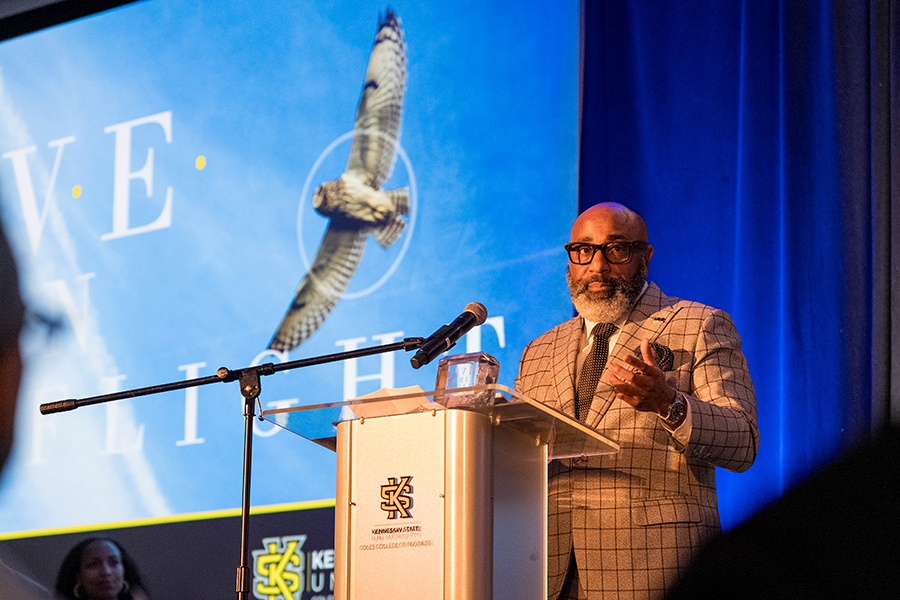
"This is kicking my butt right here."
That was Kevin L. Williams' answer in 2016 when his Executive MBA teammate Joe Handy asked him to take on one more commitment. Williams was a year from graduating from Kennesaw State University's Michael J. Coles College of Business, working full time as an engineer and spending one weekend a month in class. Joining 100 Black Men of North Metro Atlanta, the mentoring organization Handy belonged to, could surely wait until after graduation.
Handy and their third teammate, Ricardo Clesca, didn't see it that way.
"No, no, just do it, Kevin," Williams recalled them saying. "We got you. We're gonna do it together."
Williams said yes, and a decade later he is still saying it.
The three teammates are still talking, too. They call their group text JKR, for Joe, Kevin, and Ricardo, and every morning it starts the same way.
"Wake up, say good morning, whatever it is, whatever's going on," Williams said. "We will share ideas. We will bounce ideas off of each other."
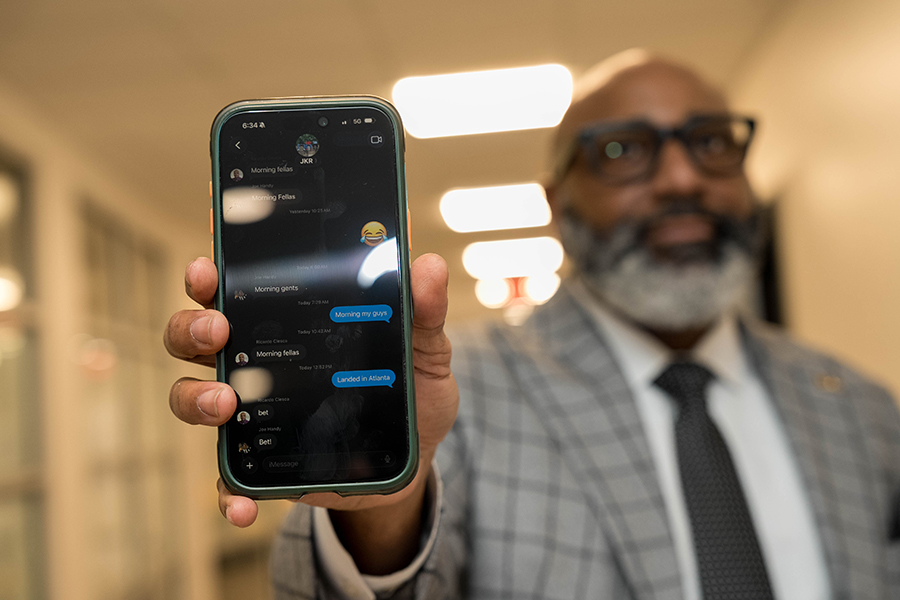
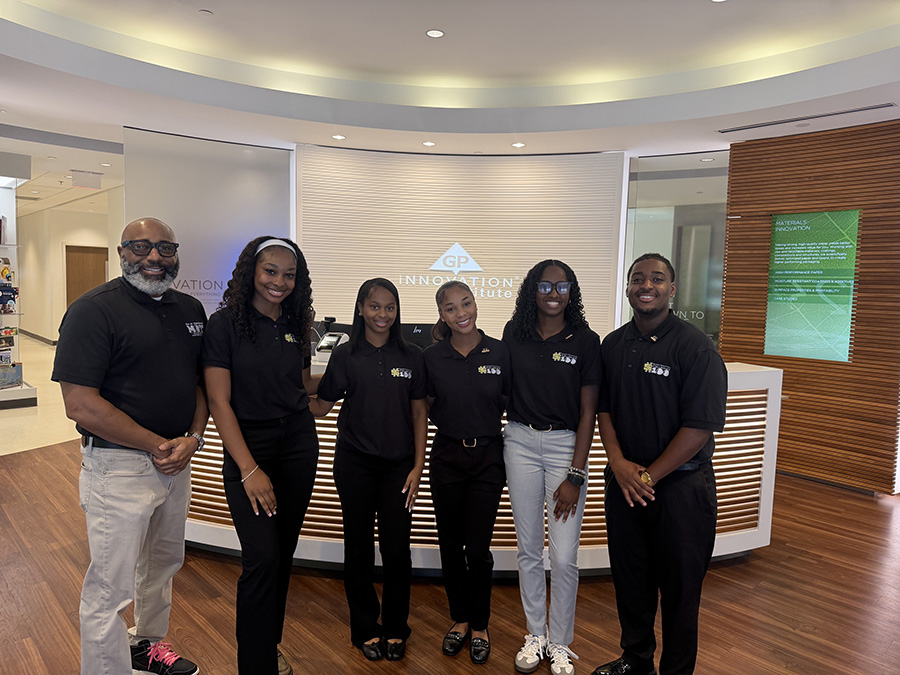
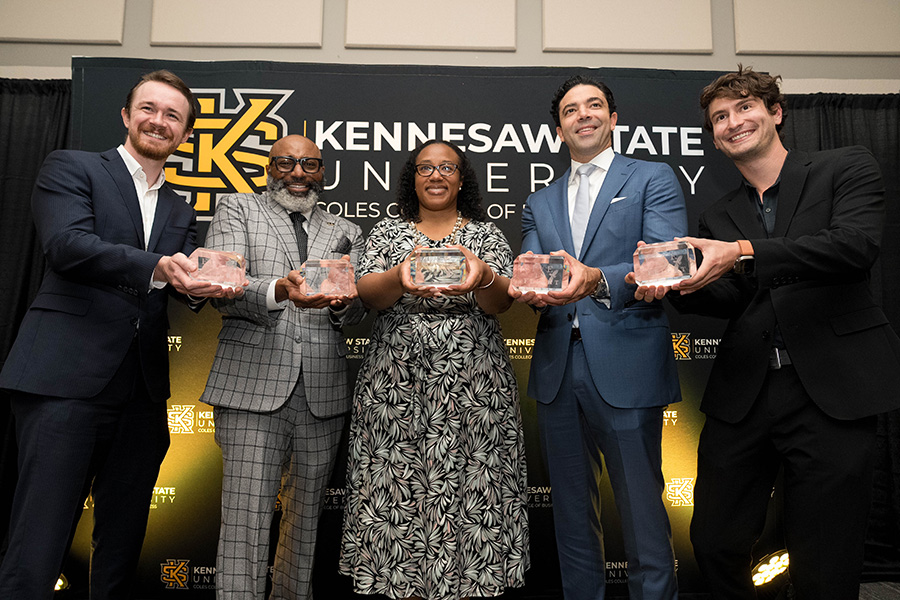
That friendship, and the yes it pushed him toward, explain much of why Williams received the Societal Impact Award on Oct. 29 at Five in Flight, Coles College's celebration of five standout alumni. A sales leader at Schneider Electric, Williams now serves as a member at large of the North Metro Atlanta chapter of 100 Black Men, mentors young men ages 11 to 18, and advises the Kennesaw State Collegiate 100, a student chapter of the organization he helped build. One of the students he guided there now flies airplanes. Another now advises the chapter.
Williams’ advice to those students comes straight from JKR.
"You don't need to know everything," he said. "But as long as your networking is good and you've got someone in your circle that you can lean on to get the answers you need, that's very helpful."
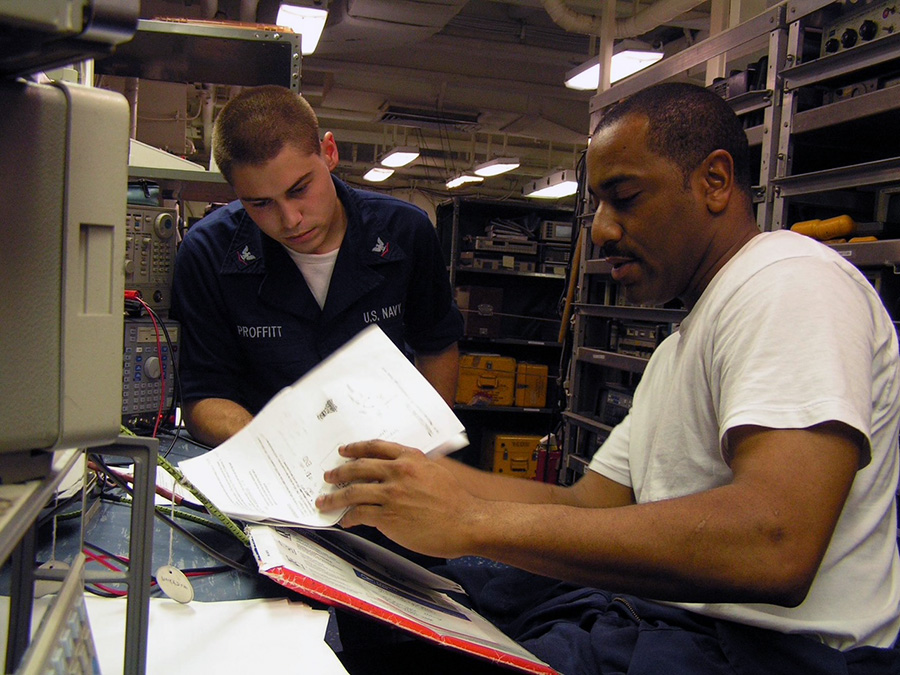
Williams learned the value of a dependable team long before he came to Coles. As a Navy aviation electronics technician aboard the aircraft carrier USS John F. Kennedy, he worked in the calibration lab, keeping the equipment that tested jet engines accurate enough to bring pilots home safely. Far from shore, the only help was the people beside him.
"It's just us out there," he said. "It's not like I'm going to outsource or get a third party."
That instinct followed him into civilian life. He moved from building automation at Johnson Controls to the Atlanta district office of ABB Drives and Baldor Motors, where he grew from technician to application engineer and began coaching the sales team. By 2015, he was leading people, but lacked the business training to back him up. He told his district manager, Chris Sarka, that he wanted to go back to school, and Sarka encouraged him, telling him that an education "is something that no one can ever take from you."
A scholarship Williams had earned in the Navy covered the cost. Joining the Navy had been his father's idea in the first place.
The Executive MBA's once-a-month weekend residencies meant he never had to step away from his job, but they also meant the work never stopped. On residency weekends, he spent Monday through Friday at ABB, Saturday and Sunday in class, and was back at his desk Monday morning.
"Your whole weekend was gone," he said. "But I always enjoyed the weekends because I will always pick up something."
Sometimes what he picked up went straight to work. After a weekend breaking down Boeing's supply chain, with each student tracing one link from parts order to finished product, Williams saw his own orders differently. When a large order for medium-voltage drives landed at ABB, he understood everything that had to happen upstream and why high-value equipment takes the time it takes.
The classmates mattered as much as the cases. His cohort brought experience from education, entertainment, medicine, and industry, and every project became a lesson in how other fields solve problems.
"Not only did I learn from the teachers," Williams said, "I've also learned from my peers and how they go about it in the different industries."
Three of those peers became a project team. Handy, Clesca, and Williams met at least once a week between residencies to keep their work on track, and by the time they graduated in 2017, the team had become something more lasting than a study group.
Williams already knew what one advocate could do for a career. In the Navy, Chief Andreas pushed him toward one qualification after another, and, in the third quarter of 2004, Williams was named Sailor of the Quarter on a ship of about 5,000. Only later did he understand how much his chief had done to make that happen.
"He was my sponsor," Williams said. "He was talking good about me behind closed doors that I wasn't even privy to."
Today he plays that role for students. The motto of 100 Black Men of America is "What they see is what they'll be," and Williams wants the young people he mentors to watch him keep climbing so they know they can, too.
"What drives me is I want to break ceilings," he said.
Inside 100 Black Men, Williams found a use for everything his own circle had taught him, and before long he brought it back to campus.
Working with a fellow chapter member, an engineer who came through Southern Polytechnic State University before it joined KSU, he helped build the Kennesaw State Collegiate 100 and set it up to run the way a business does. Students elect an executive board with a president, vice presidents, a treasurer, a secretary, and a lead for each of the organization's four pillars: mentoring, education, health and wellness, and economic empowerment.
The students set the agenda, and Williams finds the people to deliver it. When the board said members wanted to sharpen their interview skills, he recruited mentors from the chapter to coach them, and 40 students showed up dressed for the job.
He is just as willing to send a student to someone else when he isn't the right guide.
"That's not my background, but I have someone in my network," he said. "As they say, I got a guy or a gal that can help you succeed where you want to be."
Williams still remembers meeting the chapter's president, a student who arrived with more ideas than one person could carry out.
"She was just bouncing with ideas," he said. "Let's slow it down. Let's bring it together."
He had no interest in dimming that energy, only in pointing it somewhere useful. "Just had to harness that energy in the right direction," he said, "and she did."
She now flies airplanes. In February, she returned for the chapter's career day to show current members how she got there, and she still texts Williams when she hears about opportunities.
Her vice president found a different way back. After graduating, he joined the Emerging 100, the organization's network for young professionals, and today he serves as an advisor to the chapter himself.
Two teammates once refused to let Williams wait. Now the students he pulled in are pulling in the next ones.
Not every lesson lands the first time. One mentee ignored Williams' advice, watched it backfire, and came back to admit it: "Yeah, you're right, Mr. Williams."
That is why Williams believes mentoring only works when it's steady.
"You're not gonna change a life if you only see a kid or a young adult once a quarter," he said. "They need to have that consistency. They need to see that you care."
Much of the work, he said, is listening, because "sometimes these young adults, they just want to be heard." When a younger mentee starts to slip, Williams and the other mentors share the load, one calling on Tuesday and another on Thursday, so a week never passes without someone checking in.
A decade ago, two teammates told Williams they had him. Today, Kennesaw State students can say the same about him.
"The more that I can pour out on the next generation," he said, "the more someone can pour into me."
Story by Andy Mann
Troy Rice bet on himself at Kennesaw State. He came back as a CEO to bet on its students
Why Coles finance graduate Eli Hogan tells students to sit down and have the coffee
Kennesaw State students take on childhood hunger as finalists in national competition
Students Shine at Fifth Annual TK Elevator Pitch Competition