KENNESAW, Ga. | Nov 11, 2026
He helps oversee roughly $14 billion in public pension assets, holds CFA and CAIA charters, and is in his fifth year coaching Kennesaw State's CFA Research Challenge team. The advice he gives students is what he had to learn on his own.
As a Kennesaw State University student, Eli Hogan kept a spreadsheet. Down one column ran every finance job he applied for. Down the next ran each company’s response.
"I kept track of who accepted me or who took me and who rejected," Hogan said. "It was a very long list, and there were a lot of rejections."
The spreadsheet never had a column for the thing he now tells every student to do first: ask someone in the business for 20 minutes to share a cup of coffee.
"I was very scared of rejection," he said. "I was very scared of bothering people."
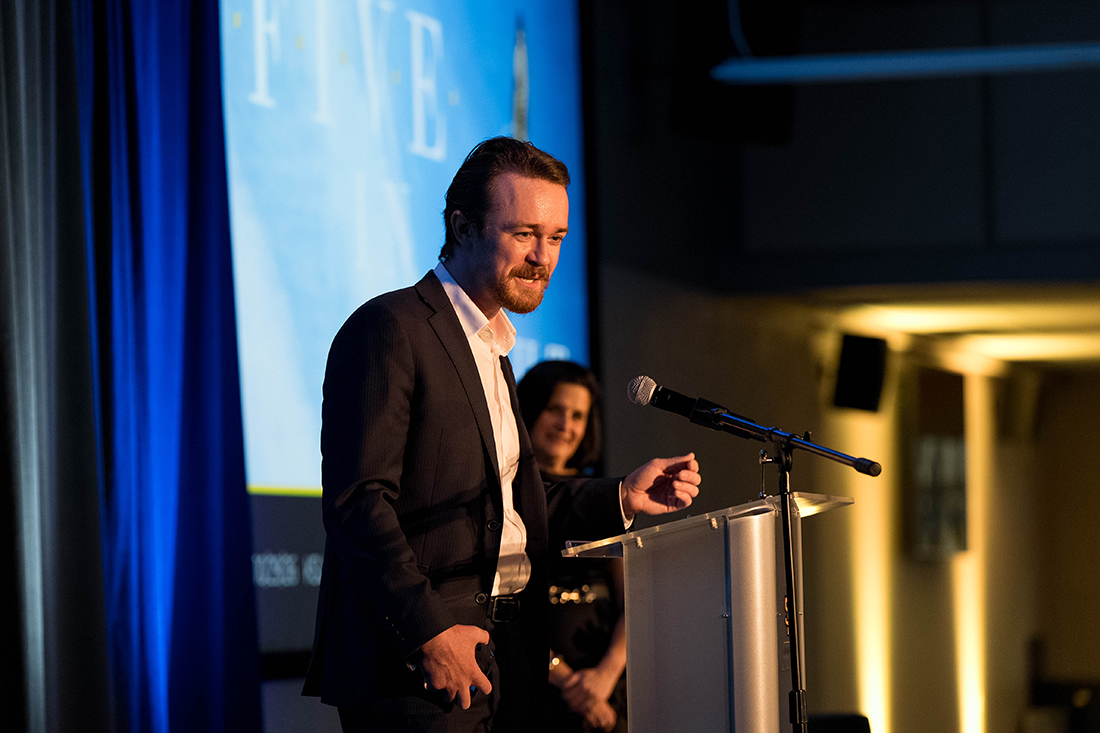
Eight years after graduating with his BBA in finance, Hogan is a portfolio manager on the Active Credit team at the Florida State Board of Administration, where he helps oversee roughly $14 billion in public and private credit for the state's pension system. He holds both the Chartered Financial Analyst and Chartered Alternative Investment Analyst designations. He is in his fifth year as the industry mentor for Kennesaw State's Student Managed Investment Fund as it competes in the CFA Institute Research Challenge. On Oct. 29, the Michael J. Coles College of Business presented him with the G.O.L.D. Award, for a Graduate of the Last Decade, at Five in Flight, its alumni awards.
When students ask him how to get into investment management from Kennesaw State, he tells them what the spreadsheet taught him.
"There are a lot of talented people, but there's not really an established pipeline," he said. "The only thing that you can do is just pound the pavement and knock on doors, so to speak."
Hogan grew up in a military family about 30 minutes north of campus. His father served long tours in the Middle East while his mother stayed home. Nobody in the house worked in finance, and he didn't plan to either.
"I originally wanted to be a doctor,” he said, “and I have a terrible, terrible fear of needles and blood. I realized that that was not going to go away.”
Although he had the grades to go farther from home for college, he chose not to. He had dealt with a serious health problem in high school and wanted family support within reach.
Hogan switched to business in his first year. He was drawn to finance because it suited a habit he already had, which was reading about economics for fun.
The real turn came in the spring of his sophomore year, when he joined the Student Managed Investment Fund, where students invest real money from an account Henssler Financial seeded in 2010. The first time Hogan walked into the Henssler Trading Room, he felt out of his depth.
"These juniors and seniors, they know so much," he said. "They've done these internships. They're so much more serious than me."
Those juniors and seniors are his friends now. Some of his favorite college memories are late nights in that room, working through pitches until midnight.
"I love being in the room with other smart people," he said. "I'm so corny about it. I'm a big iron sharpens iron guy."
His first internship was at Henssler Financial, with nothing on his resume yet to prove he could do the work. The firm took him anyway, and its chief investment officer, Troy Harmon, became a valuable mentor that Hogan still reaches out to today.
A fellow Henssler intern, who was also president of SMIF, invited Hogan to join the fund's first team to compete in the CFA Institute Research Challenge Southern Classic the following year. Hogan accepted the offer.
The team researched Delta Air Lines, building a report and a pitch over long nights in the trading room. They got the final draft to their faculty coach, finance faculty member Vic Wakeling, about 10 minutes before the deadline.
The night before the Southern Classic finals, in February 2017, Hogan was still rehearsing his part at midnight and getting worse with every pass. He decided he was "either gonna get it or I'm not gonna get it," and went to bed.
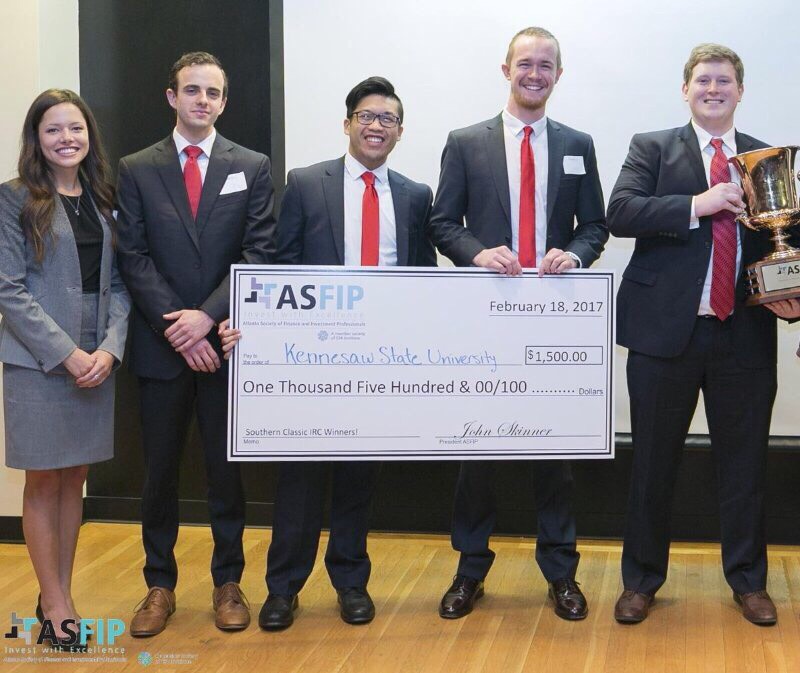
He had it. Partway through the presentation, he knew the pitch was landing. That day, in Kennesaw State's first year in the competition, the team beat Clemson and the University of Georgia and went on to the North American finals in Seattle.
The lesson he took from it is one he still gives students before a big presentation.
"There is such thing as being overprepared, and you just got to give your brain a rest," he said.
Hogan's most repeated piece of career advice is about sequence.
"You should always start out more technical because you can always go less technical," he said.
A graduate who starts in a client-facing role, he said, will find it hard five years later to move into picking securities, because everyone there has a five-year head start. Going the other direction is easy.
He built his own career the same way. He joined J.P. Morgan Private Bank in Atlanta two months after graduating magna cum laude in 2018. A year later he moved to UPS, where a small in-house team managed the pension for the company's drivers and employees, and in early 2021 UPS named him a director of investments for its international plans.
"They saw that I was competent and capable of doing more, and they trusted me to do more," he said.
When UPS handed management of its North American pension plans to Goldman Sachs Asset Management in 2024, Hogan moved with the assets. Each step took him deeper into the technical work, and the next would take him into private credit, where loans are negotiated one at a time rather than traded in bulk.
"It's important to move in the direction of more complexity," he said.
In 2025, six months into the Goldman job, Hogan was diagnosed with cancer and forced to take six months off work for treatment. He had been sick before, and he did not intend to let it decide where he ended up.
"If I can control this outcome, I want to control this outcome," he said.
So he ordered the study materials for the CAIA exam, the second of his two charters, and worked through them between treatments.
"I'm not the kind of person that can just allow themselves to say, 'I'm going to write this year off and I'm not going to get anything out of this year,'" he said. "Better do something."
Even with that drive, there was a stretch when he couldn't. He was, he said, "kind of feeling sorry for myself and kind of just sitting around."
His father, who had never accepted a B-plus from him without asking why it wasn't an A, pushed him to start a new certification to keep his mind occupied.
"I think that he just knew I needed to do something just to keep me moving forward and progressing," Hogan said.
With his treatment finishing in mid-September 2025, he sat for the exam later that month. The CAIA Association made him a charterholder in November.
The advice he gives when a student's plans fall through sounds like his father's. A senior whose internship ended without a job offer came to him this fall.
"There's no magic bullet," Hogan said he told him. "You just gotta get through it."
Hogan has mentored at least four young graduates one on one and is a regular guest for SMIF and the Coles College Leadership Scholars Program, which he joined as a student.
One engineering major stepped outside his field to join the fund and was leading it by the time he graduated in 2025. The first resume he sent Hogan had errors in it, and Hogan told him so.
"You could just tell he was a very hard worker," Hogan said. "He was very eager."
That graduate now works for Wells Fargo in New York.
The advice he offers to sophomores without any finance connections is the exact opposite of what he personally did at 20: go and talk to people. Kennesaw State sits half an hour from Atlanta's banks and investment firms, and as a student he never used that.
"Hey man, can I come down and buy you coffee? 20 minutes of your time. I just want to learn about what you do," Hogan said. "People want to help people."
"It's going to only become more important for students to be willing to reach out and put themselves out there, and sit down and have the coffee," he said.
The same belief is why he still coaches the Research Challenge team, where Coles students analyze a public company and defend their findings before industry judges. Kennesaw State teams have won the Southern Classic three times: in 2017, 2020, and 2023.
"That's why I help out with it now," he said. "I do feel like it was so great for me."
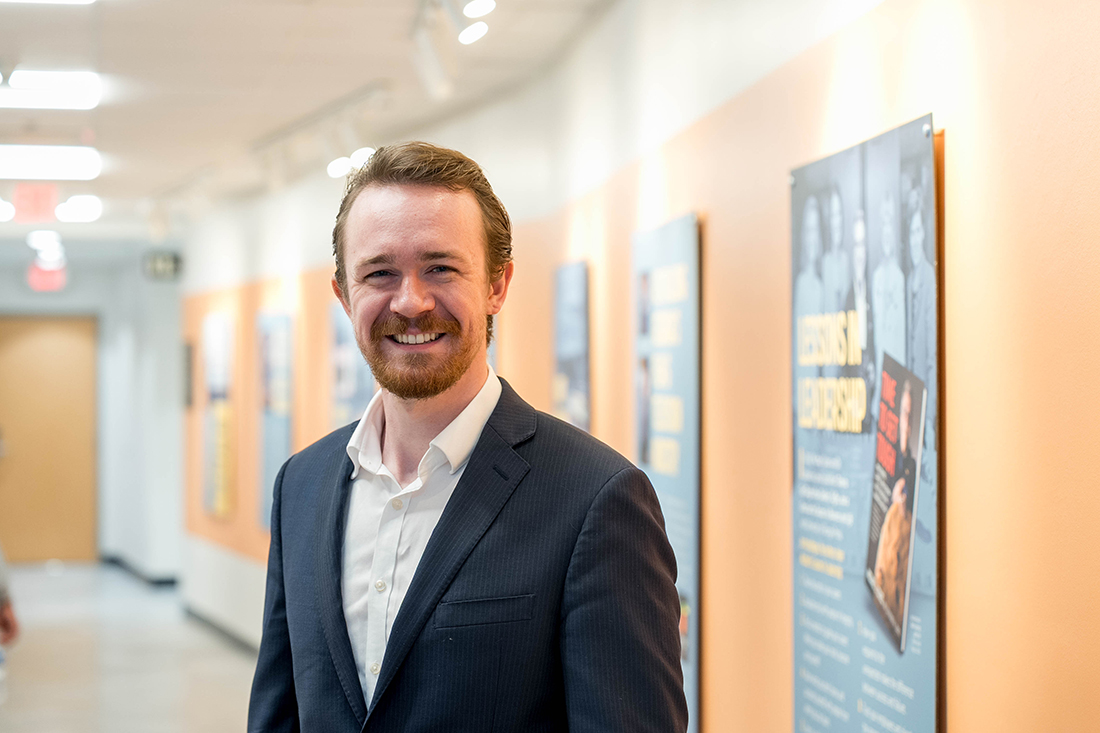
Hogan now works for the Florida State Board of Administration, which invests on behalf of the state's teachers and other public employees. It was a chance to do the more complex work he wanted, with a team willing to help him learn it.
It also put him back to work for the same kind of beneficiary he had served at UPS, where the money belonged to truck drivers. He grew up in a single-income home where everything was bought on sale, and he identifies with the people at the far end of a pension.
"I understand what it's like to be in a position where you have to think about every dollar," he said.
Asked why that matters to him, he kept it short.
"Because they're real people," he said.
Story by Andy Mann