KENNESAW, Ga. | Sep 11, 2026
40 Years Forward
Looking back with gratitude and forward with purpose
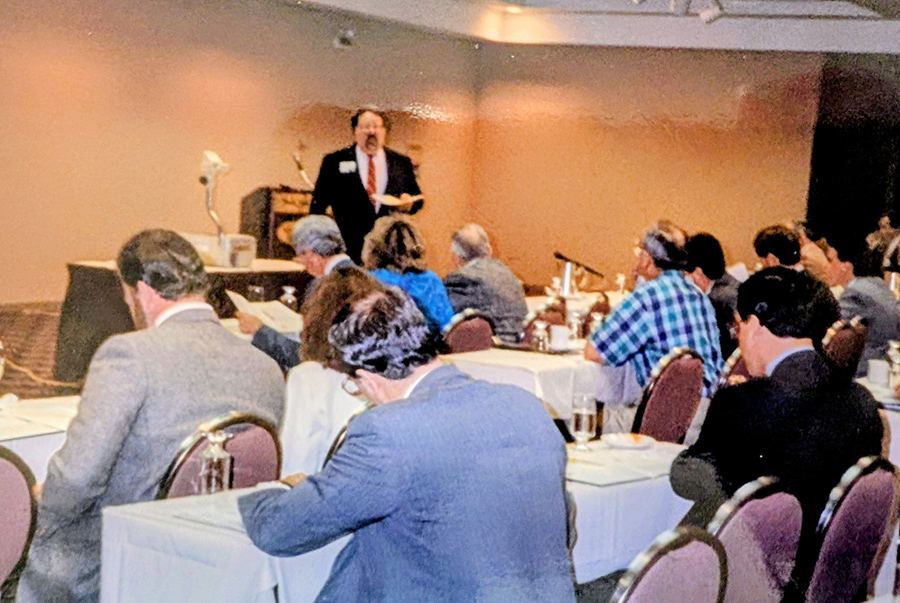
Forty years ago, Craig Aronoff founded the Family Enterprise Center at KSU during a time when few resources existed specifically for family businesses. His foresight and expertise set the Center on a path of meaningful education, connection, and support that continues today.
From that strong foundation, the Center has continued to evolve alongside the families we serve. Joe Astrachan followed Craig as director, leaning into our university roots and creating opportunities for family business leaders to learn from leading research and one another. Gaia Marchisio later took the helm, deepening that work through the Family Business Clinic and working alongside families as they navigated complex challenges. We are grateful to them and others who came before us, building this community and championing family businesses along the way.
Each chapter has looked a little different, but they all reflected what family businesses needed at that moment. As we celebrate our 40th anniversary, we’re thinking about what family business leaders need from us now, as well as what the next 40 years should look like.
For us, the answer starts with community.
We want to meet family businesses where they are, creating opportunities to learn from research and experts, but just as importantly, from one another. This month, we’ll bring that community together at the Family Business Forum—the program that launched the Center—for a day focused on Navigating What’s Next in growth, ownership, and leadership.
But when the Forum ends, the conversations won’t. Through facilitated peer groups across metro Atlanta, we’re bringing the community closer to where our members live and work, creating trusted spaces for family business leaders to stay connected throughout the year.
That’s 40 Forward: honoring what has been built while continuing to evolve around the families we serve.
All the best,
Director, Family Enterprise Center at KSU
New Research For Family Businesses
Your Family Business Has a Trust Advantage. Are You Using It?
Jenny Dinnen & Katie Rucker, Next Gen Collaborative
Family businesses have something many organizations spend years trying to build: trust.
In our 2026 Public Perception of Family Businesses Study, we surveyed more than 1,000 U.S. adults to understand what people really think, feel, and understand about family businesses.
One finding immediately stood out: 70% of Americans identify family businesses as the most trustworthy and transparent when compared with private businesses and public companies. That's a tremendous advantage, but our research also uncovered an important challenge: some of what makes family businesses remarkable isn't always visible from the outside.
An interesting distinction is that people who have worked inside family businesses are more likely to recognize their innovation, creativity, ambition and even the complexity involved in succession, while those without that firsthand experience often don’t see these valuable traits.

We call this the visibility gap and it raises a question worth asking inside your own business: What is true about your family business that someone on the outside would have no way of knowing?
Maybe it's:
These stories matter. Especially as younger generations of customers, employees, and future leaders form their own perceptions of what family business means.
Legacy In Motion
Trust is Built Into the Hand-Off
Turning decades of earned trust into confidence in the future
A leadership transition changes more than who makes decisions. It can affect the trust a family business has built with employees, customers, and its community.
As we move deeper into the Silver Tsunami, the wave of baby boomer business owners preparing to retire, more businesses face changes in leadership or ownership. Families must consider not only what will be transferred, but how trust earned over decades will carry forward.
Trust does not automatically transfer with a title or ownership stake. It is strengthened when the next generation understands how it was earned and current leaders create space for successors to build relationships of their own.

For outgoing leaders, this means sharing more than operational knowledge. Successors need to understand the promises the business has made, the relationships that shaped it, and the values behind pivotal decisions. Introductions to longtime customers and partners provide continuity, but new leaders must ultimately form genuine connections of their own.
Incoming leaders have an important balance to strike. Honoring what came before does not require preserving every process. It means recognizing what is essential to the business’s identity while identifying where new ideas can make it stronger.
Families can support this process by asking questions early:
The strongest hand-offs connect the credibility of the past with confidence in the future. Approached with intention, trust becomes more than something a business has earned. It becomes part of the legacy the next leader is prepared to carry forward.
Want to learn more? New Family Business CEOs Must Claim the Seat, Not Just Inherit the Title