KENNESAW, Ga. | Jul 1, 2026
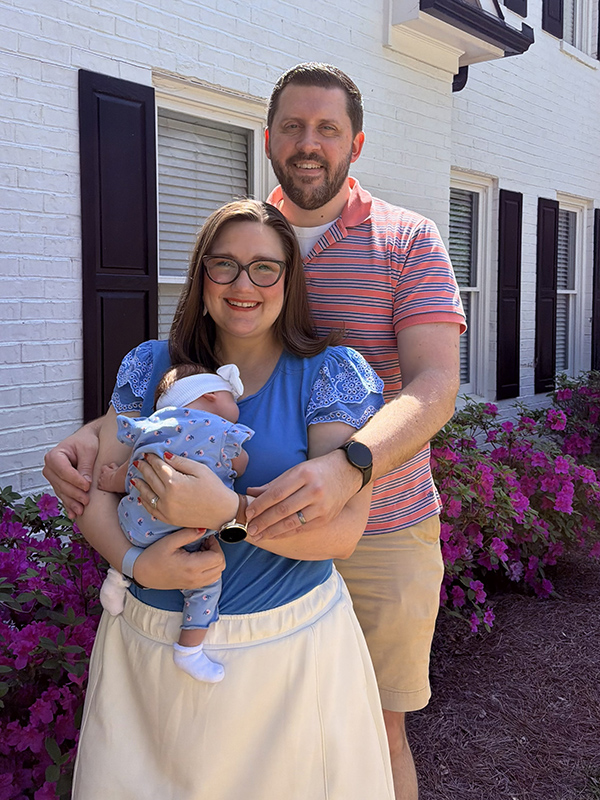
Welcoming a Child Changes the Way We Measure Time
A few months ago my husband and I welcomed our first child into our family. Watching my daughter discover the world has reminded me that the future isn’t just something we plan for; it’s something we’re already shaping.
That perspective stayed with me as I returned to the Family Enterprise Center because, in many ways, it’s exactly how family businesses think. While many organizations measure success one quarter at a time, family businesses measure it in generations. They make decisions for today’s business, but also for the children, employees, and communities who will inherit the legacy they’re building.
During my first few weeks back from parental leave, I expected to spend time catching up. Instead, I’ve found myself slowing down. I’ve paid closer attention to conversations and listened deeper to the stories our members share. It helped me recenter myself and my mission as I returned to work: to help families build stronger businesses, stronger relationships, and stronger futures.
As I settle back in, I’m looking forward to reconnecting with you all. Whether we’ve worked together for years or haven’t yet formally met, I’d love to hear about what’s happening in your family business, opportunities you’re excited about, and how the Center can support your journey.
Welcoming my daughter has changed the way I measure time and deepened my appreciation for the families we have the privilege to serve every day. Families who are building successful businesses and creating legacies that will outlast them. After all, the most meaningful legacies—both at home and in business—are built one generation at a time.
All the best,
Director, Family Enterprise Center at KSU
From Playmates to Paychecks
When Childhood Relationships Become Professional Ones
Long before there were job titles, there were family vacations, backyard games, and holiday traditions. In many family businesses, the people you now supervise are the same siblings or cousins you grew up climbing trees with at Grandma's house.
As children, those relationships were built on love, trust, and shared experiences, not performance reviews, accountability, or difficult decisions. But as the business grows, so do the roles people play. A sibling may disagree with your leadership. The cousin who was once your best friend may now report to you, and you may find yourself making decisions that affect their careers or financial well-being.

That can bring feelings of guilt, uncertainty, or frustration. Many family business leaders assume they should set those emotions aside in order to "be professional." But emotions aren't a sign that you're doing something wrong. They're a natural response to caring deeply about both your family and your business. The goal isn't to remove emotion from the workplace. It's to recognize it, acknowledge it, and ensure it doesn't become the only factor driving important decisions.
Strong family businesses don't succeed because they avoid emotion. They succeed because they learn to navigate it together. Leading with both head and heart helps strengthen the business while honoring the relationships that make it possible. Here are a few practices to consider:
Growing up together gives family businesses a unique advantage: deep trust, shared history, and genuine care for one another. Those same qualities also make the work more emotional. Acknowledging those emotions doesn't weaken the business. It strengthens the trust, empathy, and resilience that allow both the family and the company to thrive.
Want to learn more? Managing Family Dynamics in Family Business: A Complete Guide
Leading in a Vacuum
Why Family Business Leadership Can Feel Lonely
Leadership can be isolating in any business, but in a family business, that isolation can sometimes run even deeper.
As businesses grow, so do the expectations placed on their leaders. Decisions are rarely just strategic. They can affect ownership, family relationships, employee livelihoods, and the legacy generations have worked to build. At the same time, there are few people with whom leaders can speak candidly. Employees look to you for answers. Family members may have personal interests in the outcome. Even trusted advisors can offer expertise without fully understanding the emotional weight behind the decision.
It's no surprise that many family business leaders feel like they're carrying the responsibility alone.

The irony is that the more successful a family business becomes, the fewer peers many leaders feel they have. Friends outside the business may not understand the complexities of balancing family expectations with business realities, while discussing sensitive issues within the company can create unintended tension.
The good news is that loneliness doesn't have to be part of leadership. Intentionally building a support system beyond your own organization can provide perspective, encouragement, and reassurance. Consider making time to:
No one can (or should) carry the emotional weight of family business leadership alone. When leaders connect with others who understand the unique intersection of family, ownership, and business, they gain more than advice. They gain perspective, encouragement, accountability, and reassurance that their challenges are shared by others walking a similar path. Sometimes, simply hearing, "I've been there," is enough to replace isolation with confidence and remind you that you don't have to lead in a vacuum.
Want to learn more? The Family Enterprise Center at KSU offers monthly peer groups in several locations around metro Atlanta. Facilitated by family business experts, you'll find guidance, support, and community. Learn more and join.