


KENNESAW, Ga. | Jun 15, 2026
Master Craftsman student Corryn Anderson transforms research, craftsmanship and personal expression into a public installation at Smith-Gilbert Gardens.
When Corryn Anderson enrolled in Kennesaw State University's Master Craftsman Program – part of the Robert S. Geer Family College of the Arts – they expected to learn new fabrication skills. What they didn't expect was the opportunity to create a large-scale public artwork that would invite visitors to reflect on memory, resilience and the power of community.
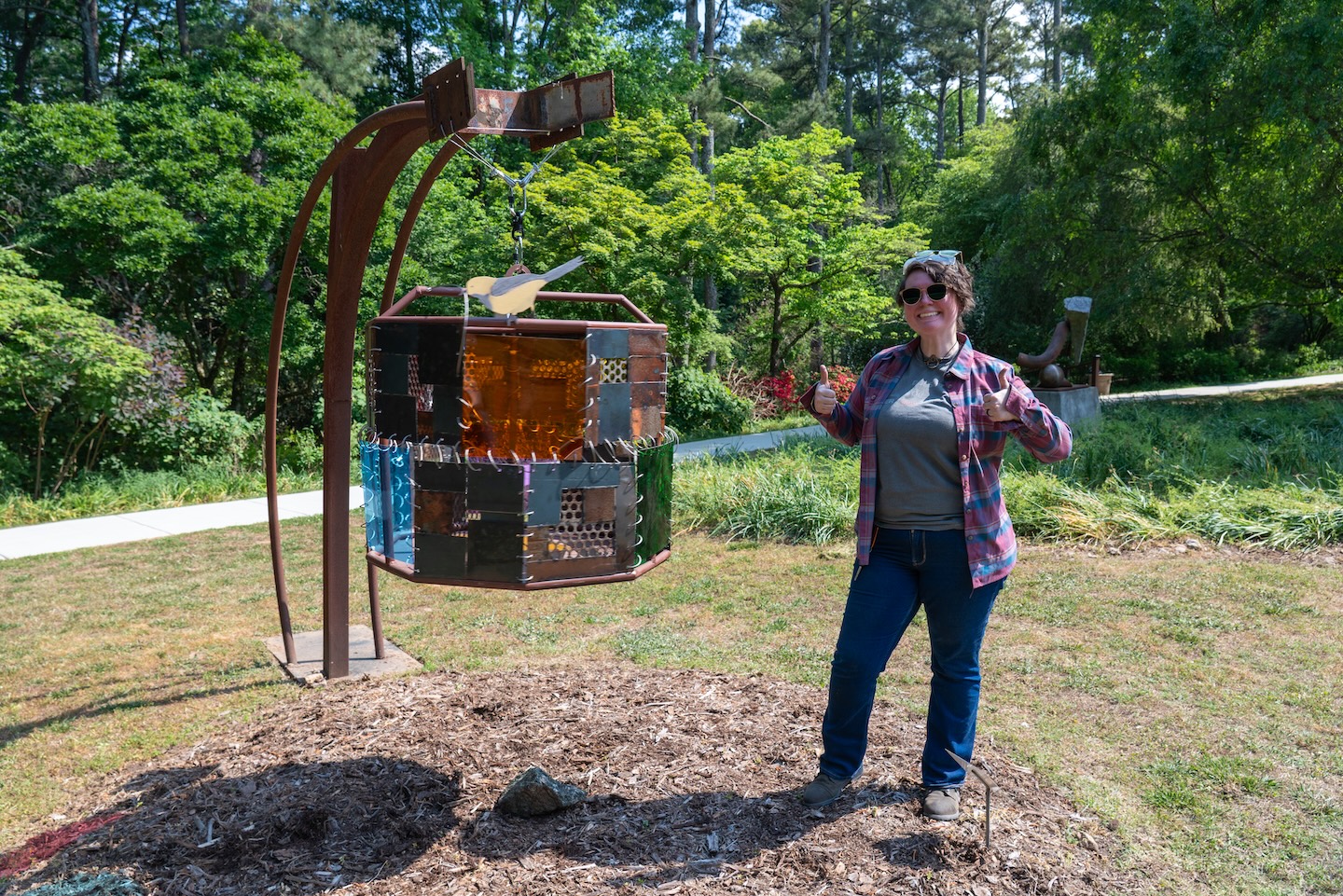
A fiber and textile artist in the School of Art and Design, Anderson is the creator of The Work Continues, a temporary outdoor sculpture now on view as part of the Art Blooms exhibition at Smith-Gilbert Gardens, a City of Kennesaw Botanical Garden. Installed beneath a steel brace that once supported a tree no longer standing, the piece transforms a space marked by absence into one of reflection, remembrance and renewal.
For Anderson, the project represented a significant departure from their usual artistic practice.
"I am a textiles major, not a sculpture major," Anderson said. "I took the class because it seemed like an interesting elective. I had no idea how much of it would focus on public art and engaging with a community audience."
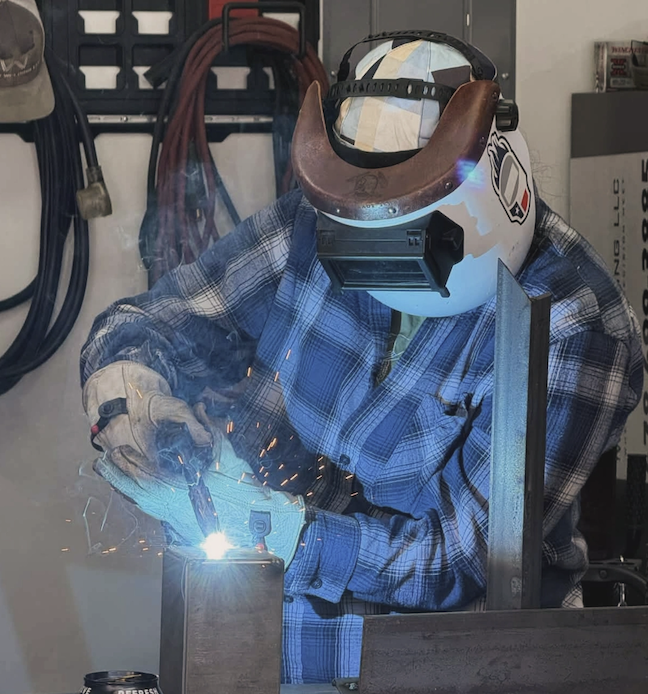
That challenge is central to the Master Craftsman Program, which immerses students in the design, fabrication and installation of ambitious works while introducing them to the realities of public-facing artmaking. Under the guidance of Master Craftsman Program Coordinator and Lecturer of Sculpture Allen Peterson, students develop concepts, present proposals and navigate the technical and conceptual demands of creating work for real-world audiences.
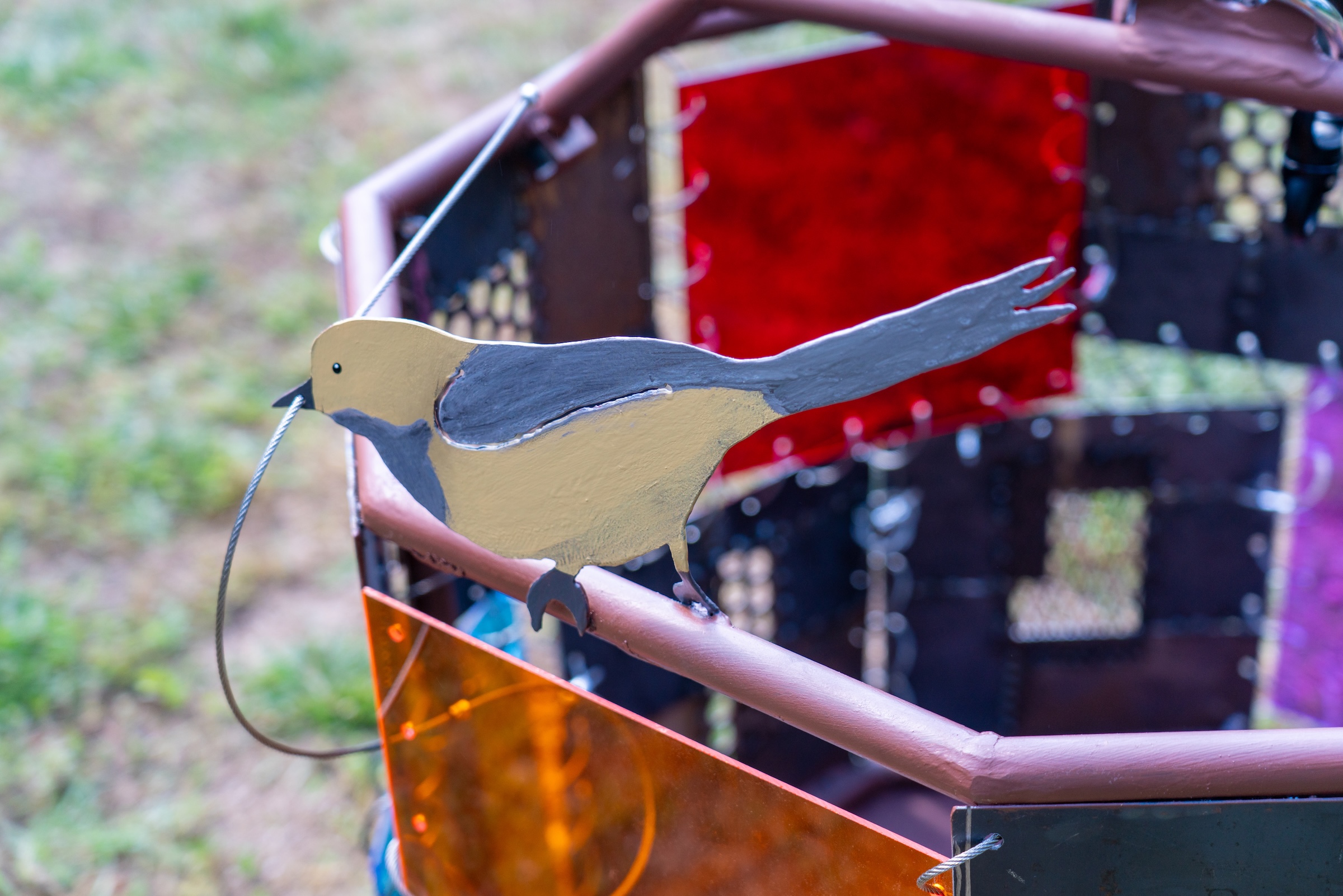
Anderson's original concept was inspired by quilting traditions, an enduring influence in their artistic practice. Through the design process, Peterson encouraged them to think beyond a flat textile form and explore how quilting concepts might translate into three dimensions. The result was The Work Continues — a suspended sculptural “quilt nest” inspired by the woven nests of the orchard oriole, a native bird known for constructing intricate hanging shelters from found materials. In Anderson's sculpture, a stylized oriole appears mid-stitch, suggesting that healing, community building and social progress remain ongoing acts of creation.
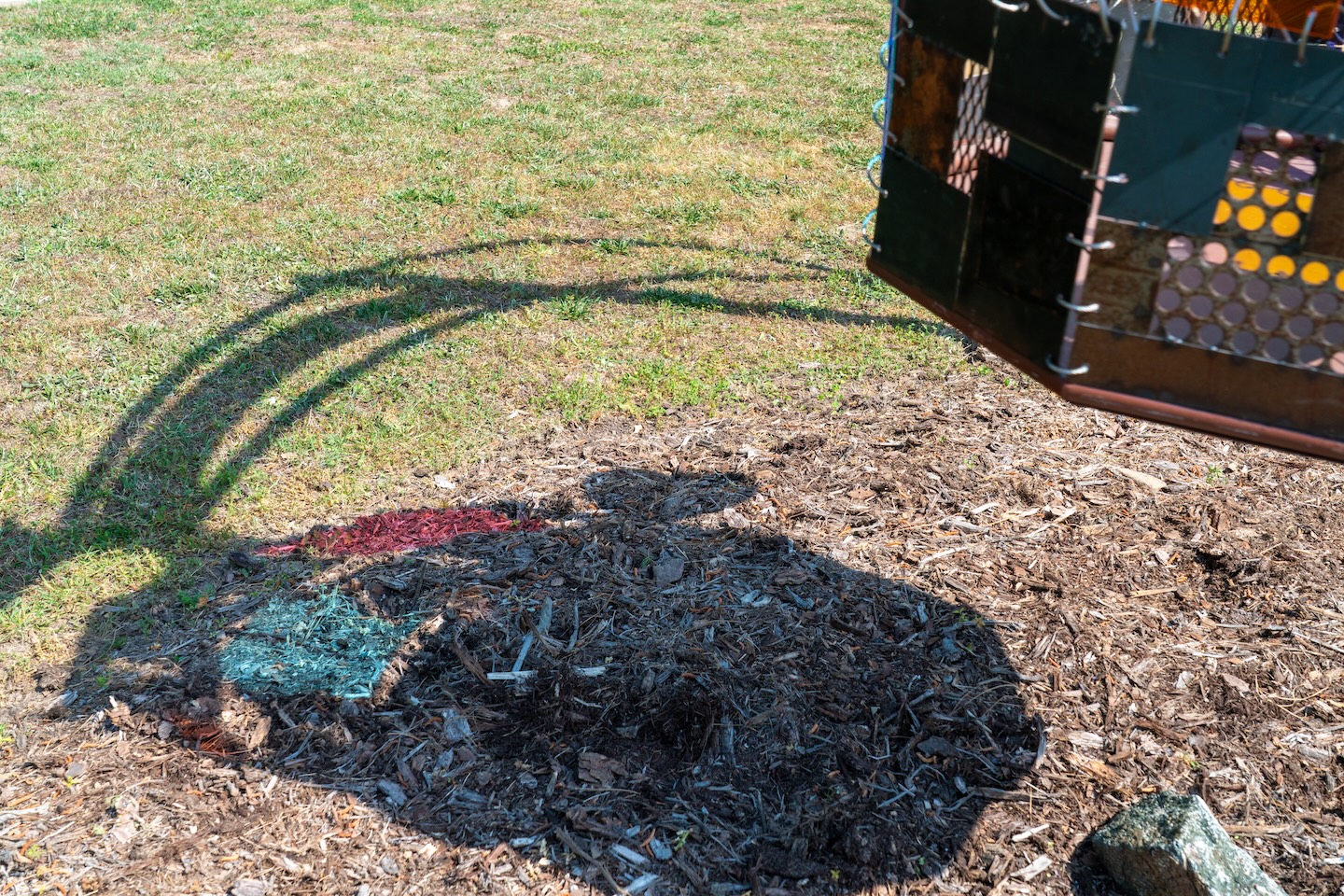
Constructed from reclaimed steel panels stitched together with stainless-steel cable, the sculpture resembles a patchwork quilt transformed into an architectural form. Transparent acrylic panels punctuate the structure, allowing visitors to see inside while sunlight passes through the work. As the sculpture rotates gently in the wind, colored acrylic panels cast shifting reflections onto the surrounding landscape.
The work's visual language is deeply rooted in research.
While learning about the history of Smith-Gilbert Gardens, Anderson became fascinated by the story of Richard Smith and Dr. Robert Gilbert, whose partnership shaped the property for decades. Their stewardship of the gardens during the height of the AIDS epidemic inspired Anderson to explore themes of loss, remembrance and resilience within queer communities.
That research led them to one of the largest community art projects in history: the AIDS Memorial Quilt.
“The thing that struck me about the AIDS Memorial Quilt is that it takes all of these individual acts of remembrance and stitches them together into something larger,” Anderson said. “I was interested in how people respond to grief and loss in a public way.”
Rather than directly recreating the quilt, Anderson translated its spirit into sculpture. The patchwork steel panels evoke quilt blocks, while the suspended nest references both collective care and the ongoing work of rebuilding after loss. The title itself, The Work Continues, speaks to resilience as an unfinished process.
The installation also responds directly to its physical site. Rather than concealing the empty space left by the missing tree, the sculpture embraces it. Suspended beneath the existing steel brace, the work invites visitors to consider how communities and ecosystems adapt after loss.
For Anderson, seeing the piece installed was an emotional milestone.
“When Professor Peterson told me my proposal had been selected, I cried,” they said. “It's such a cool opportunity. My sculpture was built specifically for this place, and being able to create something that people can experience in our community has been incredible.”
The project exemplifies the educational mission of the Master Craftsman Program, where students learn not only how to make objects, but how to create meaningful experiences. Through research, design, fabrication and public engagement, students gain the skills to transform ideas into works that resonate far beyond the studio.
On view through the 2026 Art Blooms exhibition season, The Work Continues offers visitors a chance to encounter art that is both deeply personal and profoundly communal; a reminder that memory, healing and resilience are never finished, but continually shaped by the communities that carry them forward.
Photography by Mary-Kathryn Lopez
A Vision Realized: The Enduring Legacy of Emily Bourne Grigsby and Athos Menaboni
KSU Alumnus Michael Kalish Returns to Atlanta After 35 Years to Unveil "Reel Portraits" Exhibition

Where Reality Gives Way to Imagination: "Branches Etched Across the Sky" Comes to KSU
$500,000 Gift from Dr. Audrey Morgan honors KSU Provost - Dr. Ivan Pulinkala