The Postdoctoral Researcher Funding program is aimed at enhancing the research community at KSU. This initiative provides valuable training for emerging researchers while also supporting faculty research efforts. The award covers the postdoc’s salary (the budgeted salary range is $51,600 to $60,000; offers are based on relevant experience) and benefits for up to 18 months and provides up to $2,000 of professional development funding for conference travel. Research mentors receive the added benefit of a formal mentor training and accountability framework. Postdocs receive the added benefit of a structured career development programming
series covering core competencies.
Associate Professor, Department of Mechanical Engineering
Dr. Ashish Aphale is an Assistant Professor in the Department of Mechanical Engineering at Kennesaw State University. Prior to joining KSU, he was a postdoctoral research associate at the Center for Clean Energy Engineering of University of Connecticut (UConn). At UConn he worked on development of materials for clean energy power systems. The focus of his research is to develop mechanistic understanding of materials degradation under systems operating condition in wide area of applications. He has published over 30 research articles and presented in several conferences of national and international repute.
Mario Bretfeld
Associate Professor, Department of Ecology, Evolution, and Organismal Biology
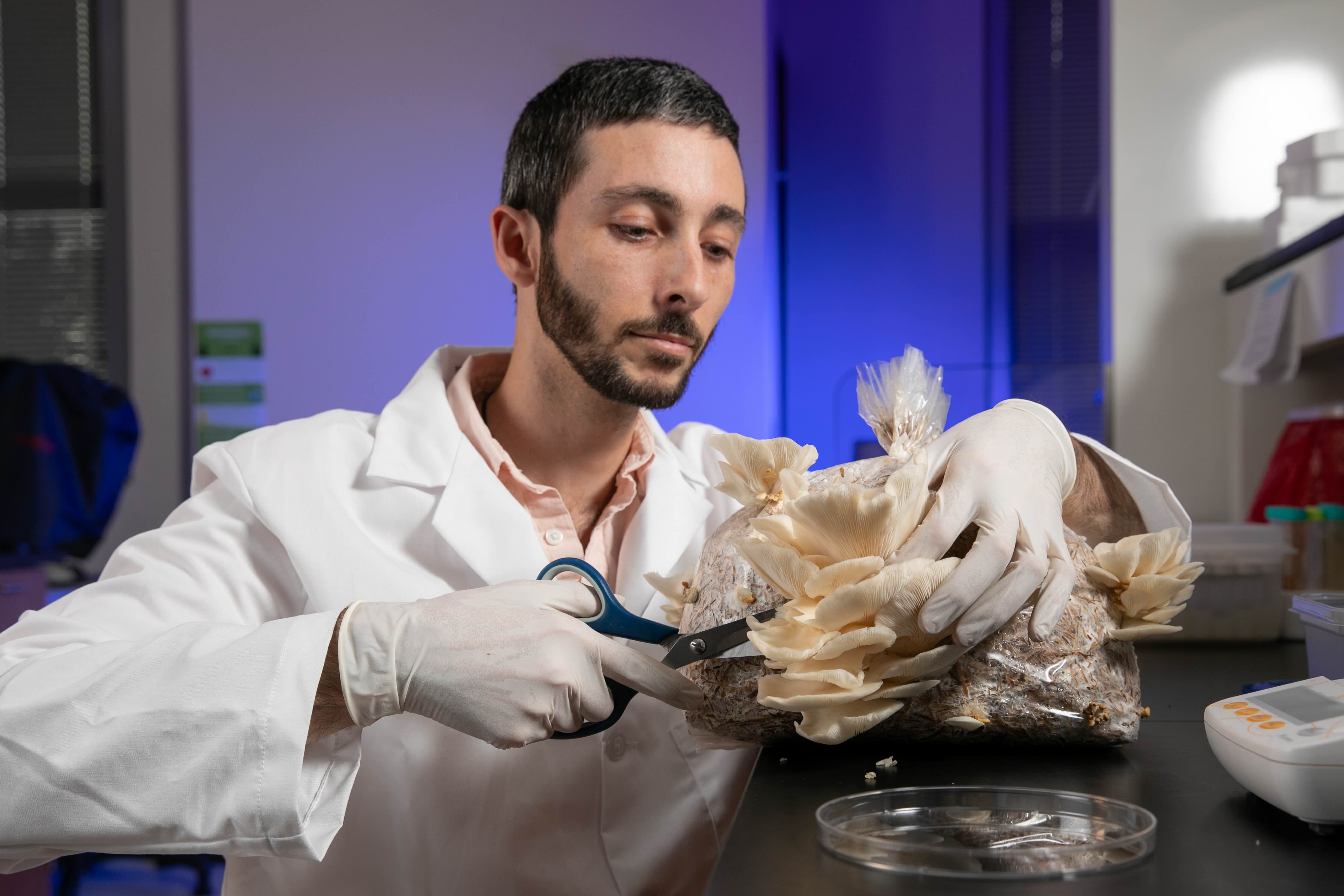
In a broad sense, my primary research interest lies on the interaction between plants
and their environment. This includes research questions at larger scales, for example
why plants occur where they occur, how their distribution changes over time, and what
the drivers of observed changes are. Examples of such drivers are disturbances including
fire and insects, competition with other species, as well as climate change. These
are mostly questions in the field of Plant Ecology.
I am also interested in how plants function, specifically the relationship between
water and plants. We have a fairly good understanding how water moves from the soil
through the plant into the atmosphere (i.e. transpiration). However, a lot of questions
remain unanswered regarding the mechanisms involved in water uptake and redistribution
through the roots. The umbrella term for this research is Plant Physiology.
Research that combines above two disciplines yields the hybrid discipline of Plant
Ecological Physiology. Data for my research are primarily obtained in the field but
I also am interested in agricultural research to optimize yield and quality of produce.
I consider myself an applied ecologist with the goal to inform predictive models and
to optimize land management and conservation efforts.
Sumit Chakravarty
Assistant Chair and Professor, Department of Electrical and Computer Engineering
Dr. Sumit Chakravarty currently works as an Associate Professor of Electrical Engineering
with Kennesaw State University. He also serves as the MSECE program coordinator. He
completed his doctoral studies from University of Maryland, Baltimore County and his
Master of Science from Texas A&M University, Kingsville, both in Electrical Engineering.
His PhD dissertation is on analysis of Hyperspectral Signatures and Data. He has multiple
peer-reviewed journal publications, conference publications, a book chapter and three
granted patents. His area of expertise is Wireless Communications, AI and Signal Processing.
He has used his expertise in remote sensing by working as a scientist in industry wherein he also worked on other sensor modalities commonly used in remote sensing like Multispectral, Lidar and SAR. This includes working with a cross disciplinary team comprising of specialists from industry, government bodies like NASA, Goddard and academia like University of Maryland.
His other industrial experience in engineering and research include working in various
roles such as Instrumentation Engineer for Triune Projects, Research Intern at Siemens
CAD and Apex Eclipse Communications, Scientist for SGT Inc and Lead Scientist for
Honeywell Research (Automatic Control Solutions-Advanced Technology Labs). Some his
relevant experience includes instrumentation and plant logic design, noise reduction
in communication systems, vibration analysis for equipment health monitoring, flare
steam control loop design and modeling, image/video signal segmentation and analysis
and use of statistical techniques for remote sensing and medical CAD applications.
Sagnik Dakshit
Assistant Professor, Department of Information Technology
Dr. Dakshit's research focuses on building trustworthy, explainable, and human-centered
AI systems for high-stakes domains such as healthcare and education. I develop methods
that move beyond accuracy-driven optimization to address interpretability, reliability,
and real-world deployment currently funded by KSU and NSF.
Dr. Dakshit earned his Ph.D. in Computer Science from The University of Texas at Dallas,
specializing in Intelligent Systems, and his B.Tech from West Bengal University of
Technology, India. During his doctoral training, he collaborated with Robert Bosch,
Seagate Technologies, HP Labs, and Nokia Bell Labs, and held software development
roles at IBM and Tata Technologies.
His work has earned the ECML-PKDD 2025 Best Research Contribution Award and a Marquis
Who's Who 2024 listing, and has been featured by KLTV7, CBS19, and Tyler Today Magazine.
He serves on the program committees of IEEE ICHI and ACM Multimedia, reviews for ICLR
and NeurIPS. He is a member of IEEE and ACM.
Soon Goo Lee
Assistant Professor, Department of Molecular and Cellular Biology
The main goal of my research is to understand the molecular basis of how enzymes,
regulatory proteins, and key signaling molecules function in a variety of metabolic
pathways and regulatory networks using biochemical and biophysical research tools,
especially protein X-ray crystallography.
Our research projects focus on proteins (i) in the plant and microbial metabolic pathways
for the biosynthesis of natural products and (ii) in host-microbe interactions in
Plasmodium falciparum, the bacterial pathogen Pseudomonas syringae, and Sinorhizobium fredii. Since the evolutionary and structural aspects of proteins have not been extensively investigated, my ‘Genomic identification–Structure-based functional study–Protein engineering’ strategies have made significant contributions to protein biochemistry, parasitology, and plant & microbial biology, including around 50 published peer-reviewed papers and book chapters.
In the professional community, Dr. Lee serves as an Early Career Reviewer (ECR) member
of the Journal of Biological Chemistry (ASBMB, 2019-), an editorial board member of
Scientific Reports (Springer Nature, 2019-), and an associate editor of Frontiers
in Chemistry & Frontiers in Plant Science (specialized in Plant Metabolism & Chemodiversity,
2022-). In addition, Dr. Lee has received several awards, including the Arthur Neish
Young Investigator Award (Phytochemical Society of North America, 2021).
Paul Lee
Assistant Professor, Department of Electrical and Computer Engineering
Dr. Paul (Seung Yup) Lee is an Assistant Professor of Biomedical Engineering in the Department of Electrical and Computer Engineering at Kennesaw State University. At KSU, he is leading Translational Biomedical Optical Laboratory that aims to develop the next generation of optical imaging and spectroscopic technologies for clinical diagnostics and health monitoring.
Dr. Lee received his B.S. degree in Electrical Engineering from Seoul National University (SNU) in 2004, his M.S. degree in Biomedical Engineering from SNU, in 2006, and a Ph.D. degree in Biomedical Engineering from the University of Michigan (UM), Ann Arbor in 2015. From 2006 to 2010, he was a research engineer in Korea Electrotechnology Research Institutes. From 2016 to 2021, he was a postdoctoral fellow in the Wallace H. Coulter Department of Biomedical Engineering at Georgia Tech (GT) and Emory University.
He has received several fellowships and awards including American Heart Association
Postdoctoral Fellowship (2019), Best Scientific Poster Award at the Southeastern Pediatric
Conference (2018), Best Oral Presentation Award at the GT Postdoc Symposium (2018),
Petit Scholar Mentorship (2017) at GT and Rackham Centennial Fellowship at the UM
(2013).
M. Rasel Mahmud
Assistant Professor, Department of Computer Science
I am an assistant professor of computer science at Kennesaw State University. I completed my Ph.D. from the Department of Computer Science at the University of Texas at San Antonio (UTSA), USA, advised by Dr. John Quarles. I obtained my MS in Computer Science from the University of South Dakota, USA. I completed my B.Sc. in Computer Science and Engineering from Rajshahi University of Engineering and Technology (RUET), Bangladesh. My research interests include but are not limited to Extended Reality (i.e., Virtual Reality, Augmented Reality, and Mixed Reality), Human-Centered Computing, Artificial Intelligence, and Computer Vision. I published in top-tier venues, e.g., IEEE TVCG, IEEE VR, IEEE ISMAR, ACM VRST, and ACM ASSETS. One of my papers has been awarded an “Honorable Mention” by the ACM VRST 2022 conference for the 2nd-best paper at the conference. I also worked as a software developer previously.
Shumit Saha
Assistant Professor, Department of Information Technology
I am Dr. Shumit Saha, a Tenure Track Assistant Professor in the Department of Information
Technology, College of Computing and Software Engineering at Kennesaw State University
(KSU), Georgia, USA. I am the Director of the Resonance Lab, a research laboratory
at KSU that focuses on developing novel technologies for chronic disease management.
I received my Ph.D. in Biomedical Engineering from the University of Toronto, Canada,
my Master's in Biomedical Engineering from the University of Manitoba, Canada, and
my Bachelor's in Electronics and Communication Engineering from Khulna University
of Engineering and Technology, Bangladesh.
Previously, I served as an assistant professor in Biomedical Data Science at the School
of Applied Computational Sciences (SACS) at Meharry Medical College. Before joining
Meharry, I served as an Assistant Scientist at the University Health Network, Canada,
and held a cross-appointment as an Assistant Professor at the Institute of Health
Policy, Management, and Evaluation in the Dalla Lana School of Public Health at the
University of Toronto, Canada.
I am an Editorial Board Member of the Nature - Scientific Reports Journal and Associate Editor of the IEEE Journal of Biomedical and Health Informatics (JBHI).
Md Raf E Ul Shougat
Assistant Professor, Department of Mechanical Engineering
Dr. Shougat is the principal investigator of DynaGence Lab, and a tenure-track Assistant Professor in the Department of Mechanical Engineering at Kennesaw State University. His research interest lies in the area of Soft Robotics and Controls, Nonlinear Dynamics, and Physics inspired Machine Learning.
He is also an Academic Co-Founder of Vibrapower LLC, a startup focused on vibration-based
energy harvesting and AI-enabled sensing technologies.
Jian Zhang
Associate Professor, Department of Information Technology
Dr. Jian Zhang is an Associate Professor of Information Technology at Kennesaw State
University and Principal Investigator of the Intelligent Sensing, RFID, and Robotics
Research Lab. His research group develops AI-enabled sensing, RFID systems, wireless
communication, autonomous robotics, smart healthcare technologies, and smart agriculture
systems. Dr. Zhang leads NSF-funded research with students and collaborators in computer
science, engineering, AI, wireless sensing, robotics, and cyber-physical systems.
Current NSF-supported projects include NSF Award 2549204, Collaborative Research:
VINES: Track 1: NSF-MeitY: SoyWatch: Smart Sensing Network for Precision Soybean Breeding,
and NSF Award 2245607, Collaborative Research: CCSS: When RFID Meets AI for Occluded
Body Skeletal Posture Capture in Smart Healthcare.