


KENNESAW, Ga. | May 8, 2026
At the center of this milestone are two scholars whose research are examples of both the human and technical sides of this new program
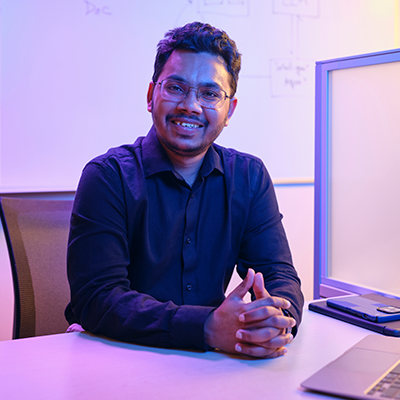
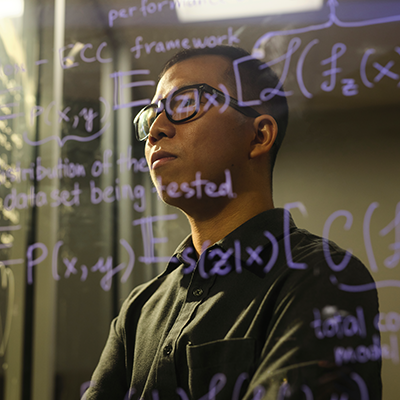
At the center of this milestone are two scholars whose research are examples of both the human and technical sides of this new program. Abm Adnan Azmee’s research focuses on human-AI collaboration, designing systems that support professionals in high-stakes situations. Alongside him, Manh Nguyen focuses on neuromorphic computing, a human brain-inspired approach that aims to make artificial intelligence faster, more efficient, and more secure.
One of the biggest concerns the public has with AI technology is the fear of being replaced by these models. But Adnan uses his interest in human-AI collaboration to build systems that work together with people, not replace them. He explains, “The AI can quickly read large amounts of text and spot patterns that might be easy to miss, while the human brings judgement, experience, and context.”
Adnan’s system is built to help first responders and healthcare workers spot potential behavioral and mental health concerns in the people they interact with, allowing them to assess the situation and respond in the most appropriate way. Adnan worked closely with the Cobb County Police Department to test the tool he developed. “My system helps by scanning reports and identifying cases that may need attention, so responders can focus more quickly on the ones that matter most,” he said.
Collaborating directly with practitioners allowed Adnan to use expert knowledge and feedback so he could shape his tool around how people actually work. “This is what makes it not just accurate, but something people can feel comfortable using. The tool has to fit into a workflow that is busy, high-stakes, and time-limited,” explained Adnan.
Manh’s research in neuromorphic computing takes inspiration from how our brains work and applies that to computing systems that process information more efficiently. “I’m interested in event-based processing, where a device only collects data and computes when something important actually happens,” said Manh. He stated that this research could make everyday technology such as phones, sensors, and smart home systems work better because they would record and process information only when needed. Not only would privacy and security issues improve, but devices would become more energy efficient because they would not be constantly collecting data.
“As a researcher, I am excited by the chance to discover new ideas, develop the theory behind them, and help bring those ideas closer to real-world use,” Manh said. He is inspired by the significance of his field of research and the rich potential for interdisciplinary collaboration among electrical engineering, neuroscience, materials science, and others.
Manh’s enthusiasm reflects the spirit of innovation that drives research at KSU. That kind of collaboration strengthens the university’s research mission while expanding its impact across the region. “At KSU, we are committed to conducting innovative research that advances society,” said Dr. Juliet Langman, Dean of the Graduate College. “The work of doctoral students is part and parcel of this commitment, with doctoral students often leading the way in innovation under the mentorship and guidance of our talented faculty.”
As members of the first group of students to navigate a new degree program, Adnan and Manh expressed a sense of pride in helping to shape the program as it was growing. Adnan described the experience as both a personal milestone and a unique opportunity to contribute to something that will benefit future students. “We helped build a culture, connected people across labs, and figured out best practices as we went,” he said. Adnan’s dissertation chair, Dr. Md Abdullah Al Hafiz Khan agreed and noted that Adnan played an important role in helping define what the program could become. “His success sets a strong example for future students and demonstrates the program's promise in preparing researchers who can contribute meaningfully to computer science and to real-world societal challenges,” Khan said.
Prior to beginning this Ph.D. program, Manh said he “had very little experience with academia.” However, as a member of this inaugural cohort, he gained insight into the work involved in developing a new academic program and observed how faculty refined the program alongside the students. Manh’s dissertation chair, Dr. Liang Zhao, described him as someone who set a high standard for the program early on as he helped define a culture of rigor, initiative, and collaboration. “He grew into an independent researcher, with strong technical depth and the ability to lead work from idea to impact,” said Zhou.
Developed to meet the growing demand for leadership in computing, this Ph.D. program was designed to blend the highest level of theoretical foundations with applied research. Now with the graduation of its first students, the program demonstrated this model is working. “The first two doctorates in this new program provides proof of concept for the degree’s structure,” said Langman. “We are looking forward to many more graduates who will move into successful careers in industry and academia in the coming years.”
- By Tracy Gaudlip