|
Project Listing
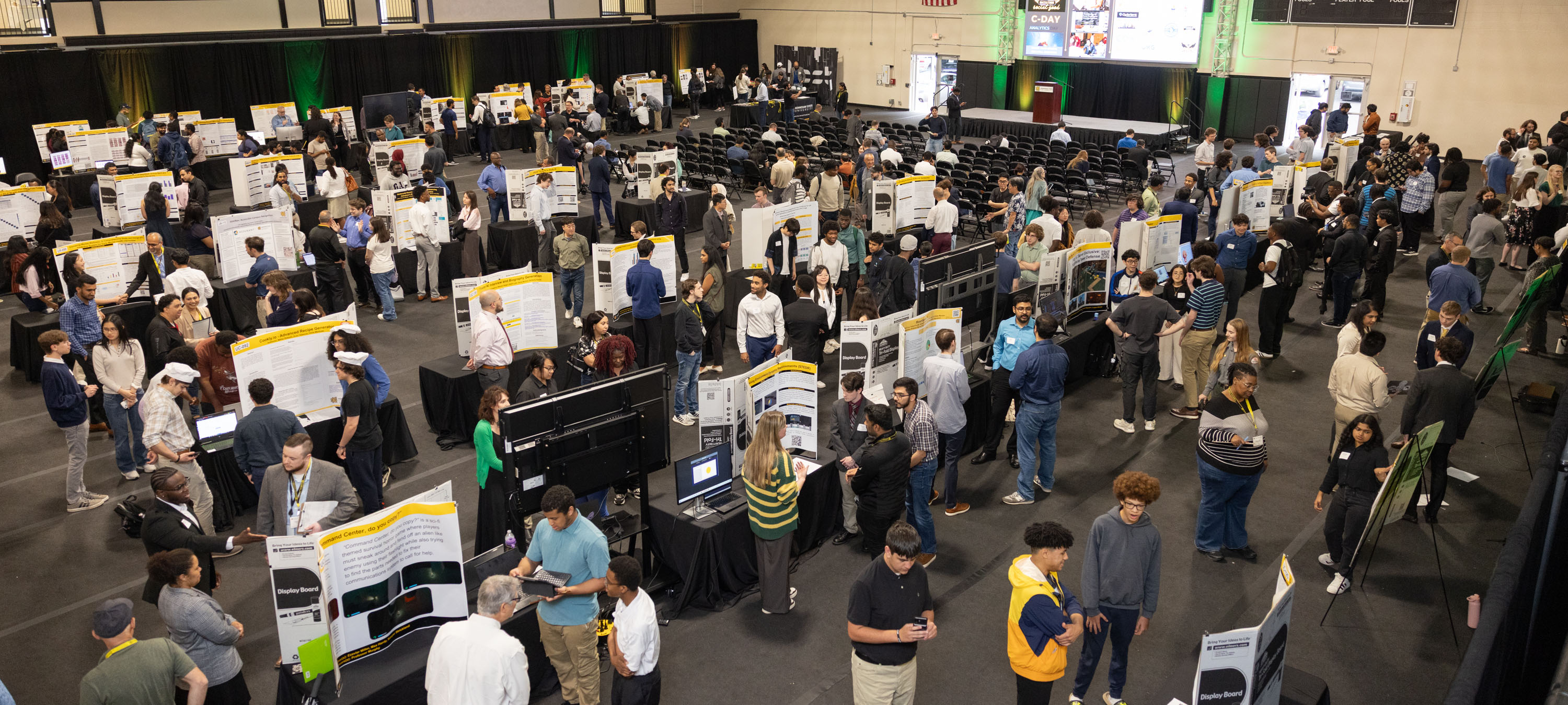
Spring 2026 C‑Day will feature a wide range of student-led projects and research from across the College of Computing and Software Engineering at Kennesaw State University. Projects showcase hands-on learning, innovation, and real-world problem solving across computing disciplines.
What to Expect:
- Undergraduate and graduate capstone projects
- Undergraduate, master’s, and PhD research presentations
- Topics spanning artificial intelligence, cybersecurity, data science, software development
and more
Complete Spring 2026 project listings, organized by category, will be added as students
refine submissions.
-
Undergraduate Projects (30)
|
* Project will be featured during the Flash Session
-
UC-011-171 Beyond Postseason Awards: Predicting Accolades via Real-Time Control Chart
Signals in the NCAA Transfer Era (Undergraduate Project) by Bowen, Daniel, Cyclewalla, Shayaan,
Abstract: In the era of the NCAA transfer portal, collegiate basketball coaches face the critical challenge of identifying and targeting elite recruits within a condensed 15-day window. This study investigates the predictability of elite player performance by analyzing postseason award winners within the Coastal Athletic Association (CAA). Utilizing game-by-game data on player efficiency, usage percentages, and Player Efficiency Ratings (PER), we implemented an Exponentially Weighted Moving Average (EWMA) control chart—a technique from the Statistical Process Control (SPC) family—to monitor performance signals. Our results indicate that the EWMA model successfully identifies future award-winning players after an average of only 8.58 games. By providing a 22-game lead before the season’s conclusion, this model offers coaches a significant strategic advantage, allowing for the early identification of potential transfer targets before the portal officially opens. These findings suggest that SPC-based modeling is a highly effective tool for predictive sports analytics and carries broad applications for future collegiate recruitment strategies.
Department: SDSA
Supervisor: Prof. Michael Frankel; Dr. Austin Brown
Poster
-
* UC-082-216 AI Driven Guest Support for VacationsForYou (Undergraduate Project) by Grogan, Cassidie, Elison, Kendal, Dulcio, Benjamin, Begashaw, Ezra, Faltz, Wilfred, Faltz, Wilfred
Abstract: The AI Guest Support Assistant is a proof-of-concept, web-based chatbot designed to
streamline guest support for a high-volume vacation rental operation. The system leverages
a Large Language Model (LLM) combined with a Retrieval-Augmented Generation (RAG)
approach to deliver accurate, context-aware responses to common guest inquiries, such
as reservation details and check-in times. Built using a React frontend and a FastAPI
backend, the platform integrates securely with the StreamlineVRS property management
system. The solution aims to reduce call center workload by automating repetitive
inquiries while maintaining a clear escalation path for more complex requests. This
project evaluates the feasibility, usability, and effectiveness of AI-assisted customer
support in a controlled environment.
Department: SWEGD
Supervisor: Prof. Yan Huang
Poster
-
UC-086-235 Student Performance Pattern Mining (Undergraduate Project) by Arevalo Colocho, Cesar
Abstract: This project applies data mining techniques to explore patterns in a student performance
dataset. The analysis focuses on discovering natural groupings of students and frequent
associations among academic, social, and lifestyle attributes. Clustering and association
rule mining are used to identify meaningful structures in the data, emphasizing pattern
discovery and interpretation rather than outcome prediction.
Department: CS
Supervisor: Prof. Christopher Regan
Poster
-
UC-087-236 Early Prediction of Player Performance (Undergraduate Project) by Freeman, Grady, Truong, Hien, Mayo, Jackson,
Abstract: This study examines whether early-season performance metrics can support player evaluation under the NCAA’s shortened transfer window. Using data from Conference USA and the Mid-American Conference, we modeled offensive (UASE) and defensive (DAR) efficiency with multiple predictive methods. Across both full-season and 9-game datasets, DAR was more predictable, with higher R² and lower RMSE values. Linear Regression consistently performed best for DAR, while KNN and Random Forest performed best for UASE depending on the dataset. Results show that meaningful performance patterns can be identified early in the season, even with limited data. These findings suggest analytics can help programs make faster, more informed decisions for recruiting, roster planning, and player retention.
Department: SDSA
Supervisor: Dr. Austin Brown, Prof. Michael Frankel, Dr. Muhammad Imran
Poster
-
UC-097-186 Nudox - Compiler Based Information Retrieval (Undergraduate Project) by Slabysh, Mikita, McCrary, Robert, Wirht, Miles, Ferguson, Lindsey,
Abstract: Nudox is a language-agnostic, version-aware documentation and search platform backed
by compiler-level analysis. By lowering source code to intermediate representations,
Nudox extracts structural metadata, like function signatures, types, and modules independent
of the source language. At the core of the platform is a custom search engine built
around versioned knowledge: queries resolve to graph nodes and expand outward along
structural edges using semantic heuristics, surfacing contextually relevant symbols
rather than flat text matches. The result is a canonical, automatically generated
source of truth that tracks how a codebase evolves across commits.
Department: CS
Supervisor: Prof. Sharon Perry
Poster
-
UC-098-187 Zero-Inflated Poisson Modeling of NCAA Postseason Awards (Undergraduate Project) by Lane, Charles, Bresko, Kyle, Treang, Kaleb,
Abstract: Our project focuses on predicting postseason awards for NCAA Men's College Basketball
which can be difficult to model given that less than 15% of players in a given season
win awards. After evaluating basic models, we selected a Zero-Inflated Poisson (ZIP)
model to account for most players receiving zero awards. We identified free-throw
attempts as being the best predictor for the structural zeros present in who can win
an award. The final ZIP model produced better evaluation metrics than other basic
models. Accounting for structural zeros allowed us to better model how on court statistics
can translate into postseason awards.
Department: SDSA
Supervisor: Dr. Brown, Prof. Frankel, Dr. Imran, Dr. Karami
Poster
-
UC-099-189 Spectre (Undergraduate Project) by Tobal, Alexander, Higgins Jr, Chris, Reeves, Jaylin, Leichter, Logan,
Abstract: Spectre consists of four levels, where players complete various objectives and fight off ghosts while doing so. Our tutorial level introduces players to the mechanics, such as shooting, rear view mirror shooting, walking and jumping. With the rest of the levels focusing on completing objectives in order to progress. The final level culminates in a boss fight, ending the journey. While players explore and complete objectives, enemies drop a currency that players can spend to obtain upgrades. Getting hit by enemies not only reduces the players’ health but also applies debuffs to them making players more cautious of their surroundings. These debuffs include lower movement speed, locking out jumping, deactivating the rearview mirror, etc.
Department: SWEGD
Supervisor: Dr. Joy Li
Poster | More Information
-
UC-115-161 Wayward Stray: Selix (Undergraduate Project) by Tinoco, Arly, Ercole, Tyler, Stansel, Ivy, Lothman, Austin, Charland-Martin, Jeremi, Charland-Martin, Jeremi
Abstract: Wayward Stray:Selix is a 3rd person platformer which places importance on exploration and discovery. Players will take the role of Selix as they explore an arid desert, fighting off enemies and discovering items hidden around the map, which reveal more about the game world and its characters. Selix, a young dragon, is exiled from the only home he’s known, forced into a strange land in search of a new place to call his own. Along the way, he finds a companion, a small dove that aids and guides his way. Exploring these uncharted areas, Selix discovers there’s more to the world than his small view, and discovers secrets about himself as well.
Department: SWEGD
Supervisor: Dr. Joy Li
Poster | More Information
-
UC-117-213 Haunted Owl Hotel – A 3D Horror Maze Chase Game (Undergraduate Project) by Griffin, Carter, Egl, Rin, Redmon, Kcyana, Portillo, Jose, Nesbit, Alana, Nesbit, Alana
Abstract: “Haunted Owl Hotel” is a horror Pac-Man-inspired, 3D maze chase game. You play as a cute owl named Sappy trying to escape the scary hotel, but suddenly your elevator breaks down. Navigate the spooky halls to collect the candles left behind on each floor to reactivate the elevator, but be careful, after grabbing each candle, the darkness left behind will follow you. Ghosts lurk around every corner hoping to make you their next victim. Descend through each floor without losing all 3 lives to escape the haunted owl hotel and win the game.
Department: SWEGD
Supervisor: Prof. Lei Zhang
Poster
-
* UC-121-133 Head in the Clouds (Undergraduate Project) by Osborne, Hunter, Day, Jane, Bell, Chase,
Abstract: Head in the Clouds is a video game that puts the player in the shoes of a child with
ADHD (Attention Deficit Hyperactivity Disorder). Rain, the protagonist, is told by
their mother to take out the trash, but keeps getting distracted and daydreaming instead.
The player must beat platforming challenges to get Rain back on task. The narrative
and gameplay is meant to represent the difficulties of having ADHD.
Department: SWEGD
Supervisor: Dr. Joy Li
Poster | More Information
-
* UC-122-135 Mutatio Mentis (Undergraduate Project) by Alderman, Isaac, Mizell, Braden, Sutton, Collin,
Abstract: Mutatio Mentis is a first person, narrative heavy, puzzle-lite RPG that follows the story of a renaissance era plague doctor and their attempt to alter the minds of three subjects; a gardener, a street urchin, and a priest. The narrative is set in 1637 Florence, Italy, in the wake of the Great Plague of Milan, and draws heavily from renaissance culture. Each of the three subjects have progressively more complex personal conflicts, which present through the gameplay aesthetics of each act, as the gameplay changes to reflect the problems of each subject. Our focus is on tackling mental and emotional health through empathy and nuance rather than diagnosis. To this end, different aspects of each subject’s psyche take physical form in the dreamscape environments, allowing the player to speak and interact with them directly, influencing the state of the subject themself, and, in turn, the environment around the player. The game features many puzzles, with solutions ranging from alchemy, exploration, and dialogue, to spatial and logical reasoning. The primary goal of play is to reach the core of each subject’s mind, allowing the opportunity to change their fundamental outlook on life, if the player so chooses. Either way, the consequences will follow the player until the end. Our aim with Mutatio Mentis is to make our players think carefully about how their actions might affect each patient they treat, and find their own answer to the question of how much they should influence each one.
Department: SWEGD
Supervisor: Dr. Joy Li
Poster
-
* UC-123-140 P15-T2 Boating Safety Game US Army Corps | Boating MVP (Undergraduate Project) by Hamza, Maryam, Hamza, Saleh, Vanwinkle, Will, Caffrey, Trevor, Akinsunmi, Tobi, Akinsunmi, Tobi
Abstract: This project is an interactive 2D educational boating safety game developed in Unity
to teach students essential water navigation and life jacket safety practices in an
engaging and immersive format. Designed in collaboration with a real-world sponsor,
the game simulates a dynamic boating environment where players navigate obstacles,
identify hazards, and make safety decisions under time constraints. The experience
integrates instructional modules, guided character narration, and a final quiz phase
that reinforces knowledge through immediate feedback, scoring, and achievement-based
rewards. Players learn critical concepts such as proper life jacket fit, safe boating
procedures, hazard identification, and shallow water awareness. The project combines
game development principles, user interface design, audio feedback systems, and educational
assessment strategies to create a scalable learning tool suitable for kiosk deployment
at visitor centers. By blending gamification with real safety standards, the application
aims to increase engagement, retention, and real-world boating preparedness among
youth audiences.
Department: SWEGD
Supervisor: Prof. Yan Huang
Poster
- UC-124-143 The Analysis of MMA Fights (Undergraduate Project) by Mason Park
This study investigates the evolution of MMA fighting styles and the impact of physical
attributes on bout outcomes using K-means clustering and Apriori association techniques.
Exploratory Data Analysis reveals a temporal shift from grappling-dominance to a more
balanced, striking-centric era. Utilizing a validated k=3 cluster model, the research
identifies that while lower weight classes maintain a balance of styles, heavier classes
trend toward striking
Poster
-
UC-128-145 KSU ESports Discord Server Bot (Undergraduate Project) by Gammill, Austin, Thomas, Foster, Truong, Lam, Olubajo, Jeffrey, Ahmed, Ismail, Ahmed, Ismail
Abstract: The KSU Esports program has requested us to develop further upon the Discord Server Bot that they are currently using. This prior implementation was developed by Capstone students last year. Our project’s goal was to build upon their work, polish existing features, commands, UI/UX, and fix known bugs. We have worked on improving the bot’s matchmaking algorithms, tournament seeding logic, API integration, database persistence layer, stability, and statistics tracking. Furthermore, we have developed the UI/UX to be more user-friendly, added support for additional games, and overhauled the bot’s database logic.
Department: IT
Supervisor: Prof. Donald Privitera
Poster | More Information
-
* UC-131-162 Physical 8-Bit CPU (Undergraduate Project) by Hoerner, Samuel, Merchant, Aryan, Dislen, John, Day, Kyran,
Abstract: This isn’t an app - it’s the machine behind it. A fully functional 8-bit CPU, built from scratch, turning raw signals into real computation. The system combines our custom assembly-to-run, FPGA-driven control unit (CU), discrete transistor Arithmetical Logical Unit (ALU), external memory, and 5 registers to execute programs through a fetch-execute cycle. The result is a tangible computing platform that bridges low-level digital logic with high-level system behavior.
Department: CS
Supervisor: Prof. Sharon Perry
Poster
-
UC-135-129 fishGame: Mobile Hyper-casual Fishing Game (Undergraduate Project) by Rousell, Lauren, Martinez, Lisbeth, Portillo, Jacob, Miller, Jacob,
Abstract: fishGame is a strategy-driven hyper-casual mobile game that combines the accessibility
of traditional mobile gameplay with the progression depth of a roguelike. The project
was developed over a three-month period using Unity 6.3 and related production tools.
Following the completion of an alpha build, testing was conducted through gameplay
sessions and a detailed follow-up survey to gather feedback on player experience,
clarity, and engagement. Results indicated that fishGame was well received, with players
reporting low levels of confusion and strong replayability. These findings suggest
a clear interest in mobile games that offer greater depth while preserving the immediacy
and simplicity associated with the hyper-casual genre.
Department: SWEGD
Supervisor: Dr. Sungchul Jung
Poster | More Information
-
* UC-136-132 Gamma Guardian: Teaching about HLH (Undergraduate Project) by Rousell, Lauren, Leichter, Logan, Portillo, Jacob, Lock, James,
Abstract: Gamma Guardian is an educational strategy game for children ages 6 to 12 that introduces
Hemophagocytic Lymphohistiocytosis (HLH) and immune-system balance through interactive
gameplay. The game places players inside the human body, where they use touch controls,
antibody shields, and immune-response management to defend against interferon gamma,
bacteria, and pathogens. Development used Unity 6.3 and followed a level-based design
with educational feedback, AI-driven enemies, and a simple visual style to support
learning. The result is a fully functional game with five levels, integrated educational
content, and multi-platform support, exceeding the original goal of producing only
a demo.
Department: SWEGD
Supervisor: Dr. Joy Li
Poster | More Information
-
* UC-137-237 The House Watches (Undergraduate Project) by Martinez, Lisbeth, Rousell, Lauren, McBride, Jaime, Quiroz, Karizma, Kleine, Aidan, Kleine, Aidan
Abstract: The House Watches is a horror-puzzle game about a boy and a dog trying to reunite
after mysterious supernatural creatures, called duendes, invade their home. The game
consists of two levels, each with a different mode of gameplay; level one is a more
traditional item-collection horror experience, and level 2 is based around puzzles
that must be completed in a limited time frame. The House Watches includes original
art, music, and models, as well as a dynamic gameplay system that increases the difficulty
of each level over time.
Department: SWEGD
Supervisor: Dr. Joy Li
Poster | More Information
-
* UC-138-166 The Allies Connect Platform: Improving Access to Community Resources
Through Technology (Undergraduate Project) by Holland, Sarah, Anand, Neha, Andoh, Aldrick, Diop, Yacine, Rogers, Alex, Rogers, Alex
Abstract: Finding help shouldn’t be difficult, but for many people, it is. Important information about food, shelter, and local support is often scattered across different websites, social media pages, and documents, making it hard to find what’s needed, especially in urgent situations. The Allies Connect platform was created to bring that information into one place. It is a centralized, mobile-friendly platform that allows users to: • Search for resources • Register for events • Connect with nonprofits At the same time, the platform also provides organizations with simple tools to keep their information accurate and up to date. By focusing on clarity and ease of use, Allies Connect helps people find the support they need more quickly and confidently.
Department: IT
Supervisor: Prof. Donald Privitera
Poster | More Information
-
UC-139-175 Agentic debugger and documenter (Undergraduate Project) by Omodemi, Olaoluwa, Le, jade, Dietz, Preston,
Abstract: Modern software development teams routinely introduce subtle bugs — mutable default arguments, bare exception handlers, insecure eval()/exec() calls, resource leaks, hardcoded secrets — that escape manual review but accumulate into technical debt and security risk. Existing linters identify problems but leave remediation to the developer. This project investigates whether a coordinated multi-agent system, combining rule-based static analysis with generative LLM reasoning, can autonomously detect, fix, and document such issues with no developer involvement beyond providing the input file.
Department: CS
Supervisor: Prof. Sharon Perry
Poster | More Information
-
* UC-142-177 Multiplayer SPSU Tub Racing Video Game (Undergraduate Project) by Pitts, William, Urvan, William, Powell, Thomas, Young, Joshua,
Abstract: Multiplayer Bathtub Racing revives a well-known Southern Polytechnic State University
tradition through a digital multiplayer experience built in Unity. The project extends
a prior single-player tub racing game by adding online multiplayer
Department: CS
Supervisor: Capstone Professor: Prof. Sharon Perry; Industry Mentor: Shaun Sheppard
Poster
-
UC-143-178 Georgia Laws of Life CRM Implemenetation (Undergraduate Project) by Sternon, Nicholas, Flores, Josh, Scales, Jessica, Bhuiyan, Opurbo, Patel, Shiv, Patel, Shiv
Abstract: This project focuses on implementing a Customer Relationship Management (CRM) system
for Georgia Laws of Life using the Little Green Light (LGL) platform. The organization
previously relied on spreadsheets, which caused issues such as duplicate records,
inefficient reporting, and difficulty managing relationships. To address this, the
team analyzed existing workflows and developed a structured data model. The system
was configured, and sample data including constituents, donations, schools, and contracts
was successfully imported to validate the design. The results show that the CRM system
improves data organization, enhances relationship tracking, and provides a more efficient
and scalable solution for managing organizational data.
Department: IT
Supervisor: Prof. Donald Privitera
-
UC-144-182 Paracosm (Undergraduate Project) by Friday, Va'Quez
Abstract: Paracosm is a gothic horror game revolving around a tattoo artist, named Villain, who discovers that his art has suddenly come to life. Despite this phenomenon, Villain insists on finishing his tasks before three Am, due to his superstitious nature. What he doesn’t know yet is that if he doesn’t finish by that time, then he will be forever stuck in his shop with no escape. He will also learn that not all of his lively drawings are friendly, and that the not-so friendly drawings of his will stop at nothing to make sure he fails-Knowing that if he fails, he will be forced to continue bringing his imaginary world to life and be bound to it for eternity.
Department: SWEGD
Supervisor: Dr. Joy Li
Poster
-
* UC-149-185 AI-Assisted Media Organization and Intake System (Undergraduate Project) by Wu, Meilun, Branham, Nevaeh, Higgins, Isaiah, Kangni, Claude, Ahmed, Fatima, Ahmed, Fatima
Abstract: This project includes the design and validation of a metadata-driven media intake
and organization system implemented for the Office of the District Attorney, Cobb
Judicial Circuit. The institution produces a considerable volume of photographs and
video content via outreach programs and community interaction initiatives. Yet, the
organization does not have an organized framework for managing media files, which
results in inefficient file retrieval and data loss over time due to a lack of standardized
organizational practices. In this regard, this project aims to develop a workflow-based
system for the efficient organization of media files that will be powered by a local
user interface and backed up by an intake process on the backend. First, the system
will automate the metadata extraction process, classify all files based on events
and the date range of their creation, and provide the necessary guidance on filling
out the questionnaire to apply metadata consistently. Next, the optional AI-based
tagging mechanism will help improve the metadata content by providing recommendations,
ensuring that humans double-check the suggested changes. The system will allow integration
with the Microsoft 365 SharePoint platform and its metadata management features to
facilitate efficient media searching and filtering. Considering the access restrictions,
the proof-of-concept was implemented in a mock SharePoint environment.
Department: IT
Supervisor: Prof. Donald Privitera
Poster
-
* UC-151-197 Nest: An AI-Powered Transition Navigator for Aging-Out Foster Youth in
Georgia (Undergraduate Project) by Sookra, Stephen, Delaney, Tylin, Bryant, Brenden,
Abstract: Each year, approximately 600–700 young people age out of the Georgia foster care system with no permanent family, no housing plan, and no clear guide beyond a 250‑page state transition PDF. The outcomes are severe: high rates of homelessness, low college completion, and unstable employment. Nest is an AI‑powered, mobile‑first web application that turns this overwhelming bureaucracy into a personalized 90‑day transition plan generated in under 60 seconds. Through a short conversational intake, the system collects a youth’s age, county, housing status, and education or work goals, then uses a deterministic rules engine to determine likely eligibility for key programs such as Extended Youth Support Services (EYSS), Chafee Education and Training Vouchers, former‑foster‑care Medicaid coverage, SNAP, and KSU’s ASCEND program. A Retrieval‑Augmented Generation (RAG) pipeline grounded in a curated Georgia‑specific resource database explains each recommendation with citations and step‑by‑step actions, reducing hallucination risk. The prototype is implemented with a React/Tailwind frontend and FastAPI backend and is explicitly designed around trauma‑informed UX principles so that transition‑age foster youth receive not just information, but an actionable, deadline‑driven plan and a “caring adult in their pocket.”
Department: CS
Supervisor: Prof. Richard Gesick
Poster
-
* UC-152-211 CCSE Capstone Meeting Intelligence Platform (Undergraduate Project) by Crose, Calvin, Enyart, Noah, Johnson, Marcus, Jones, Jaeden, Smith, Jonah, Smith, Jonah
Abstract: The CCSE Capstone Meeting Intelligence Platform is a web-based monitoring system designed
to assist CCSE leadership in overseeing a large variety of capstone projects. Currently,
the CCSE leadership handles the overseeing of projects manually, either with advisors
sitting in on student-client meetings or by reviewing recordings, which can lead to
problems where potential red flags are unidentified. To help manage this, the system
processes Microsoft Teams meeting transcripts and analyzes them using a Large Language
Model (LLM) combined with Retrieval Augmented Generation (RAG) techniques. It then
will identify potential project risks like scope creep, conduct concerns, and deviations
from project specifications, providing automated analysis and early risk detection
to help monitor capstone projects without requiring manual review of every meeting.
Department: SWEGD
Supervisor: Dr. Yan Huang
Poster
-
UC-158-205 ScrappyFin — IND, Simulated Digital Wallet & Fraud Detection Platform (Undergraduate Project) by Davis, Logan, Galvan, Dante, Jordan, Zahaira, Bracey, Avery, Pham, Chris, Pham, Chris
Abstract: ScrappyFin is an educational FinTech platform developed in partnership with The Home
Depot to simulate a digital wallet system and demonstrate fraud detection techniques.
Users can create virtual wallets and perform synthetic transactions in a controlled
environment, enabling analysis of financial behavior without real risk. The platform
combines rule-based logic with machine learning models to identify suspicious activity,
such as unusual transaction amounts or patterns. An admin dashboard provides clear
explanations for flagged transactions. ScrappyFin showcases how modern financial systems
detect risk while serving as a practical learning tool for software engineering and
data-driven applications.
Department: SWEGD
Supervisor: Dr. Yan Huang
Poster
-
* UC-162-194 Smart Soil Analyzer (Undergraduate Project) by Florez Garcia, Samuel, Johnson, Edward, Gamino, Aaron, Burton, Tassha, Kinney, Wyatt, Kinney, Wyatt
Abstract: The Smart Soil Analyzer is a machine learning-based application designed to maximize
agricultural efficiency and sustainability. Our team developed a predictive system
using a K-Nearest Neighbors (KNN) classifier trained on a comprehensive crop recommendation
dataset. The tool allows users to input key environmental and soil metrics, including
Nitrogen (N), Phosphorus (P), Potassium (K), temperature, humidity, pH levels, and
rainfall. By processing these variables, the model accurately predicts the most suitable
crop for the specific land conditions. This solution provides farmers with data-driven
insights to optimize yields, reduce fertilizer waste, and combat soil degradation
through precise crop matching.
Department: CS
Supervisor: Prof. Lingyan Wang
Poster
-
* UC-164-215 HootNest: AI-Powered KSU Student Assistant (Undergraduate Project) by Washington, Tabitha, Steele, Aspen,
Abstract: HootNest helps prospective Kennesaw State students get clear, reliable answers about
college life. It is designed for students who may not have easy access to counselors,
mentors, or campus visits. The chatbot allows students to ask the chatbot anything
they need to know.
Department: CS
Supervisor: Prof. Sharon Perry
Poster | More Information
-
* UC-167-222 SECU Horizon (Undergraduate Project) by Duarte, Julian, Boecker, Chance, Martin, Adam, Collins, Rylan, Haggard, Oliver, Haggard, Oliver
Abstract: Secu Horizon is a fast-paced, stealth-based 3d action platformer, where you run around
in a dystopian city. The main mechanic of the game revolves around a knife projectile
that the player throws and teleports to. The game will have a strong mix of smooth
platforming, soft stealth sections, and bullet time combat, as the player throws around
the knife to defeat enemies. The feeling that this game will invoke is that of being
an unstoppable rebel ninja, in the cold dead of the night.
Department: SWEGD
Supervisor: Dr. Joy Li
Poster | More Information
-
* UC-177-226 Scrapper Kinetics LLC (Undergraduate Project) by Rudenko, Mikhail, Torimoto, Andrew, Lock, Jimmy, Cheng, Marco,
Abstract: Scrapper Kinetics LLC is a multiplayer and multimodal physics puzzle game. Where players
get to choose between playing in VR or Desktop mode, and then, with up to 7 friends
(8 players total), try to make a profit in the harsh dead space hulks they have been
hired to scrap. We made the game as a test to see how easy it is to have completely
different devices interact in the same play space.
Department: SWEGD
Supervisor: Dr. Joy Li
Poster | More Information
|
-
|
* Project will be featured during the Flash Session
-
* GC-113-125 Carter’s Lake Visitor Center Boating Safety Game (Graduate Project) by Blake, Hunter, Brown, Chancelor, Robbins, Lauren, Bryant, Will, Bryant, Kendrick, Bryant, Kendrick
Abstract: The Boating Safety Game is an educational, kiosk-based touchscreen game created for the U.S. Army Corps of Engineers and the Carters Lake Visitor Center. It is designed to improve the knowledge and engagement of boating safety concepts for visitors, particularly for students and youth. The project was developed using multiple game scenarios meant to reinforce safe boating practices through tutorial scenes, top down navigation, life jacket and required item selection tasks, and player motivation through quizzes, feedback, scores, and a star ranking system. The game’s design emphasizes accessibility and retention through simple touchscreen interaction, guided instruction, and repeated feedback on player choices. Together, these elements demonstrate a structured and engaging approach to teaching core boating safety concepts in a format aligned with the educational and operational needs of the visitor center.
Department: SWEGD
Supervisor: Dr. Reza Parizi
Poster
-
* GC-119-134 Pipeline for VR Embodied Lecture Authoring and AI Gesture Refinement (Graduate Project) by Aiyatham Prabakar, Rishi Kiran
Abstract: While Virtual Reality (VR) offers immersive educational opportunities, its pedagogical
success relies heavily on a genuine sense of "instructor presence". This project presents
a hybrid pipeline that automatically refines presenter 3D avatar gestures using semantic
AI. Our non-VR recording system captures high-fidelity facial tracking and MediaPipe
for upper-body pose estimation via standard RGB video. For emotion recognition, a
local Large Language Model analyzes audio transcripts to generate a timestamped emphasis
track. This semantic engine, intelligently exaggerating gestures during critical lecture
moments. The captured motion and AI-enhanced gestures are synthesized and replayed
on a virtual lecturer within an VR environment for evaluation.
Department: SWEGD
Supervisor: Dr. Sungchul Jung
Poster
-
GC-126-148 Allies Connect- Georgia's Nonprofit and Volunteer Coordination Platform (Graduate Project) by Calhoun, Molly, Banks, Takeshia, Castro, David, Hanrahan, Ryan, Davis, Tarik, Davis, Tarik
Abstract: Georgia's nonprofit services face an issue of discoverability. While many nonprofits
have the resources to help their community members succeed, they have trouble actually
connecting to members of the community that need their support. Connecting with these
resources is challenging for community members because their avenues of communication
are spread across the internet. Some have their own websites, some have a Facebook
page where they post events, some rely on word of mouth and fliers, and others rely
on phone chains to keep their community members informed. This means that community
members seeking support need to be able to access all these separate services. Allies
Connect aims consolidate some of these communication methods by creating a website
where all of Georgia's nonprofit services can host their community information, and
events. Allies connect provides easy access to a visual map that displays all resources
and community events in an area, and allows users to easily find and contact the resources
they need. Additionally, Allies Connect features a robust volunteer management system
that allows other community members to get involved and support others in their community.
Department: SWEGD
Supervisor: Dr. Reza Parizi
Poster
-
GC-130-160 C-Day Explorer: A Domain-Aware Platform for Discovering and Extending KSU
Student Projects (Graduate Project) by Jonnalagadda, Rohan, Chapaneri, Sanketh,
Abstract: C-Day showcases some of the strongest computing projects at KSU, but once each event
ends, past work becomes scattered across semester pages, posters, PDFs, and videos,
making it difficult to see long-term trends or build on prior ideas. C-Day Explorer
addresses this gap with a centralized, domain-aware web platform that aggregates project
records from 21 semesters of C-Day archives, KSU Digital Commons, winner pages, and
YouTube presentation videos. The system organizes 1,286 projects into 11 computing
domains with high abstract coverage, poster and video links, and similarity-based
connections that help users quickly find related work and promising directions for
extension. By turning isolated showcase artifacts into an integrated, searchable history
of student innovation, C-Day Explorer helps students, judges, and faculty discover
prior projects, identify patterns, and move ideas forward beyond a single showcase.
Department: CS
Supervisor: Dr. Bin Luo, Mentor
Poster | More Information
-
GC-140-126 Machine Learning Models for Solar Power Output Prediction: A Comparative
Study with Adaptive PSO-Based Random Forest Tuning (Graduate Project) by Mahabaduge, Hasitha
Abstract: Accurate prediction of solar power output is essential for energy scheduling, grid reliability, and efficient integration of renewable resources. Because photovoltaic generation is governed by changing atmospheric conditions, forecasting output is inherently a nonlinear learning problem. This study evaluates four machine learning models — Linear Regression, Random Forest, Multi-Layer Perceptron (MLP), and an Adaptive Particle Swarm Optimization-tuned Random Forest (Adaptive PSO-RF) — using irradiance, temperature, humidity, wind speed, cloud cover, and time-derived features drawn from a dataset of 6,738 observations. Random Forest achieved the strongest overall performance, with an RMSE of 1,816.24 and an R² of 0.9533. The Adaptive PSO-RF produced nearly equivalent results, confirming that the baseline Random Forest parameters were already near-optimal for this dataset. Feature interpretation was examined through both impurity-based and permutation importance. Whereas impurity-based importance erroneously ranked humidity as the dominant predictor, permutation importance yielded a physically meaningful ranking in which irradiance and hour emerged as the primary drivers. The study demonstrates that nonlinear ensemble methods substantially outperform linear regression for solar power forecasting and that careful interpretation of feature importance is necessary whenever predictors are correlated.
Department: CS
Supervisor: Dr. Coskun Cetinkaya
Poster
-
GC-141-167 Smart Resume Screening & Interview Preparation Assistant (Graduate Project) by Olien, Loreli, King, Tomas, Chen, Hanzhi, Gray, Kawanda, Frazier, Brittany, Frazier, Brittany
Abstract: The hiring process often relies on manual resume review and keyword matching, which
can lead to inconsistent and biased candidate evaluations. This project introduces
a Smart Resume Screening and Interview Preparation Assistant designed to improve transparency
and consistency in early-stage candidate evaluation. The system allows recruiters
to upload resumes and job descriptions, then uses embedding-based semantic matching
and large language models to assess candidate alignment across skills, experience,
education, and projects. The application generates structured rankings, explainable
insights, and tailored interview questions. This project focuses on developing a functional
prototype that demonstrates how AI can enhance decision support while maintaining
human control in hiring workflows.
Department: IT
Supervisor: Dr. Ying Xie
Poster
-
GC-154-201 Evaluation of Generative AI Responses to Pharmacy Prompts (Graduate Project) by Syed, Abrar
Abstract: Generative AI (GenAI) is increasingly used in pharmacy for drug information and decision support, yet accuracy remains variable. We systematically reviewed studies that reported full prompts and model responses to evaluate correctness across pharmacy‑relevant tasks. GenAI performed well on basic drug facts but was inconsistent for patient-specific recommendations and interaction checking, with occasional hallucinations. Findings support cautious, supplementary use in pharmacy practice and education.
Department: SDSA
Supervisor: Dr. Amir Karami
Poster
-
GC-155-130 Multimodal Speech-Based Dementia Detection (Graduate Project) by Hood, Tyler, Blanco, Carlos, Shetty, Prajwal,
Abstract: Early detection of dementia is important for timely intervention, but traditional
diagnostic procedures remain costly, time-consuming, and difficult to scale. Speech-based
analysis offers a promising non-invasive alternative because cognitive decline often
affects fluency, articulation, and other acoustic properties of speech. In this work,
we present a multimodal dementia detection framework that combines self-supervised
speech representations from wav2vec2 with demographic metadata, including age, gender,
and ethnicity. We first compare the multimodal approach against a strong audio-only
baseline under a controlled experimental setup. We then extend the analysis with a
systematic ablation study and repeated-run statistical evaluation to measure the contribution
of individual metadata features. Results show that the multimodal model consistently
outperforms the audio-only baseline, with the largest gain primarily driven by age.
In contrast, gender and ethnicity provide only marginal independent benefit. Across
repeated experiments, the multimodal configurations also show stable performance,
supporting the robustness of the observed improvements. These findings suggest that
self-supervised speech embeddings capture meaningful dementia-related information,
while selected demographic context, especially age, can provide complementary predictive
value. Overall, this work strengthens the case for multimodal learning as a practical
direction for scalable speech-based dementia screening.
Department: CS
Supervisor: Dr. Zongxing Xie
Poster
-
GC-161-210 Hybrid Path Planning using Genetic Algorithm (Graduate Project) by Tigani, Caitlin, Joyee, Ramisa Fariha, Mohammad, Wasif,
Abstract: This research investigates whether uninformed search (BFS) or informed search (A*)
is more effective when combined with a Genetic Algorithm for maze path planning. We
design and implement four algorithms: baseline BFS and A*, hybrid GA+A*, and hybrid
GA(BFS+A*). Our findings show that while A* alone performs optimally, integrating
it with GA can produce alternative quality solutions, though with computational trade-offs.
The study demonstrates that GA+A* provides the best balance between solution quality
and runtime efficiency.
Department: CS
Supervisor: Dr. Chen Zhao
Poster
-
GC-168-220 Active Directory to Cloud Security Data Pipeline (Graduate Project) by Butler, Michael, Shamshad, Shahiba, Touil, Mounia, Afantchao, Koko,
Abstract: This project builds an automated pipeline that extracts identity and asset data from
on-prem Active Directory, stages it in Google BigQuery, and securely sends normalized
data to Lucid through Google Cloud Run. Using PowerShell scripts, the system collects
users, groups, computers, DNS, DHCP, and related metadata without changing the source
environment. BigQuery serves as the staging layer for validation and processing, while
Cloud Run transforms and transfers the latest data to Lucid for visualization. The
goal is to provide a repeatable, traceable, and reliable workflow that improves visibility
into identity relationships for security investigations, auditing, and validation
in a controlled sandbox environment.
Department: SWEGD
Supervisor: Dr. Reza Parizi
Poster
-
GC-172-139 Detection of SMS Spam using Transformer BERT Model (Graduate Project) by Bonner, Nathan, Kandell, Zachary, Hayes, Michael, Quintanilla, David, Greenberg, Leon, Greenberg, Leon
Abstract: This project evaluates automated SMS spam classification by comparing traditional
machine learning against modern transformer architectures. We built a Bidirectional
LSTM (BiLSTM) baseline using TF-IDF feature extraction and NearMiss-1 undersampling
to handle severe class imbalances. We then compared this against a fine-tuned Hugging
Face Sentence-BERT model. Preliminary results show Sentence-BERT significantly outperformed
the BiLSTM baseline (99.01% vs. 95.65% accuracy). These findings demonstrate that
transformer-based embeddings offer a highly accurate, scalable solution for spam mitigation
without relying on aggressive data undersampling.
Department: CS
Supervisor: Dr. Dan Lo
Poster
-
* GC-173-232 A Surrogate Accountability Framework for Agentic AI Systems (Graduate Project) by Tubbs, Crystal
Abstract: Agentic AI systems introduce new accountability challenges because autonomous agents
can act, adapt, and execute decisions without continuous human oversight. This research
develops the Surrogate Accountability Framework (SAF), an architectural approach for
embedding external oversight, traceability, and control directly within agentic workflows.
To operationalize SAF, a working system, Chrysalis, was designed and implemented as
a real time governance layer that monitors agent behavior, evaluates decision pressure,
and enforces constraints through validation and intervention mechanisms. By shifting
accountability from post hoc evaluation to continuous system level enforcement, this
approach reduces the risk of compounding errors and enables interpretable, actionable
control signals. The results demonstrate a practical pathway for deploying agentic
AI systems with enforceable accountability in real world environments.
Department: CS
Supervisor: Dr. Martin Brown
Poster | More Information
-
* GC-178-191 Communication App: AI-Assisted AAC Platform (Graduate Project) by Wills, Alex, Koya, Maryam,
Abstract: The Communication App is an accessibility-focused mobile application designed to support
individuals with speech impairments, strong or unrecognized accents, and neurodivergent
communication needs. The system leverages AI assisted speech-to-text (STT) and text-to-speech
(TTS) technologies to enable real-time and seamless communication between users.This
project aims to bridge communication gaps by providing a customizable, adaptive platform
that learns user speech patterns over time. The application integrates cloud-based
services, secure communication protocols, and an intuitive user interface to ensure
usability, performance, and accessibility.
Department: CS
Supervisor: Prof. Arthur Choi
Poster | More Information
|
-
Undergraduate Research (6)
|
* Project will be featured during the Flash Session
-
* UR-084-219 Towards Bounding the Behavior of Neural Networks (Undergraduate Research) by Nwankwo, Emmanuel
Abstract: Modern neural networks are typically considered black-box systems: while they are
able to achieve state-of-the-art performance in many domains, it is difficult to elicit
the reasons behind their decisions. From this, a sub-field of artificial intelligence
called eXplainable Artificial Intelligence (XAI) arose to fill this gap. One approach
to XAI is based on the symbolic compilation of a neural network's behavior to a logical
formula. However, such approaches are limited in scalability, due to the fundamental
difficulty of the problem. This research instead proposes an incremental and anytime
approach to explaining the behavior of a neural network, for image recognition. Our
approach is based on a recently published result by a KSU undergraduate, that proposed
an incremental and anytime approach to explaining the behavior of an individual (threshold)
neuron. To visualize the behavior of an individual neuron, we propose to enumerate
prototypical examples of images that activate the neuron. We propose to visualize
the behavior of a neural network by appropriately aggregating the prototypical examples
of its neurons. Preliminary results suggest that such aggregate visualizations reveal
interpretable patterns that can reveal the reasoning behind a neural network's decisions.
Further, our approach can provide such insights in a more efficient, incremental fashion,
compared to prior compilation-based methods which are by nature exhaustive.
Department: CS
Supervisor: Dr. Arthur Choi
Poster | More Information
-
UR-133-165 Quantum Machine Learning for Science and Engineering (Undergraduate Research) by Barnes, Barclay, Zharikov, Anna, Hamzi, Meriem,
Abstract: Quantum machine learning (QML) has emerged as a promising method for overcoming the
computational limitations of classical machine learning when analyzing large and complex
data sets. This project investigates the application of QML algorithms to real-world
science and engineering problems, with a focus on civil and environmental engineering
datasets. We develop and evaluate a Python-based system, implemented in Google Colab,
that integrates multiple quantum computing frameworks, including PennyLane, TensorFlow
Quantum, and Qiskit, to implement and compare several QML models against their classical
counterparts. The proposed system explores a range of algorithms such as Quantum Neural
Networks, Quantum Support Vector Machines, Quantum Principal Component Analysis, and
Quantum Logistic Regression across at least five engineering use cases, including
structural health monitoring, traffic flow prediction, air quality, flood forecasting,
and pollution modeling. Performance is evaluated using accuracy, computational efficiency,
and scalability. The results highlight scenarios in which QML demonstrates a potential
advantage over a classical approach, while also identifying the current limitations
that come with near-term quantum devices. This work contributes to a modular framework
for learning and applying quantum machine learning and provides insight into its practical
viability and application within science and engineering applications.
Department: CS
Supervisor: Dr. Yong Shi; Prof. Sharon Perry
Poster | More Information
-
* UR-147-188 Staged Multi-Modal Alzheimer Classification using Uncertainty Quantification (Undergraduate Research) by Chen, Branden, Litton, Ethan, Doan, Long,
Abstract: Diagnosing Alzheimer’s disease often depends on costly neuroimaging techniques such as MRIs and PET scans, which are not always accessible and can place a significant financial burden on healthcare systems. Existing clinical workflows lack a reliable way to determine which patients truly require these advanced tests, resulting in either unnecessary imaging or delayed and inaccurate diagnoses. To address this challenge, we propose the Uncertainty-Driven Dual-view (UDD) model, a multi-stage framework that integrates low-cost clinical and structural data with uncertainty-aware learning. The model first generates predictions using accessible data and quantifies its confidence, referring only high-uncertainty cases for further evaluation with expensive imaging modalities. This selective escalation strategy enables more efficient use of resources while preserving diagnostic accuracy. By combining multi-modal learning with uncertainty-guided decision making, the proposed approach offers a cost-effective and scalable solution for early Alzheimer’s disease screening.
Department: CS
Supervisor: Dr. Chen Zhao
Poster
-
* UR-160-200 Tortured Artist (Undergraduate Research) by Tigani, Caitlin, Scholl, Ben, Tucker, Adam, Tucker, Anaiya,
Abstract: You are a photographer that wants to move out, so you take pictures of your house
to give to your real- estate agent. However, as you are developing the photos you
hear a noise that makes you turn on the lights, ruining your photos. Now you must
retake the photos before morning, but something around the house has changed. Rooms
are no longer in the right place, items are moved around, doors are locked, and an
entity is watching you. Will you find the secrets within the puzzles or be left tortured?
Department: SWEGD
Supervisor: Dr. Joy Li
Poster | More Information
-
* UR-166-204 Multi-user STEM Learning Experience Powered by LLM Conversational Agents (Undergraduate Research) by Haynes, Devon, Boecker, Chance, Haggard, Oliver,
Abstract: While Extended Reality (XR) provides experiential and interactive foundations for
STEM education, current storytelling and narrative-driven applications often lack
responsive nonplayer characters (NPCs), limiting interactive potential through pre-scripted
stories. Additionally, despite the growth of Large Language Model (LLM) integration
in XR, limited research explores the combined use of multi-user XR systems and conversational
Artificial Intelligence (AI) to facilitate real-time, adaptive instruction. This project
seeks to address these gaps by 1) Developing a narrative-driven STEM learning XR prototype
that incorporates synchronous multi-user interaction and an embedded LLM-driven conversational
agent and 2) Exploring the effectiveness of combining these technologies to improve
learning engagement and educational outcomes.
Department: SWEGD
Supervisor: Dr. Lei Zhang
Poster
-
* UR-171-118 AidFlow: A Predictive Financial Aid Transparency System for Students (Undergraduate Research) by nakkana, chaathurya
Abstract: Students frequently experience delays and confusion regarding financial aid refunds
due to unclear system statuses and lack of communication. This project introduces
AidFlow, a predictive financial aid transparency system that translates complex financial
data into clear explanations, predicts refund timelines, and provides actionable guidance.
A rule-based model and system pipeline were developed to simulate real-world scenarios
and improve student understanding and decision-making.
Department: CS
Supervisor: Prof. Sharon Perry
Poster
|
-
|
* Project will be featured during the Flash Session
-
GRM-010-170 Machine Learning Framework for E. coli Prediction and Forecasting (Masters Research) by Devaraj, Sangeetha, Mhatre, Jui,
Abstract: Water quality monitoring is essential for public health and environmental sustainability, yet existing monitoring infrastructures remain sparse, fragmented, and incomplete. Data from the United States Geological Survey (USGS) indicate that while over 1.5 million sites are cataloged in the USGS Water Data for the Nation, only a small fraction are actively reporting water quality measurements, with significant reductions observed in recent years. Moreover, critical parameters such as pH, water temperature, dissolved oxygen, turbidity, and microbial indicators like Escherichia coli are inconsistently measured, with widespread missing and irregular data. This work presents an AI-enabled water quality data framework designed to address these limitations by integrating heterogeneous environmental datasets, reconstructing missing observations, and enabling predictive analytics. The proposed framework incorporates spatio-temporal modeling and location-aware representations to capture upstream–downstream dependencies and environmental influences such as rainfall and watershed dynamics. Building on this foundation, we develop predictive models for E. coli concentration and contamination risk forecasting, transforming sparse and incomplete monitoring data into actionable insights. Building on this foundation, we transform sparse monitoring data into actionable insights through continuous forecasting and binary risk classification. Our proposed regression model captures the underlying environmental physics, explaining 71% of the variance (R2=0.71) in same-day E. coli loads. While continuous 24-hour advanced forecasting is limited by irregular testing data (R2=0.40), our novelty lies in deploying a binary safety classifier that successfully forecasts actionable public health hazards one day in advance with an overall accuracy of 74%.
Department: CS
Supervisor: Dr. Ahyoung Lee
Poster
-
* GRM-012-173 Can You Trust AI Code? Understanding and Detecting Breaking Changes
using LLMs (Masters Research) by Ferdous, K M, Chowdhury, Kowshik,
Abstract: AI-generated code is increasingly prevalent in software engineering practices, yet
its reliability in preserving backward compatibility remains underexplored. This paper
presents a unified study of (i) how often AI-generated code introduces breaking changes
and (ii) whether large language models (LLMs) can detect such changes from commit-level
diffs with explanations. We analyze 7,191 agent-generated and 1,402 human-authored
pull requests from Python repositories using an AST-based approach to identify potential
breaking changes. Our results show that AI agents introduce fewer breaking changes
overall than humans (3.45% vs. 7.40%) in code generation tasks. However, agents show
higher risk in maintenance tasks, where refactoring and chore changes introduce breaking
changes at rates of 6.72% and 9.35%, respectively. To mitigate this risk and evaluate
the effectiveness of the LLM-based AI agent, we developed an AI agent, PyCoReX, that
can detect breaking changes from code commits. Our agent achieves a baseline F1-score
of 0.82. Our findings show that commit-level LLM-based detection can support earlier
and more reliable identification of breaking changes, improving the safety of agent-assisted
software development.
Department: CS
Supervisor: Dr. Shazibul Islam Shamim
Poster
-
GRM-05-158 Spark MLlib vs Python Frameworks (Masters Research) by Klein, Austin, Tumlin, Reed, Mackey, Brandon, Asonibare, Ayooluwa, Dasari, Sri Ajay, Dasari, Sri Ajay
Abstract: The original study evaluated Apache Spark MLlib on large datasets showing that it
was able to outperform Weka in speed while also achieving similar accuracy scores.
Our research builds upon this work by extending the analysis to compare Apache Spark
MLlib with PyTorch. We will measure training time, speed, and accuracy to compare
the results of each approach on similar hardware specifications as the original test.
Original tests show promise, though we have only implemented one of the datasets.
We will continue to implement the following datasets and improve metrics.
Department: CS
Supervisor: Dr. Dan Lo
Poster
-
GRM-06-150 Comparative Analysis of Deep Learning Architectures for Inpatient Mortality
Prediction Using Time-Series Vital Signs (Masters Research) by Meurer, Jonathan, John, Andrew Philip, Udhaya, Pranay, Robinson, Nyah, Shrivastva, Dhruv, Shrivastva, Dhruv
Abstract: This project evaluates deep learning architectures for predicting inpatient mortality
using time-series vital signs derived from the MIMIC-III dataset. A baseline Long
Short-Term Memory (LSTM) model was reproduced and extended with Gated Recurrent Units
(GRU), Convolutional Neural Networks (CNN), and Transformer architectures. Vital signs
including heart rate, respiratory rate, temperature, and systolic blood pressure were
processed into fixed-length time windows for model input. Results indicate that GRU
achieved the highest performance, while Transformer models underperformed due to dataset
limitations. This study demonstrates the impact of model architecture on clinical
time-series prediction tasks.
Department: CS
Supervisor: Dr. Dan Lo
Poster | More Information
-
GRM-081-207 Leveraging Non-Parametric Longitudinal Rank Sum Tests (LRST) for Robust Global Treatment Effect Estimation in Alzheimer’s Disease (Masters Research) by Shahid, Imaan
Abstract: Parametric approaches, such as Mixed Models for Repeated Measures (MMRM), are standard in Alzheimer’s Disease (AD) clinical trials. However, these models often falter when data violates assumptions of normality or follows non-linear trajectories—common occurrences in AD due to floor/ceiling effects on cognitive scales and heterogeneous disease progression. This study evaluates Longitudinal Rank Sum Tests (LRST) as a non-parametric alternative to maintain statistical power and robustness.
Department: SDSA
Supervisor: Dr. Dhrubajyoti Ghosh
Poster
-
GRM-083-218 WISE: Whitebox Importance-based Subnetwork Extraction and the Privacy-Preserving
Properties of Model Compression (Masters Research) by Pederson, Mason
Abstract: WISE (Whitebox Importance-based Subnetwork Extraction) is a structured compression
algorithm which extracts task-specific subnetworks by instrumenting a pretrained networks
with learned gates on transformer components and optimizing on task loss and L0 sparsity
regularization. WISE maintains high task performance at high sparsity levels (81-88%
accuracy at 85%) where other SOTA methods collapse to near random chance. We present
the first evaluation of model compression along privacy dimensions: attribute inference
resistance, training data memorization, and extraction attack vulnerability. Structured
compression via learned gates produces subnetworks with favorable privacy-utility
balance without any explicit privacy mechanism. WISE masks also transfer to fresh
models with recovery ratios exceeding 1.0, supporting the Lottery Ticket Hypothesis
Department: CS
Supervisor: Dr. Md. Abdullah Al Hafiz Khan; Dr. Chih-Cheng Hung
Poster
-
GRM-094-176 Influence of Speech Disfluencies and Prompt Optimization on LLM-Based
Alzheimer's Detection (Masters Research) by Arshad, Muhammad Awais
Abstract: This study evaluates how speech disfluencies and prompting strategies impact LLM-based Alzheimer’s Disease (AD) detection. We compared transcripts with preserved disfluencies (ADReSS) against clean transcripts (ADReSSo) using four state-of-the-art LLMs. Key Discovery: Complex prompts induce a "mirror-image" classification bias, where DeepSeek models severely over-classify AD, and GPT-5.2 over-classifies Cognitively Normal (CN) individuals. Optimization Fix: Applying DSPy MIPROv2 effectively mitigated bias in simpler prompts, while TextGrad successfully optimized complex, multi-step prompts.
Department: SWEGD
Supervisor: Dr. Seyedamin Pouriyeh
Poster
-
GRM-095-230 A Multimodal LLM Framework for Automated Construction Blueprint Analysis
with Real-Time Decision Support (Masters Research) by Arshad, Muhammad Awais
Abstract: This study addresses the high hallucination rates of Vision-Language Models (LLMs)
when analyzing complex, hybrid construction blueprints. We developed a dual-input
pipeline that pairs high-resolution images with a four-layer JSON "Digital Twin" (vector
text, raster OCR, geometry) to mathematically ground the LLM's visual interpretation.
Key Engineering Achievement: We processed a massive 137-sheet civil engineering project
with zero errors. By introducing a multi-tier JSON pruning strategy, we cut token
usage by up to 70% and processed the entire batch from $13-$15 to just $0.93. Decision
Support Extension: We integrated real-time traffic data (TomTom) and GDOT procedural
policies to transform the pipeline from a simple document reader into a strategic
project management advisor.
Department: SWEGD
Supervisor: Dr. Minsoo Baek
Poster
-
GRM-132-159 Integrating Causal Inference with Graph Neural Networks for Alzheimer’s Disease Analysis (Masters Research) by Peddi, Pranay Kumar
Abstract: Deep graph learning has advanced Alzheimer’s disease (AD) classification from MRI, but most models remain correlational, confounding demographic and genetic factors with disease-specific features. We present Causal-GCN, an interventional graph convolutional framework that integrates do-calculus-based back-door adjustment to identify brain regions exerting stable causal influence on AD progression. Each subject’s MRI is represented as a structural connectome where nodes denote cortical and subcortical regions and edges encode anatomical connectivity. Confounders such as age, sex, and APOE4 genotype are summarized via principal components and included in the causal adjustment set. After training, interventions on individual regions are simulated by severing their incoming edges and altering node features to estimate average causal effects on disease probability. Applied to 484 subjects from the ADNI cohort, Causal-GCN achieves performance comparable to baseline GNNs while providing interpretable causal effect rankings that highlight posterior, cingulate, and insular hubs consistent with established AD neuropathology.
Department: CS
Supervisor: Dr. Dhrubajyoti Ghosh
Poster
-
* GRM-134-128 NeuroVision: Mapping Brain Signals to Language and Visual Meaning (Masters Research) by Yellu, Siri
Abstract: NeuroVision presents a unified framework for mapping electroencephalography (EEG) signals to language and visual meaning. Extracting semantic information from EEG remains a fundamental challenge due to its low signal-to-noise ratio, high dimensionality, and inter-subject variability. To address these challenges, we propose a multimodal representation learning framework that aligns EEG signals with both textual and visual embeddings through temporal modeling, spatial brain-region decomposition, and contrastive learning. The framework integrates self-supervised pretraining with supervised multimodal alignment to learn robust and transferable representations. Experimental results demonstrate BLEU-1 of 0.1106 and ROUGE-1 of 0.1493 for EEG-to-text generation, alongside a 52% improvement in retrieval performance (R@1: 1.38%) and high cross-modal consistency (0.9998). These results provide strong evidence that EEG signals encode modality-independent semantic structure, advancing general brain-to-meaning decoding and enabling scalable, next-generation brain–computer interface systems.
Department: CS
Supervisor: Dr. Sanghoon Lee
Poster
-
* GRM-153-198 SafeCircle: AI and Micro-Radar-Based Remote Monitoring for Patients
with AD/ADRD (Masters Research) by RAHMAN, AWAN-UR-, Borty, Soarov, Ankolu, Gowtham,
Abstract: Alzheimer's disease and related dementias (AD/ADRD) are irreversible and degenerative
neurological conditions that severely impacts neurons, resulting in cognitive decline
and memory loss. This study explores a mHealth system, including a SafeCircle iOS
prototype, a novel solution that combines artificial intelligence with cutting-edge
micro-radar technology. The platform offers a variety of features, including management
of patient and caregiver profiles, real-time alerts in case of emergencies, emergency
contact lists, one-touch SOS support, sharing of live locations, and recording of
unusual events in video. It is a responsive and reliable care assistant that optimizes
patient safety while reducing caregiver burden.
Department: IT
Supervisor: Dr. Nazmus Sakib; Dr. Sumit Chakravarty
Poster | More Information
-
* GRM-156-153 Finding Top-K assignments for Multi-Hypothesis Tracking (Masters Research) by Hood, Tyler, Gurung, Rakshak,
Abstract: Multi-Hypothesis Tracking (MHT) is a framework for solving the data association problem in multi-target tracking by maintaining multiple possible assignments between observations and targets over time. Rather than committing to a single solution, MHT explores a set of competing hypotheses, allowing it to handle noise, missed detections, and ambiguous measurements. In practical systems such as radar, LiDAR, and vision-based tracking, MHT is commonly implemented using algorithms like Murty’s algorithm to generate multiple high-quality assignment solutions from the Hungarian algorithm. In this work, we instead propose an assignment-tree-based approach, where hypotheses are incrementally constructed and prioritized using a structured search strategy. This allows for more flexible exploration and pruning of the hypothesis space compared to traditional k-best enumeration methods.
Department: CS
Supervisor: Dr. Arthur Choi
Poster
-
GRM-157-180 Precision Engineering: Using AI to Design Nanoparticles that Target Malignant
Cells (Masters Research) by Gurung, Rakshak, Tkabladze, Nino,
Abstract: The challenge of predicting nanoparticle distribution remain a significant hurdle
in nanomedicine. This research presents a computational framework for the inverse
design of nanoparticles, utilizing ML models to optimize drug delivery systems for
tumor targeting. By analyzing the relationship between nanoparticle compositions and
biological accumulation, the model identifies optimal configurations to maximize therapeutic
efficacy. The results demonstrate that AI-driven inverse design can significantly
streamline the development of precision nanocarriers, reducing the need for exhaustive
experimental trials.
Department: CS
Supervisor: Dr. Arthur Choi; Dr. Asahi Tomitaka
Poster
-
* GRM-159-214 Transportation Energy and Emission Modeling and Analysis Tool (TEEMAT) (Masters Research) by Neno Aloyem, Laeticia
Abstract: The Transportation Energy and Emission Modeling and Analysis Tool (TEEMAT) is a web-based decision-support framework for evaluating the environmental impacts of EV adoption across U.S cities. TEEMAT integrates a feedforward neural network trained on MOVES 4.0 for tract-level vehicle emissions (CO₂, NOₓ, PM₂.₅), a macroscopic traffic and activity-based model capturing congestion-driven emission spikes, and a Meta-Prophet model trained on NREL Cambium data for grid emissions (CO₂, CH₄, N₂O). Results show that while EV adoption reduces tailpipe emissions, rising travel demand and congestion-induced low speeds can significantly offset these gains underscoring that meaningful decarbonization requires coordinated transportation and energy grid strategies.
Department: IT
Supervisor: Dr. Mahyar Amirgholy and Dr. Chenyu Wang
Poster | More Information
-
* GRM-169-137 Predicting the Stock Market's Next Move: How Neural Network Architecture
Shapes Forecasting Accuracy (Masters Research) by Powell, Roderick
Abstract: Three feedforward neural network (FFNN) architectures — bottleneck, parallel multi-path, and residual parallel — were trained on ten years of daily S&P 500 (SPY ETF) price and volume data to predict next-day market direction (Up/Down). All three demonstrated predictive ability above random chance. Architectural choice directly determined class prediction bias: the bottleneck concentrated errors on Up days, the parallel architecture distributed them evenly, and residual connections inverted the bias toward Down days. Model 2 (parallel) achieved the highest test accuracy (58.2%) and the most balanced class predictions among the three configurations.
Department: CS
Supervisor: Dr. Abdullah Khan
Poster
-
* GRM-170-221 Mind Modeling for Neuroadaptive VR Labs (Masters Research) by Nagulapally, Harish Chary
Abstract: Students with motor impairments lack equal access to hands-on STEM laboratory experiences.
This study investigates whether EEG signals and eye-gaze data contain distinguishable
patterns linked to specific hand motor functions both physical and imagined. Identifying
this relationship is the critical first step toward a BCI-driven VR system for accessible
STEM education.
Department: CS
Supervisor: Dr. Sungchul Jung
Poster
-
* GRM-174-228 Mitigating Prompt-Induced Variability in LLM Outputs (Masters Research) by Tubbs, Crystal
Abstract: Large language models in enterprise settings often produce structurally invalid outputs
when users communicate informally, creating silent failure modes that pass unnoticed
in downstream systems. This study investigates how prompt variation alone impacts
schema compliance and output reliability. We evaluate three architectures across two
tasks and four prompt styles, isolating the effect of interaction style on model behavior.
Results show that baseline systems achieve 100% compliance under structured prompts
but fail completely under ambiguous and casual inputs. A minimal reliability pipeline
consisting of generation, self critique, and schema validation restores 100% compliance
across all conditions at a predictable computational cost.
Department: CS
Supervisor: Dr. Martin Brown
Poster | More Information
-
GRM-175-233 From Leakage to Reliability in Dementia Detection (Masters Research) by Tubbs, Crystal
Abstract: Automated dementia detection from speech offers a scalable approach to cognitive screening,
but its reliability depends on rigorous experimental design. In this work, we reconstructed
a Wav2Vec2-based dementia classification pipeline and identified critical methodological
flaws, including speaker leakage, nondeterministic preprocessing, and invalid test
partitions. We rebuilt the dataset using strict speaker-level separation, deterministic
segmentation, and validation checks to ensure reproducibility. The corrected baseline
achieved an accuracy of 44.74 percent and macro F1 score of 0.4439, reflecting a more
realistic performance estimate than prior inflated results. This work establishes
a scientifically valid foundation for evaluating augmentation strategies such as SpecAugment
in future phases.
Department: CS
Supervisor: Dr. Zongxing Xie
Poster | More Information
-
GRM-176-225 MemoryEIL: An Enhanced Memory Layer Architecture for Heterogeneous Robots (Masters Research) by Shen, Yukang
Abstract: Embodied agents still struggle to generalize across robot types, tasks, and environments
because most policies remain tightly tied to robot-specific observations and action
spaces. While recent VLA and planning methods improve task performance, they still
lack a shared memory layer for storing and reusing experience across heterogeneous
robotic systems. We propose MemoryEIL, a predicate-based memory layer that converts
multimodal observations and execution traces into structured graph memories while
preserving raw embeddings for fine-grained retrieval and disambiguation. MemoryEIL
separates short-term task belief from long-term experience and plugs retrieved memories
into either VLA policies or differentiable TAMP planners. Preliminary results show
better retry behavior, fewer repeated failures, and more reliable execution than planning
without memory.
Department: SWEGD
Supervisor: Prof. Yan Huang
Poster | More Information
-
GRM-179-195 A Retrieval-Augmented Generation (RAG) System for Bible Question Answering
Using Scriptural Text and Commentary (Masters Research) by Koya, Maryam, Mishra, Pragya,
Abstract: This project develops and evaluates a question-answering (QA) system designed to address
theological and interpretive questions about the New Testament. It uses a Retrieval-Augmented
Generation (RAG) framework that integrates a pretrained large language model with
a structured knowledge base consisting of public-domain Berean Standard Bible (BSB)
New Testament and New Testament commentaries. User queries are embedded to retrieve
semantically relevant passages, which are then supplied as contextual input for answer
generation. The system is evaluated based on retrieval quality, answer faithfulness,
and comparison to ground truth. Performance is benchmarked against a baseline BM25
keyword retrieval system without commentary, demonstrating that commentary-augmented
semantic retrieval improves interpretive accuracy and reduces hallucinated responses.
Department: CS
Supervisor: Dr. Dylan Gaines
Poster | More Information
|
-
|
* Project will be featured during the Flash Session
-
GRP-0100-193 Are TGNN-Based Intrusion Detection Results Trustworthy? A Dataset Audit
and Evaluation Framework (PhD Research) by Chowdhoury, Faysal, Suer, Sait, Zhang, Yinning,
Abstract: Temporal Graph Neural Networks (TGNNs) have reported near-perfect accuracy in Network
Intrusion Detection (NID). However, this research reveals these results are often
artifacts of dataset flaws rather than genuine model capability. Through a systematic
audit of five benchmark datasets, we identify critical issues: node identity leakage,
feature extraction artifacts, train/test contamination, and temporal sparsity. We
demonstrate that models often learn to recognize specific attacker IP addresses instead
of generalizing attack behavior. We propose a standardized evaluation framework featuring
leakage-aware relabeling and attack-aware chronological splitting to provide a more
reliable basis for future TGNN-NID research.
Department: CS
Poster
-
GRP-01-196 Topological Drift Predicts Epidemic Instability (PhD Research) by Fanning, Charles
Abstract: We study whether changes in contact-network topology predict transitions into high-risk
epidemic periods across several classical empirical proximity network datasets. We
use temporal graph learning with persistent homology-based topological signals and
evaluate large-outbreak risk using SIR simulations to test whether topological drift
serves as an early warning signal for epidemic instability.
Department: SDSA
Supervisor: Dr. Mehmet Aktas
Poster
-
GRP-02-199 Topological Constraints for Protein Folding (PhD Research) by Fanning, Charles
Abstract: We study whether topological loss-based constraints improve multidomain whole-chain
protein structure prediction beyond the ColabFold baseline by better preserving the
topologies of folded proteins. We benchmark against Wasserstein metrics with our own
virtual persistence and RKHS semi-metric constraints as well as higher-order virtual
persistence diagrams.
Department: SDSA
Supervisor: Dr. Mehmet Aktas
Poster
-
GRP-03-141 Stress-Testing Parkinson’s Disease Screening: A Cross-Modal Analysis of Drawing and Speech Models (PhD Research) by Razzak, Rehma
Abstract: Medical AI systems are increasingly deployed in clinical settings, yet most published models report only clean accuracy, dataset details, and training procedures—while omitting security‑critical evaluations such as robustness to perturbations, adversarial vulnerability, and failure modes under realistic noise. This project addresses that gap by building a cross‑modal robustness assessment for Parkinson’s disease (PD) screening models across handwriting trajectories, speech‑derived acoustic features, and an LLM‑based preprocessing layer. Despite strong clean performance (visual subject‑level ROC AUC ≈ 0.99; audio ≈ 1.0), the visual pipeline proved highly brittle to realistic acquisition distortions. Downsampling and point‑dropout caused near‑chance collapse, while pressure noise and XY jitter produced monotonic degradation and threshold instability. Simple defenses improved robustness in corruption‑specific ways—augmentation was the strongest general‑purpose method, and resampling+augmentation best mitigated sampling‑density failures—yet all defenses reduced clean accuracy. Small adversarial perturbations (ε ≈ 0.2–0.3) reliably flipped predictions. Speech‑feature models were naturally robust to random corruptions and generalized well across utterance types, but adversarial attacks again caused sharp collapse at small ε, revealing a shared vulnerability across modalities. An LLM layer introduced additional instability: Llama‑3 was format‑stable but less feature‑grounded, while Gemma‑3 was more accurate but more brittle. Overall, the project demonstrates that high clean accuracy does not imply real‑world reliability, and that security evaluation must become a standard component of medical AI development.
Department: CS
Supervisor: Dr. Michail Alexiou
Poster
-
GRP-07-163 SMISHGUARD: An AI-Powered Framework for SMS Phishing Detection and Alert
System for Vulnerable Users (PhD Research) by Das, Jiban Krisna
Abstract: This research introduces SMISH-GUARD, a multi-layer framework for adaptive SMS phishing (smishing) detection that integrates language-aware semantic modeling, graph-theoretic campaign reasoning, and cost-sensitive decision calibration within a unified architecture. The framework integrates dual transformer encoders for multilingual semantic understanding with a heterogeneous temporal graph layer that captures relational attack signals such as shared URLs, sender reuse, and campaign propagation patterns. A cost-sensitive decision optimization module is further incorporated to translate probabilistic model outputs into risk-aware alert policies that explicitly balance false-positive inconvenience against the higher societal and financial cost of missed smishing attacks. The study evaluates four integrated datasets comprising 51,528 SMS messages and 16 phishing attack subtypes under realistic class imbalance and multilingual conditions. The framework achieves PR-AUC of 0.943 and ROC-AUC of 0.950, while maintaining high recall for critical phishing subtypes. The ablation study confirms that each architectural component—including semantic modeling, graph-based risk propagation and decision calibration that contributes independently to overall robustness. Multilingual experiments also indicate promising generalization across linguistic contexts. The framework emphasizes deployment realism, incorporating probabilistic calibration, adversarial robustness considerations, and explainable decision thresholds suitable for adaptive on-device warning systems. The findings suggest that effective smishing defense requires not only accurate language models but also mathematically grounded decision policies and structurally aware representations of attacker behavior. SMISHGUARD establishes a principled foundation for next-generation smishing defense systems that combine semantic intelligence, relational reasoning, and human-centered risk optimization to mitigate evolving SMS threat.
Department: CS
Supervisor: Dr. Yong Shi
Poster
-
* GRP-08-168 Diagnosing Faults in Electrical Power Systems of Satellites (PhD Research) by Lasley, Jared, Thi Binh Nguyen, Nguyen,
Abstract: Satellite systems cost hundreds of millions of dollars or more to launch. To be resistant
to catastrophic failures (and total loss of investment), satellite systems are designed
with redundant sub-systems and are further equipped with numerous sensors and other
health-monitoring sub-systems. In this poster, we consider an approach to fault diagnosis
based on probabilistic logic programming. In particular, we propose to use ProbLog
to model and reason with the electrical power system (EPS) of a satellite. Once we
model a system using (probabilistic) first-order logic, we can take the system state
and any (unexpected) sensor readings, and through automated reasoning, we can provide
ranked predictions about the most likely faults in the system. We present our approach
to fault diagnosis using ProbLog, and present a case study in a simplified EPS, highlighting
our ability to isolate and diagnose different categories of faults.
Department: CS
Supervisor: Dr. Arthur Choi
Poster
-
* GRP-09-169 Using Logic to Explain and Formally Verify the Behavior of ReLU Neural
Networks (PhD Research) by Nguyen, Nguyen Thi Binh
Abstract: Homeschooling in the United States has expanded rapidly, reaching about 3.4 million students (6.26% of K-12 school-age population) in 2024-2025, with accelerated growth following COVID-19. Understanding the reasons behind these decisions is important for informing education policy, resource allocation, and the design of schooling systems that better meet families’ needs. Most of the research on homeschooling relies on statistical methods such as logistic regression or probit models to identify significant factors associated with homeschooling decisions. In this work, we approach this research question from a different perspective by leveraging Explainable AI techniques to provide deeper insights into the homeschooling decisions.
Department: CS
Supervisor: Dr. Arthur Choi
Poster
-
GRP-093-174 Transforming Everyday Smartwatch Data into Clinical Early Warnings (PhD Research) by Jahan, Nursat
Abstract: Cardiovascular Disease (CVD) related most machine learning (ML) models trained on clinical data offer high accuracy but are not practical for continuous monitoring. Smartwatch-based wearables provide continuous real-time physiological data but lack clinical validation for robust risk prediction outside the clinical setting. To bridge this gap, we proposed a novel teacher-student knowledge distillation framework that transfers knowledge of complex and large EHR datasets to a small Fitbit smartwatch dataset-based prediction model. The student model achieves promising accuracy, identifying all types of derived CVD risk profile groups. Our study introduces a non-invasive continuous health monitoring framework, demonstrating that passively collected daily metrics can be transformed to clinically powerful early warnings of an individual’s long-term cardiovascular health plan.
Department: IT
Supervisor: Dr. Nazmus Sakib
Poster
-
GRP-096-183 Early Warning Signals for Geopolitical Oil Shocks via Multi-Model NLP
Sentiment Analysis (PhD Research) by Ohalete, Nzubechukwu
Abstract: The Strait of Hormuz carries roughly 20% of the world’s daily oil supply. Its closure on March 4, 2026, sent Brent crude surging 36.6%, from $74.64 to a peak of $118.35/barrel. Traditional time-series models fail during such unprecedented shocks because the historical price data contains no analog. This study evaluates whether NLP sentiment analysis can detect crisis signals in news text before they appear in prices, and whether agreement patterns across models predict volatility. We score 2,249 Guardian news articles using five deterministic sentiment models across three tiers: a lexicon baseline (VADER), a general-purpose transformer (RoBERTa-CardiffNLP), and three financial-domain transformers (FinBERT, FinBERT-Tone, DistilRoBERTa-Financial). Financial-domain models detected the crisis 47 days before closure, outperforming general-purpose models by 26 days. Article volume proved the strongest volatility predictor (r=0.76, p<0.0001), while model consensus, not disagreement, signals crisis severity, inverting our original hypothesis. LSTM and XGBoost forecasting experiments show all model variants converging near a naive persistence baseline during the crisis, confirming that point prediction of unprecedented events remains fundamentally limited and reinforcing the value of upstream textual early warning.
Department: SDSA
Supervisor: Dr. Kevin Gittner
Poster
-
* GRP-114-127 Gamma-Sieve: Structural De-obfuscation of Financial Regime Manipulation
via Heterophilic Graph Neural Networks (PhD Research) by Regan, Christopher
Abstract: Market manipulation increasingly exploits fragmentation — dispersing orders across dozens of accounts, venues, and sub-second timing windows — to evade rule-based surveillance. We present Gamma-Sieve, a heterophilic graph neural network approach that constructs heterogeneous transaction graphs (four node types, ten edge types) from market microstructure data, applying CARE-GNN with RL-gated edge filtering and TFE-GNN with spectral triple-frequency decomposition. At production scale, heterophilic GNNs outperform a bidirectional LSTM baseline by +16% AUC on fragmented coordination attacks. However, evaluation on real NASDAQ equity data (LOBSTER Level 3) reveals a critical domain-shift challenge: GNN false positive rates of 42–88% on legitimate trading, caused by structural overlap between adversarial fragmentation and real market-making coordination. Fragmentation calibration resolves this for CARE-GNN, reducing FPR from 7.5% to 2.4%. A cross-attack experiment further qualifies the structural advantage: GNNs catastrophically fail on unseen single-agent attacks while the LSTM detects them perfectly, demonstrating that robust deployment requires multi-architecture ensembles. These results establish graph topology as essential for detecting dispersed coordination while revealing the practical necessity of domain calibration and attack-diverse training for real-world deployment.
Department: CS
Supervisor: Dr. Michail Alexiou; Dr. Ying Xie
Poster | More Information
-
GRP-120-138 WALL-E: Wide-Area Aerial Live Learning for Emergency Disaster Evaluation (PhD Research) by Shrestha, Shiva
Abstract: WALL-E is an AI-powered, custom-built quadcopter that surveys disaster zones in real
time, classifying building damage and generating a GPS-tagged damage map with no internet
required. The system uses an RGB camera for live AI inference and a FLIR thermal camera
for additional situational awareness. A custom YOLO based model runs entirely onboard
the Jetson Orin Nano, logging every detection via GPS for immediate command use. Future
work will expand detection capabilities to include human presence identification.
Department: IT
Supervisor: Dr. Honghui Xu
Poster | More Information
-
* GRP-125-144 Mapping the Affordances of Human-AI Interaction: A Large-Scale Text
Mining and Statistical Analysis of LLM Usage Patterns (PhD Research) by Vallepu, Anil
Abstract: People increasingly communicate with AI for schoolwork, office tasks, and daily needs. This study investigates the affordances of human-AI interaction using modern text mining and statistical analysis on the WildChat-1M dataset of over 1.1 million real-world ChatGPT user conversation logs. We apply BERTopic to extract latent interaction topics, compute a probabilistic topic-document matrix P(T|D), and perform rigorous statistical testing including Welch’s T-test and ANOVA to compare affordance patterns between GPT-3.5 and GPT-4.0 Results reveal that creative writing, Coding, message drafting and many interesting topics are the dominant affordances, while a spatio-temporal trend analysis maps how interaction patterns evolve globally over time.
Department: SDSA
Supervisor: Dr. Amir Karami
Poster
-
GRP-146-136 Platonic Policy Representations: Navigating Learned Manifolds for Rapid
Adaptation (PhD Research) by Redovian, Cameron
Abstract: Adapting reinforcement learning policies to changing dynamics is typically addressed
by domain randomization, which trains a single robust policy at the cost of specialization,
or by meta-RL methods, which enable rapid adaptation but require online inference
or optimization. We propose a different mechanism: extending the Platonic Representation
Hypothesis (Huh et al., 2024) and vec2vec (Jha et al., 2025) to policy space, we show
that diverse task-competent policies trained under varying dynamics admit a shared,
low-dimensional manifold structure that is learnable from trajectory embeddings. Platonic
Policy Representations (PPR) learns this manifold via geometric preservation losses,
then navigates it for rapid adaptation: a hypernetwork generates complete policy weights
from any manifold position in a single forward pass, while a dynamics-to-manifold
predictor guides deliberate exploration of qualitatively different behavioral strategies
for novel dynamics configurations. On continuous control tasks with varying gravity,
mass, and friction, PPR achieves 12-235% improvements over domain randomization baselines,
with gains scaling with action space dimensionality: Ant (+235%, 8-dim), Walker2d
(+153%, 6-dim), Hopper (+59%, 3-dim), and LunarLander (+12%, 2-dim). These results
demonstrate that policy adaptation can be recast as geometric navigation of a learned
manifold, offering a complementary paradigm to existing adaptation approaches.
Department: IT
Supervisor: Dr. Taeyeong Choi
Poster
-
GRP-148-223 Uncertainty-Guided Conservative Propagation for Robust Coronary Artery
Segmentation (PhD Research) by Huang, Huan, Zhao, Chen,
Abstract: Coronary artery segmentation plays a key role in cardiovascular disease analysis,
yet existing methods often produce fragmented and structurally inconsistent vessels
in challenging regions. We propose an uncertainty-guided conservative propagation
(UGCP) framework that improves segmentation reliability by allowing high-confidence
regions to guide uncertain ones through controlled information propagation under a
conservation principle. This mechanism enhances structural continuity while preventing
unstable updates. Experiments on Coronary CT Angiography (CCTA) and Invasive Coronary
Angiography (ICA) datasets demonstrate improved segmentation accuracy and topology
preservation. Additional evaluations on other vascular datasets further suggest the
generalizability of the proposed approach.
Department: CS
Supervisor: Dr. Chen Zhao
Poster
-
GRP-150-192 From Construction Floor-Plan to Robot-Ready Navigation Map: A Dual-Memory
Multi-Agentic AI That Learns from Its Own Successes and Failures (PhD Research) by Akhi, Amatul
Abstract: Construction floor plans contain rich architectural information, but they are not
directly usable for robotic navigation in IoT-enabled smart buildings. They often
require manual processing to remove irrelevant annotations and extract navigable layouts.
Existing methods either depend on fixed image-processing pipelines that do not generalize
well across different floor plan styles or on data-intensive learning models that
require large annotated datasets. We propose a dual-memory multi-agent framework that
treats floor plan-to-map conversion as a sequential, experience-driven decision process
under data scarcity. The framework uses three cooperative agents for perception, decision-making,
and evaluation, which interact through a shared persistent memory represented as a
relational experience graph. Each memory entry stores a visual embedding that captures
floor plan characteristics and a logical embedding that records processing decisions,
outcomes, and failure patterns. This design enables similarity-based retrieval, reuse
of successful configurations, and explicit avoidance of past failures. Experiments
on benchmark construction floor plans, open-source residential floor plans, and real-world
robot navigation show strong structural preservation, stable cross-domain generalization
with frozen memory, and reliable physical deployment. Our system preserves navigation-critical
topology while avoiding structural corruption, demonstrating data-efficient and transferable
performance across diverse floor plan styles.
Department: IT
Supervisor: Dr. Jian Zhang; Acknowledgment: Supported in part by the NSF Grants CCSS-2245607
and CCSS-2245608, and by a Construction Innovation and Collaboration (CCIC) grant.
Poster
-
GRP-163-229 Emotion Elicitation via Empathic AI (E-AI) Agent Teacher in VR Classroom (PhD Research) by Paul, Arpita
Abstract: How emotions influence learning experiences in virtual reality (VR) remains unclear. To address this gap, we investigated the impact of emotionally elicited lectures on learners’ experiences and outcomes in a pedagogical VR classroom using a between-subjects design with two emotional conditions (positive vs. negative). Emotional cues were delivered by a virtual agent (VA) teacher through bodily gestures and verbal expressions during lecture delivery. In a user study (N=34), we collected multimodal data, including neurophysiological measures such as electroencephalography (EEG), galvanic skin response (GSR), heart rate (HR), heart rate variability (HRV), skin temperature, and eye gaze, along with self-reported emotion, learning experience, and quiz performance. The results showed significant differences in neurophysiological responses, particularly in EEG, GSR, HR, and temperature, across emotional conditions. However, no significant differences were observed in subjective emotional responses, learning experiences, or quiz performance. These findings suggest that emotionally expressive virtual agents can elicit measurable neurophysiological responses during VR learning, even when participants are not consciously aware of these changes, highlighting the importance of considering implicit emotional responses when designing affect-aware VR learning environments.
Department: SWEGD
Supervisor: Dr. Sungchul Jung
Poster
-
GRP-165-217 Evaluation of Multi-Platform Simulation Environments for Diverse Robotic
Manipulation Tasks (PhD Research) by liu, Zhiguo
Abstract: Robotic development often requires transitioning between different simulation environments to meet specific task requirements. This project presents a comparative evaluation of four major simulation platforms—Gazebo, MuJoCo, CoppeliaSim, and Isaac Sim—through the successful reproduction of diverse manipulation tasks. By implementing system integration, dual-arm coordination, sequential logic, and reinforcement learning across these engines, this study identifies the functional strengths and practical engineering constraints of each environment. The results provide a qualitative guide for selecting simulation tools based on task-specific needs, such as middleware compatibility versus physical fidelity.
Department: SWEGD
Supervisor: Dr. Yan Huang
Poster
-
GRP-180-147 Quantum Augmented Microgrids (QuAM) Simulator (PhD Research) by Jha, Nitin, Paudel, Prateek,
Abstract: Small modular nuclear reactors (SMRs) are redefining the energy generation landscape
by enabling the deployment of modular, scalable, and pre-built power units that can
be used to build distributed autonomous microgrids for critical infrastructure and
burgeoning AI factories. Often, these microgrids are linked together to provide a
resilient, decentralized power generation infrastructure. Consequently, the cybersecurity
of microgrids is of critical importance. In this work, we propose a quantum augmented
network framework for resilient microgrids. We integrate the ideas of secure quantum
networking, quantum anonymous notification, and quantum random number generation to
strengthen the integrity, confidentiality, and privacy of microgrid networks. To substantiate
the possible benefits of using quantum augmented microgrids, we simulate a practical
high-impact classical attack: a traffic analysis and priority-action spoofing campaign
that can (1) deanonymize the anonymous notification for a high-priority action, (2)
force excessive key usage, and (3) induce harmful allow/block operations at the control
level. We quantify how these attacks affect information leakage, spoof acceptance,
key sufficiency, and operational outcomes such as latency, deadline misses, unserved
energy, etc. This quantum augmented microgrid (QuAM) framework lets us evaluate trade-offs
between privacy, availability, and the operational cost of mitigations (cover traffic,
verification delays, and key-rotation policies), further paving the path for the study
of more nuanced attacks that arise due to the use of quantum-classical integrated
frameworks.
Department: CS
Supervisor: Dr. Abhishek Parakh
Poster
|
-
Experiential Projects (2)
|
* Project will be featured during the Flash Session
-
EX-04-142 Modeling Distress and Evaluating Chatbot Safety for Suicide-Related Social
Media Texts (Exploratory Project) by Razzak, Rehma
Abstract: This project addresses the urgent need for transparent chatbot safety evaluations amid rising concerns about AI-facilitated self-harm. Using public social media datasets, we simulate two tasks: (1) detecting suicidal ideation via emotion-based risk scoring, and (2) stress-testing a support-style chatbot against 888 high-risk prompts, including euphemisms and “for a story” framing. A multi-label classifier trained on GoEmotions feeds emotion profiles into a logistic regression model to generate suicidality risk scores. These scores guide a local chatbot built with Ollama’s llama3, which analyzes user messages and steers responses toward safe, empathetic behavior. Evaluation shows ~90% of replies were safe or supportive. This framework links emotional signals to risk heuristics and enables reproducible safety testing under realistic self-harm scenarios.
Department: SDSA
Poster
-
EX-116-209 The Understudy – A 2.5D Turn-Based Story Game (Exploratory Project) by Randolph, Ara, Egl, Rin, Herrington, Cayden, Swerdlow, Jonah, Griffin, Carter, Cruz, Amaya
Abstract: “The Understudy” is a whimsy-filled 2.5D turn-based theatrical adventure where you play as the last-minute understudy, who has been suddenly thrust into the spotlight after the lead mysteriously vanishes right before showtime. Armed with nothing but masks (comedic, dramatic, and tragic) and a script you definitely didn’t not rehearse enough, you fight your way through a cast of dramatic acting troupe members, ranging from a painfully shy tree to a snarky jester ex to a pompous king who’s very sure you don’t belong on his stage. Swap masks to change your combat style, solve dialogue puzzles, and prove that even an understudy can steal the show when the curtain rises. Explore the set, confront your doubts, and discover the role you were never meant to play… but might be ready for anyway.
Department: SWEGD
Supervisor: Prof. Nick Murphy
Poster | More Information
|
|